Dive Brief:
- California may be close to allowing driverless trucks over 10,001 pounds onto its roadways, a former FMCSA administrator told Trucking Dive.
- The state's department of motor vehicles is closing a 15-day public comment period on revised rule changes for testing and deploying autonomous vehicles. The brief window for public input suggests to Earl Adams Jr., former FMCSA deputy administrator and chief counsel, that California is ready to proceed.
- “The short comment period for the revised proposal is a strong indication that [the California] DMV believes it thoroughly integrated the comments and feedback from the original draft and is ready to move to a final rule,” Adams said.
Dive Insight:
California’s efforts to develop rules to allow for testing and deployment of autonomous vehicles have escalated in recent years as other states including Texas have allowed commercial operation of driverless trucks. The DMV expects to complete the rulemaking process by the end of April 2026, a spokesperson said in an email to Trucking Dive.
Among the revisions is removal of the requirement to submit disengagement reports to the DMV. That was replaced with a requirement to report on dynamic driving task system failures.
Manufacturers operating under a testing permit must also submit monthly data to the DMV, while deployment data must be reported quarterly.
The state’s priority is safety, California Transportation Secretary Toks Omishakin said in a Dec. 3 news release, adding that “these drafted regulations put safety first at every step.”
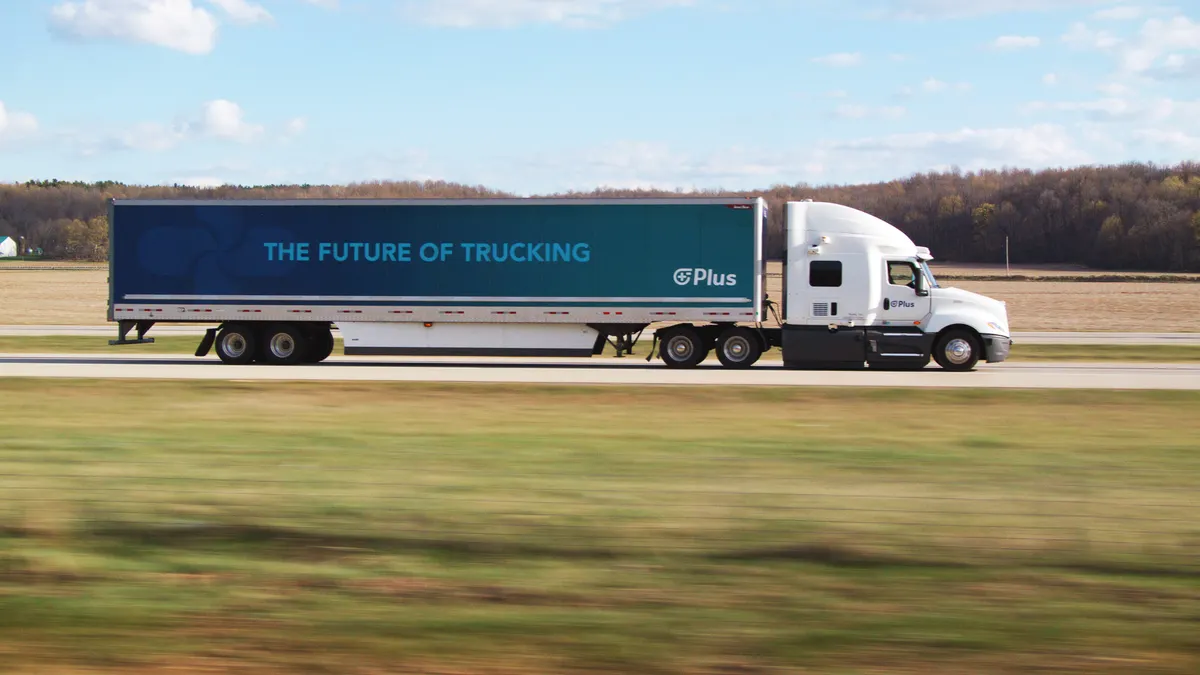
Adams, who now is VP of public policy and regulatory affairs at PlusAI, said another revision eases a permitting requirement. Under a proposed change, AV developers can apply for a deployment permit using up to 100,000 miles of autonomous driving outside of the state to satisfy California’s performance and safety requirements.
Although safety concerns have challenged AV advancement in California, protecting trucking jobs also has been a priority, especially for labor unions, including the Teamsters.
Adams said autonomous technology is being developed to address long-standing challenges in long-haul freight, including driver shortages and inefficiencies tied to hours-of-service limits.
“The technology is not about eliminating trucking jobs overnight,” he said. “In fact, for the foreseeable future, someone entering the profession today will still retire as a truck driver. The issue is not ‘either-or,’ but how to balance innovation with workforce realities.”