Dive Brief:
- FedEx Freight expects to drive profit through its network scale and ability to aid shippers in reaching nearly every U.S. zip code, executives said during an investor day presentation event in New York Wednesday ahead of its spinoff as a standalone company.
- The path to revenue growth targets serving small and medium-sized businesses, health care requiring expedited delivery, grocery, and expanding market share in technology, specifically buildouts for cloud and artificial intelligence, Mike Lyons, chief specialized services and commercial officer, said on the call.
- “We are targeting higher growth, attractive end markets that align with our offerings,” said Lyons, who has worked with FedEx for nearly two decades.
Dive Insight:
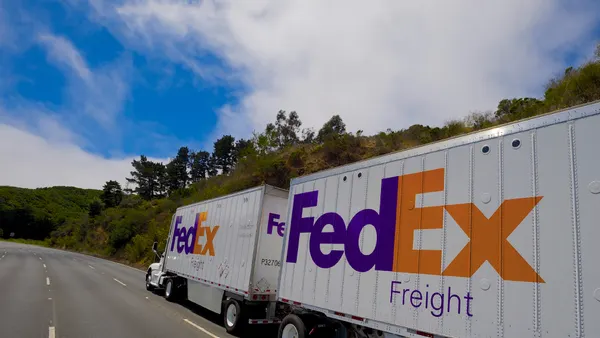
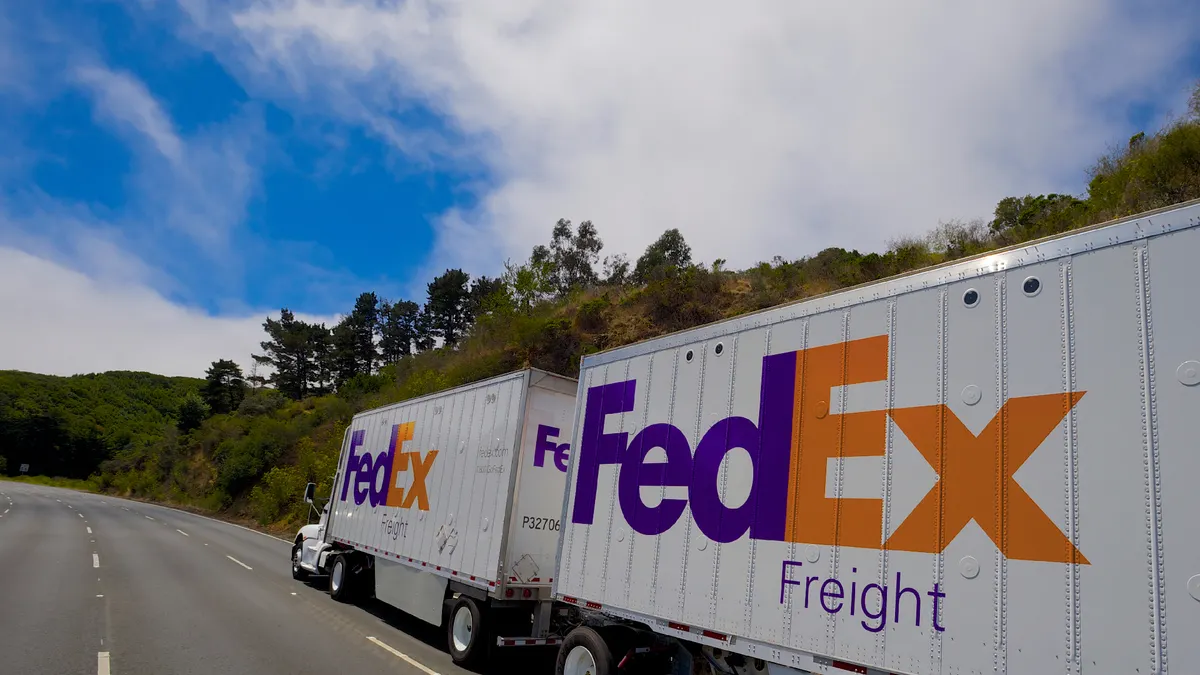
With FedEx Freight’s June 1 spinoff approaching, executives during the call detailed how the LTL carrier’s established network, which features more than 365 locations, 26,000 doors and 30,000 vehicles, will make an immediate impact.
“We connect supply chains across North America, transporting goods for companies of all sizes, industries and specialties,” John Smith, the incoming president and CEO of FedEx Freight, said at the event.
He noted the carrier’s extensive network is built for industry and precision and strengthened by scale.
The new company will still focus on its history, namely, strengthening relationships with customers who have at least 10 years of experience with the brand, Lyons noted.
But FedEx Freight will also seek new business, even with those existing partnerships, and a dedicated sales force of over 500 people will aid in that effort, he said.
Other LTL carriers have been using the transition in the freight market to expand networks, preparing for the upturn with market expansions. AAA Cooper Transportation developed nationwide coverage with a key acquisition in 2024 to further unlock the West Coast, and other major players like Estes Express Lines, Saia and XPO have been bolstering their footprints with former Yellow Corp. additions and other expansions.
For FedEx Freight, business growth will also come by improving customer engagement through enhanced technology. Lyons said the goal is to “make it easier to do business with FedEx Freight.”
Customer-facing technology to provide shippers with detailed information on the status of shipments, as well as route optimization, will deliver efficiencies, Lyons and Chief Operating Officer Clint McCoy said.
But it’s FedEx Freight’s scale that will drive the carrier’s results. In a Wednesday statement, the company projects medium-term revenue growth of between 4% and 6%.
Smith said for the LTL segment, “scale matters.” Its extensive network means shipments have fewer touchpoints, and its delivery options, which include intermodal, can also provide flexibility and reduce costs.
“We have a scaled network driven business with durable competitive advantages, and we’re just getting started,” Smith said.