Dive Brief:
- Paccar executives expect customer demand to rebound in 2026, citing economic growth, recovering freight conditions, and greater clarity around tariffs and regulatory concerns, they shared during the company’s Jan. 27 earnings call.
- Early signs of that recovery emerged in December and January, when order intake was “very strong,” CEO Preston Feight said. The acceleration helped increase margins from 12% in Q4 to a range of 12.5% to 13% in Q1.
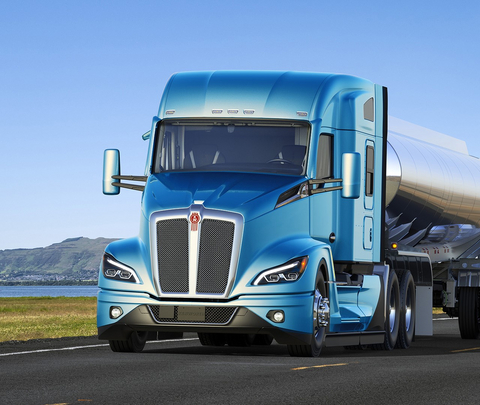
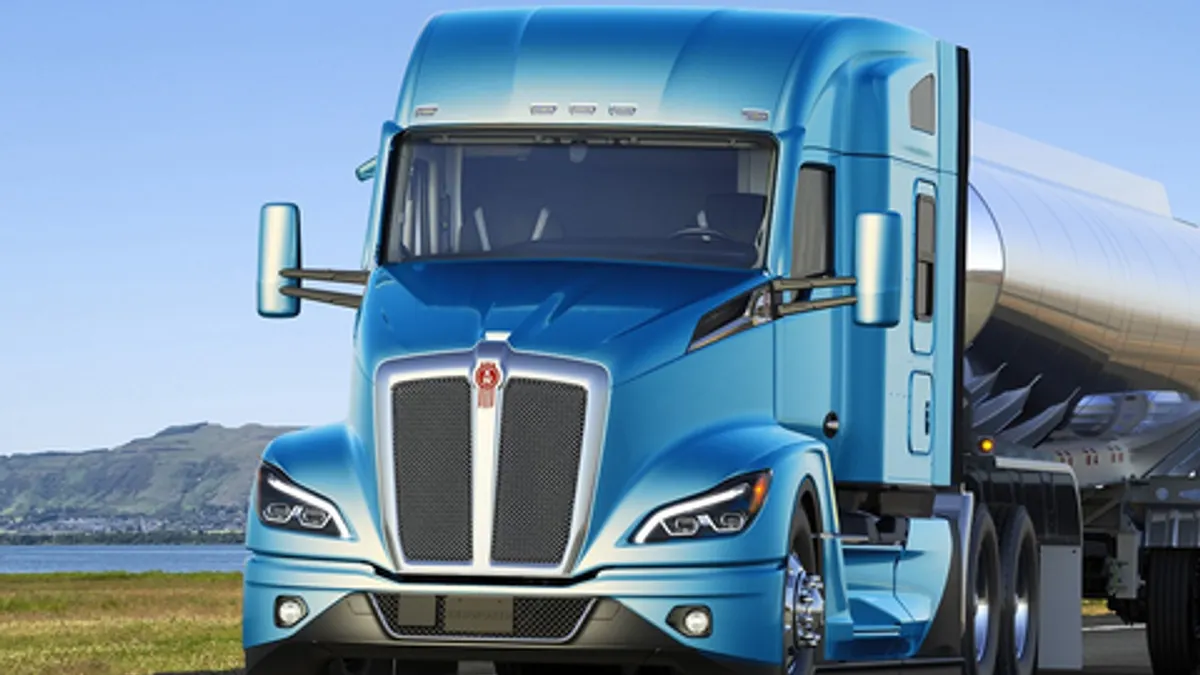
- The momentum follows a challenging 2025, during which the manufacturer of Kenworth and Peterbilt trucks reported U.S. and Canada sales of 233,000 Class 8 units in 2025, per its Q4 report, down 13% from 268,000 units sold in 2024.
Dive Insight:
Truck OEMs contended with soft freight markets and uncertainty around tariffs and emissions in 2025. But Paccar faced particular headwinds related to tariffs in 2025 that put the company at a disadvantage, Feight said. The company’s tariff surcharges ranged from $3,500 to $4,000 per truck in Q3.
Looking ahead, Feight believes the implementation of Section 232 tariffs could create more favorable conditions in 2026.
“It's a competitive world out there,” Feight said during the earnings call. “In the first quarter, many of our competitors haven't taken those tariff cuts to the market yet, which keeps things in a bit of a very competitive state.”
As a result of Section 232 and its U.S.-based manufacturing footprint, Paccar has done away with tariff surcharges in 2026, a move that could provide a pricing advantage.
“We feel good about our opportunity to gain in terms of margin and market share as the year progresses and things stabilize out,” the CEO said.
Peterbilt and Kenworth held 30% market share in the U.S. and Canada last year, a slight decrease from 30.7% share in 2024.
Beyond tariffs, Paccar executives pointed to the upcoming Environmental Protection Agency’s Nitrous Oxide (NOx) limit as a potential sales catalyst. However, the timing and magnitude of that impact remain uncertain.
“I think the EPA has done a very good job of trying to let people know there would be 35 milligrams [NOx limit],” Feight said. “But they also have stated that they're looking at useful life and warranty and what those impacts would be on cost. So those could still be subject to change.”
While the company raised its 2026 guidance for Europe and South America, it maintained its outlook for the U.S. and Canada — 230,000 to 270,000 Class 8 units — signaling optimism for a longer-term recovery amid the dynamic market environment.