Dive Brief:
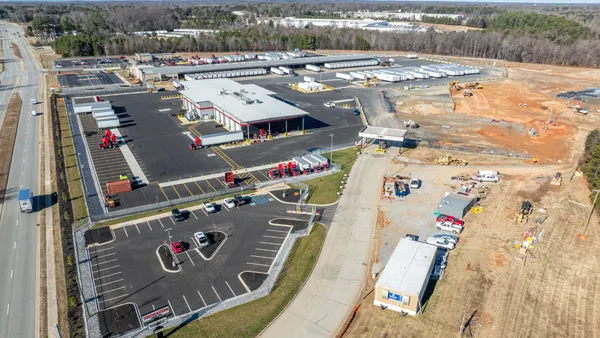
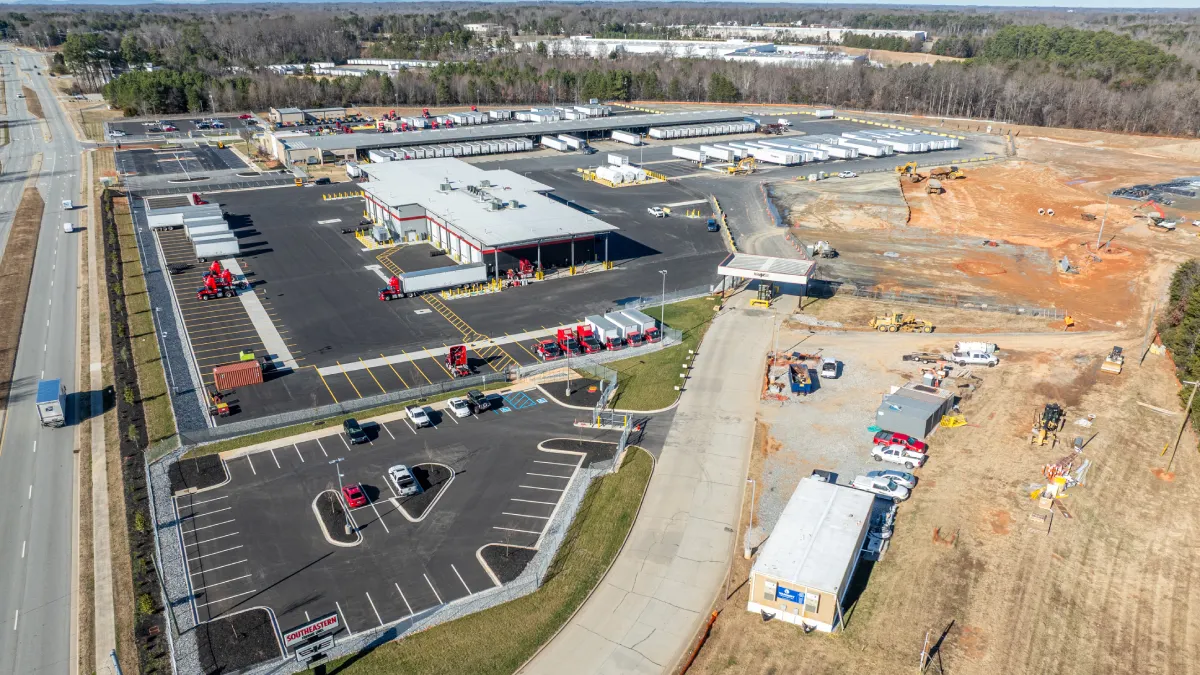
- Southeastern Freight Lines doubled the size of its Greensboro, North Carolina, facility as part of a series of upgrades to improve operational performance and expand its network capabilities.
- The Greensboro expansion increased the number of tractor bays from five to 10 and trailer bays from two to six, the LTL provider said in a news release emailed to Trucking Dive.
- The 99-dock-door service center can now “have more technicians working, keep more equipment running and expand preventative maintenance capacity to reduce breakdowns and streamline operations,” the company said in the release.
Dive Insight:
The upgrades at Greensboro were announced alongside improvements at three other sites that included a yard expansion in Houston to improve traffic flow and facility upgrades in El Paso, Texas, and Guaynabo, Puerto Rico.
Other renovations included upgraded facilities for employees’ well-being, such as the construction of a new driver rest facility in El Paso, Texas, that includes a gym, kitchen and lounge.
“These investments are about giving our teams the tools and resources that they need to perform at their best,” Ryan Smigiel, VP of real estate, said in the release.
Clete Cordero, VP of pricing and traffic, said at SMC³’s Jump Start conference in January that the carrier avoids layoffs by getting a balanced level of staff and maintaining its shipping count. “Our focus right now is making sure we don't bring on freight that doesn't fit our network,” he said.
Other LTL carriers have also highlighted their recent and future plans in anticipation of the next upcycle. Estes Express Lines said earlier this year that it’s on track to expand its door count to 14,000 in 2026, and Averitt is enhancing several sites. The capital improvements are preparing LTL businesses to make the most of market upturns.
Although carriers are investing in anticipation of a better business environment, companies lacking scale and a broad customer base must continue focusing on measures such as cost control rather than aggressive growth until conditions improve, C.H. Robinson Worldwide said in a monthly report.
"The LTL market remains characterized by soft demand and elevated operating costs, conditions that disproportionately strain smaller and mid-sized regional networks with less diversification and fewer levers to pull when volumes weaken or lanes become imbalanced," the brokerage and 3PL said.