Dive Brief:
- Drug testing for safety-sensitive positions, including truck drivers, will still be required even if the government proceeds with downgrading marijuana to a less dangerous drug, a Department of Transportation spokesperson said in an email to Trucking Dive.
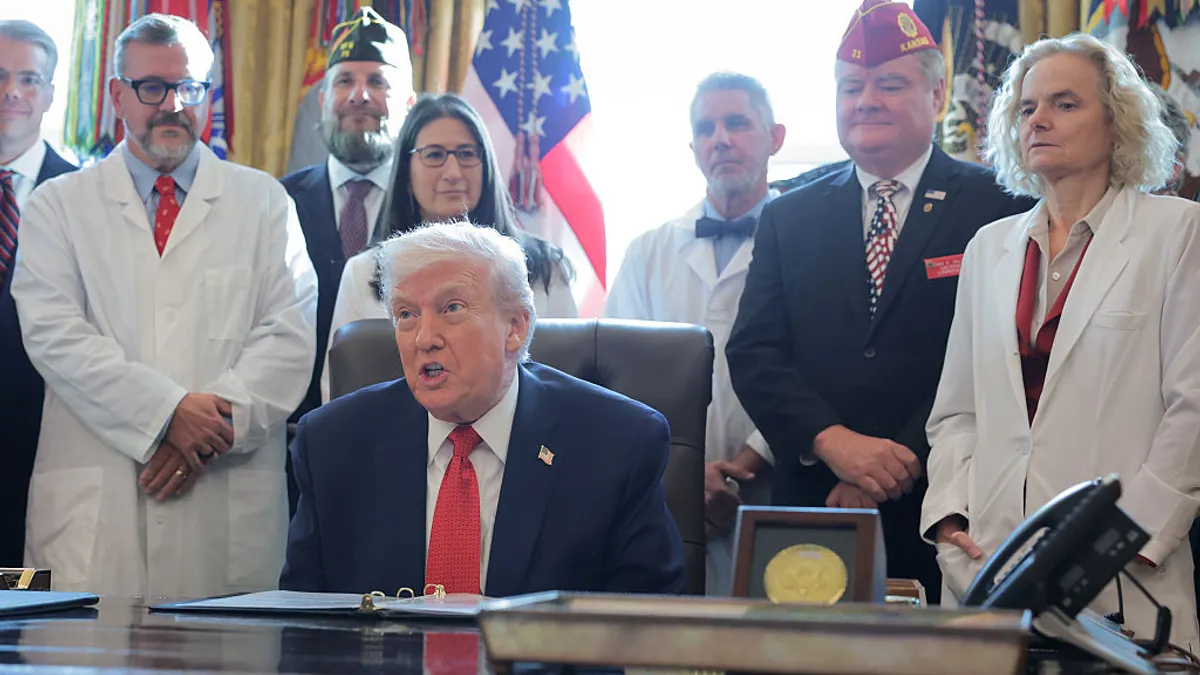
- DOT’s announcement follows President Donald Trump’s signing of an executive order Thursday directing the U.S. attorney general to expeditiously reschedule marijuana to Schedule III of Controlled Substance Act. The order said the move is meant to recognize medical use of the substance and open more opportunities for research.
- “It remains unacceptable for any safety‐sensitive employee subject to drug testing under the Department of Transportation’s drug testing regulations to use marijuana,” the spokesperson said.
Dive Insight:
The order does not supersede rules that bar a range of transportation positions, including pilots, train engineers and ship captains, from ingesting the drug, the DOT said.
Marijuana is presently classified as a Schedule I substance, putting it alongside heroin and LSD. Rescheduling marijuana to Schedule III coincides with a 2023 Department of Health and Human Services recommendation that recognized the drug had an accepted medical use, per a White House fact sheet.
At least 40 states, including the District of Columbia, either have state or locally-sanctioned, regulated medical marijuana programs, according to the fact sheet.
The order also calls for improving access to and regulatory oversight of cannabinoids, otherwise known as CBDs, a group of substances in the cannabis plant.
While the Trump administration advocates for improving access to these cannabis-derived products to help people better manage certain health conditions, such as chronic pain, the American Trucking Associations expressed concerns about safety risks if the drug is reclassified.
Brenna Lyles, ATA’s VP of safety policy, said in a statement that safeguards should be prioritized to preserve testing and technical requirements for DOT-regulated, safety-sensitive workers.
“A safe driver is a qualified driver,” she said. “And a qualified driver is drug- and alcohol-free. Motor carriers must retain reliable, enforceable tools to ensure they are not putting unqualified drivers behind the wheel.”