Dive Brief:
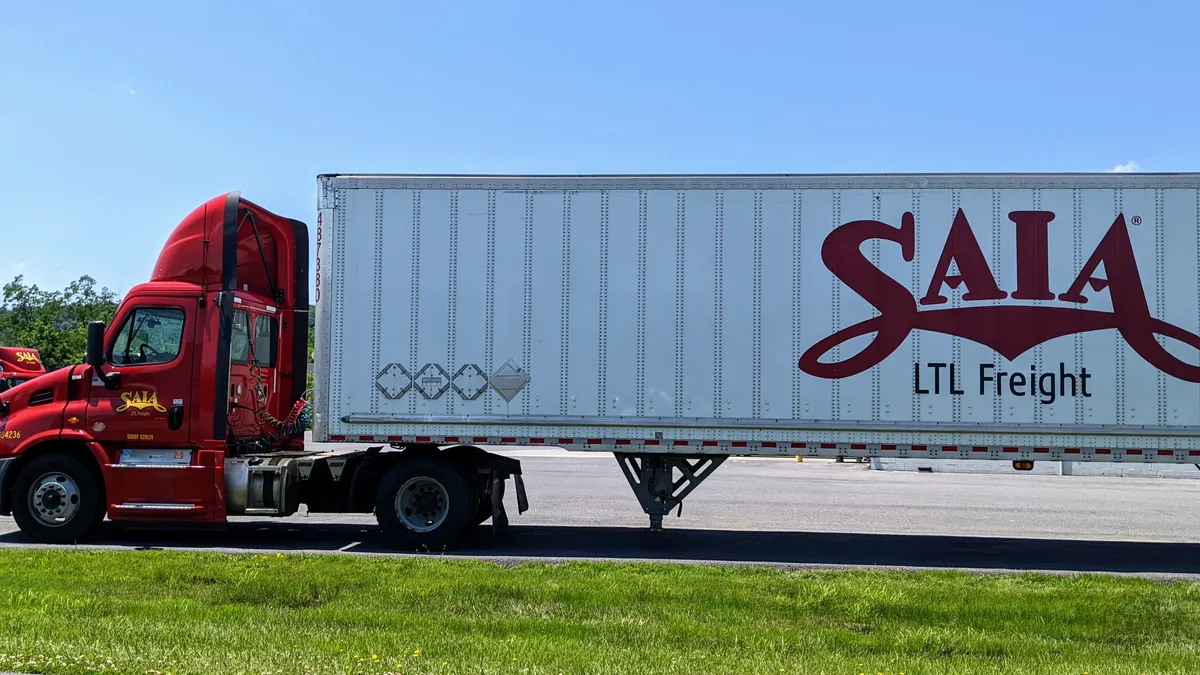
- The number of long-distance LTL jobs declined by 5,000 to 241,000 workers between December 2025 and January 2026, the biggest drop between consecutive months in years, according to preliminary seasonally adjusted federal data for January.
- If that latest tally holds, it would mark one of the lowest levels in the LTL workforce — a total amount last seen when Yellow Corp. filed for bankruptcy. In contrast, TL long-distance jobs declined by about 800 to 496,300 from December to January,
- Final figures as well as preliminary employment data for February will be published April 3, the Bureau of Labor Statistics told Trucking Dive.
Dive Insight:
Aside from two months in 2020 during the COVID-19 pandemic, the LTL workforce at the start of 2026 was the lowest it’s been since November 2014. TL similarly posted its lowest level in over a decade.
Meanwhile, the total number of U.S. carriers holding common or contract freight authority stood at 342,487 as of February, according to analytics firm FTR Transportation Intelligence. Avery Vise, VP of trucking at FTR, noted in an email that the figure is 33% higher than it was before the pandemic, and that most of those carriers are very small operations. “Overall capacity has essentially normalized,” Vise added.
A more balanced truckload carrier supply is a key part of LTL’s recovery, Uber Freight VP of LTL Jeff Thomas told Trucking Dive in a statement.
The freight broker noted in its Q1 market report that the macro demand is slowly recovering. Meanwhile, there is some tightening on key TL lanes, such as through higher tender rejections.
“We’re starting to see early signs of tightening capacity show up in the LTL market, particularly with an uptick in quotes and tenders for heavier shipments, around 10,000 pounds and above,” Thomas said. “As truckload capacity tightens, freight that would typically move via full truckload or partial is beginning to shift into LTL networks, which has historically been a reliable signal at the tail end of freight downturns.”
Meanwhile, regulatory enforcement is further pressuring capacity, Vise added.
“The missing ingredient for a sustained carrier recovery is consistently stronger freight volume,” he said.