Editor’s Note: This story is the fourth installment of a five-part series highlighting intermodal growth in the Chicago area and its impact on trucking. Read the previous story here.
Nussbaum Transportation is trying a different approach to recruiting drivers. Instead of a sign-on bonus, the Illinois-based trucking company offers an early exit option. After 30 days and before 90, if a driver feels Nussbaum, or a career in trucking, wasn’t the right fit, the carrier offers $1,000 to that driver to help them transition to what’s next.
“It shows that we don’t need to offer a bunch of money just to get a driver to come here,” said Joe Anderson, director of recruiting at Nussbaum. “We’re confident that you can make a career here and be successful.”
The lack of sign-on bonus hasn’t prevented Nussbaum from hiring drivers. It’s reached its goal to hire nine to 10 drivers weekly several times in recent months.
At the same time, Nussbaum’s turnover has increased — a workforce issue plaguing much of the trucking industry nationwide.
While carriers across the country grapple with many of the same driver recruitment and retention challenges, some factors are unique to Midwestern states, which gives fleets in this region a leg up — or down — in the hiring game.
Trucking executives discuss what they believe are the five key differences in hiring in the Midwest versus other parts of the country.
1. Available driver pool
Trucking has a significant presence in Middle America. In fact, 32 of the top 100 for-hire carriers are located in the Midwest — the highest of any region. This draws in talent, but competition is fierce.
“We're all gunning for the pool of drivers that are available,” said Mike Kucharski, co-owner and VP of Illinois-based JKC Trucking. Plus, drivers can easily jump ship to another company, he added.
Low unemployment rates in the region make recruitment challenging, according to Jonathan Phares, assistant professor of supply chain management at Iowa State University. The Dakotas have the lowest unemployment rates in the country, and Indiana, Iowa, Kansas, Minnesota, Nebraska and Wisconsin have unemployment rates under 4%.
“The available labor force in Iowa is tapped out for all intents and purposes,” Phares said. The flipside of that: “retaining them tends to be relatively easy.”
2. Regulations and unions
“The port environments come with their own set of regulations,” said Anthony Apa, Jr., president and owner of Illinois-based Mark-it Express. That could be attractive to potential drivers because of better pay or working conditions, or it could dissuade drivers who don’t want to navigate unions and stricter regulations.
3. Cost and pay
Higher cost of living on the coasts naturally results in higher pay, but it also raises expectations, said John Schumacher, VP of operations and director of business development at Greenline Express, a provider of reefer LTL transport services from the West Coast to Midwest. He said California drivers, for example, expect newer equipment and cleaner, well-maintained reefers.
Conversely, “compensation pressure isn’t as extreme” in the Midwest, Schumacher said.
4. Freight patterns
Kimberly Maes, president of flatbed and specialized at Wisconsin-based Roehl Transport, said freight is more consistent with relatively predictable seasonality in the Midwest, versus the coasts where volumes fluctuate based on imports, “especially with the tariff impacts.” Drivers may be attracted to consistent work.
Schumacher agreed Midwest freight is steadier, plus there’s more drop-and-hook, reducing idle time for drivers.
5. Work ethic
Workers in the Midwest tend to be hardworking with a “higher degree of loyalty than what we experience on the coast,” Maes said, noting it’s a stereotype “so you see it quite a bit but not always.”
Carrier tactics to find drivers
Despite regional differences, many challenges are universal. Across the country, trucking companies are navigating recent changes to English proficiency enforcement and non-domiciled CDL rules. Trucking leaders noted a shrinking qualified driver pool due to failed drug tests and an aging driver population.
“Recruiting qualified drivers is the name of the game,” Apa said. “We're just not seeing an influx of new drivers coming into the industry as a whole.”
Maes has more frequently seen drivers who want to be home at least every weekend, but “unfortunately, the freight doesn't always align with that,” she said. “So trying to balance those becomes tough.”
This is where dedicated, LTL, drayage and local carriers have an advantage, according to Karl Fillhouer, VP of sales and operations at Circle Logistics, an Indiana-based brokerage. These fleets’ operations often allow a driver to be home frequently, “if not nightly,” he said.
For drivers seeking frequent home time, “small, irregular route carriers are at the bottom of the pile in regard to desirable companies to work for,” Fillhouer said.
To combat recruitment and retention challenges, Midwestern trucking fleets are employing a variety of tactics.
Anderson said Nussbaum attends job fairs and partners with a local community college for its driver training program, the Nussbaum Trucking Academy.
It also gathers feedback from current drivers via employee surveys — and follows through to make improvements. Previously, if drivers ran into a breakdown or incident after hours, their call was directed to a third party. Nussbaum received negative feedback, and now drivers can speak with internal personnel.
“We ended up beefing it up. We've got a much larger, stronger after hours weekend presence now,” Anderson said.
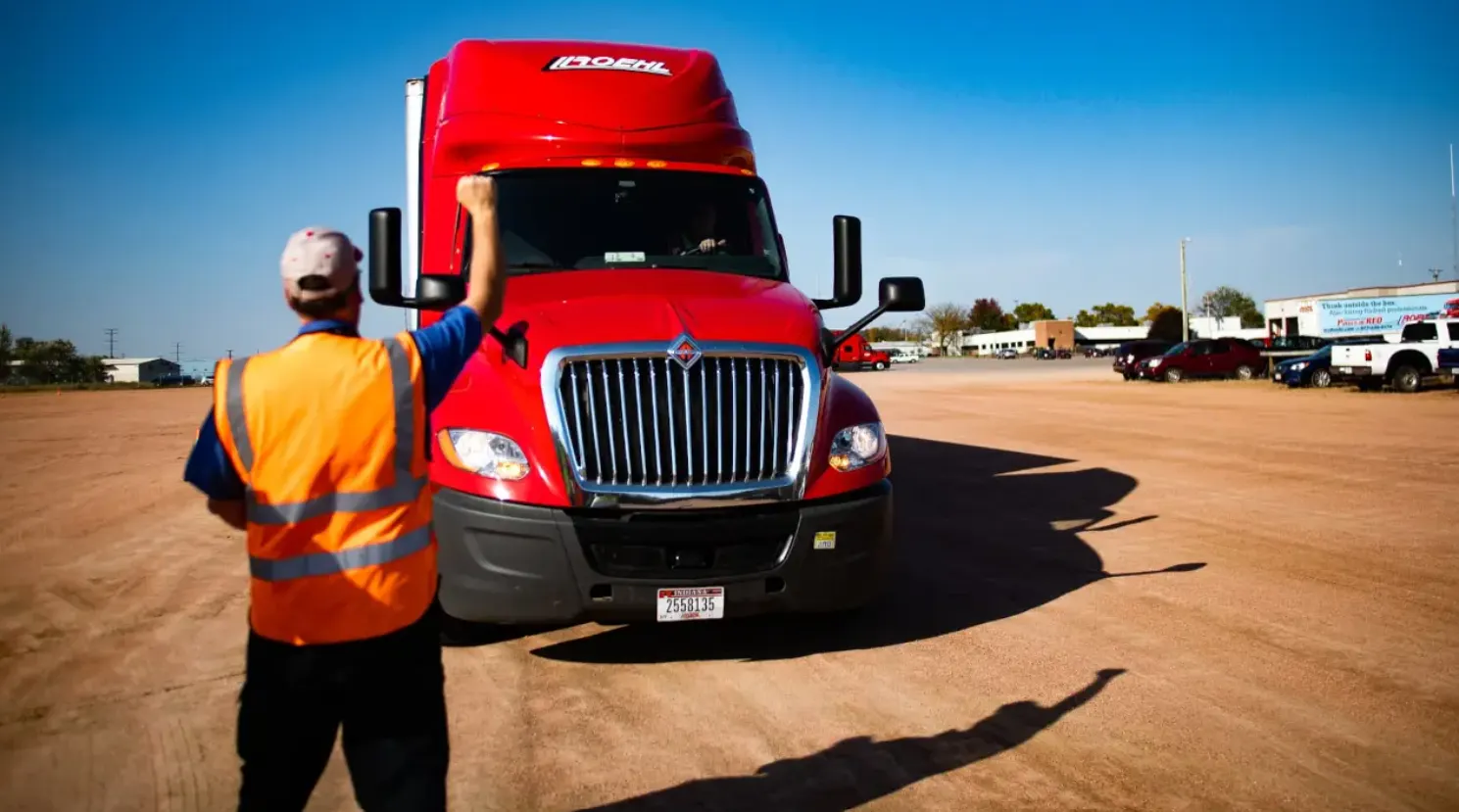
Roehl similarly works with local schools on intern programs, has its own Get Your CDL training program and often recruits from military bases. Military veterans tend to be “really good truck drivers,” Maes said. “They’re independent. They have that good work ethic.”
However, not all recruitment strategies are successful.
Kucharski of JKC Trucking previously ran a program to train individuals from Native American reservations to get their CDL and become truck drivers. In the end, the program didn’t work out, because many of the drivers were homesick spending long days away from family, he said.
Now, Kucharski aims to pay slightly above market rate to attract drivers. He admitted even with the higher compensation, “it's still difficult to get drivers.”