Dive Brief:
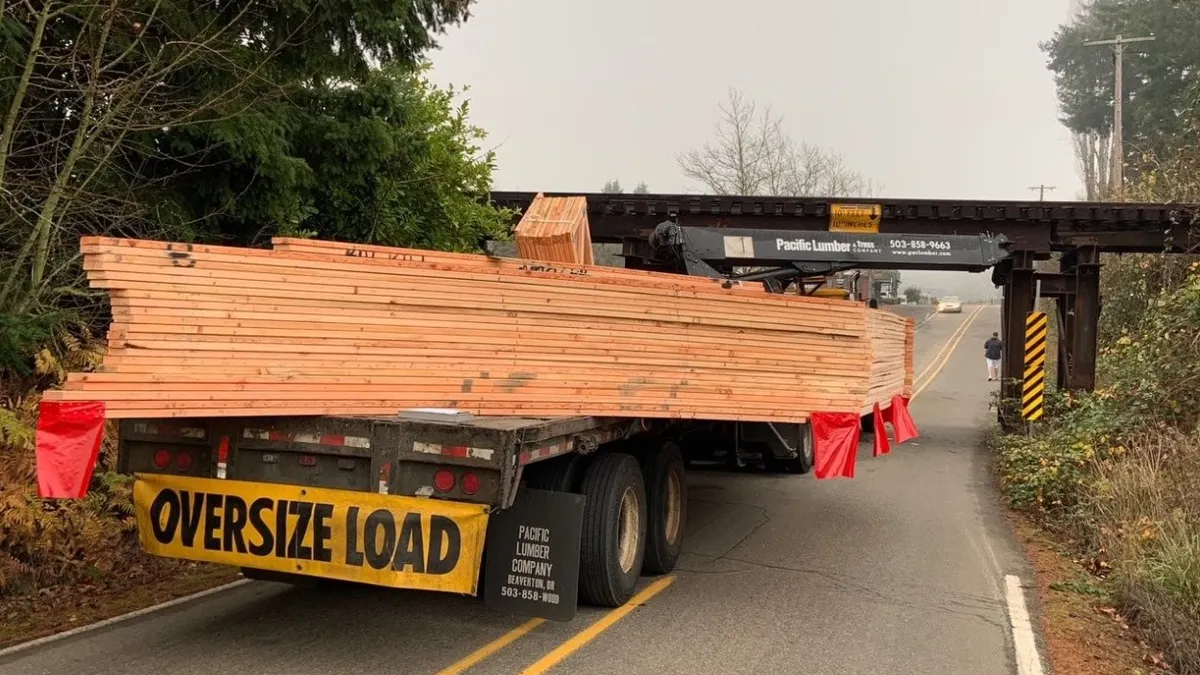
- Automated functions for the permitting and route planning of oversized loads in Oregon, introduced in 2025, have helped save $940,000 during its first year of use, the state’s Department of Transportation said in an Aug. 19 news release.
- The Oregon Routing Information Online project, known as ORION, previously relied on analysts using paper maps to vet vehicle clearances for trips, but the digital system can help process applications instantly with the safest and fastest routes.
- “There are still certain load or route criteria that, when triggered, require additional review and approval from analysts and road authorities,” state officials said. “However, that process has been greatly automated, sending emails to the road authorities, letting them know they have a permit to review in ORION.”
Dive Insight:
Oregon was one of the last states to automate its overdimensional permitting, following a 2013 bridge crash in Washington state that spurred reform.
The crash involved a 2010 Kenworth with a flatbed semitrailer, led by an escort vehicle, that collided with the Interstate 5 Skagit River Bridge, sending a Dodge pickup truck and Subaru into the river. Everyone survived.
A National Safety Transportation Board investigation found a series of deficiencies and called for changes.
As of 2015, most states had automated their oversize and overweight permitting systems, the Federal Highway Administration noted as part of the crash follow-up response.
But several states, including Oregon, Kentucky and Vermont, had no plans to automate those systems. They have since changed that.
For Oregon, overdimension traffic increases every year, and the modernization project eliminated the need to fill seven vacant positions, Oregon DOT Commerce and Compliance Administrator Carla Phelps said in the release.
“Ensuring these over-dimension loads can travel through the state without incident is critical to the safety of the traveling public, commercial drivers, and Oregon roads and bridges,” she said.