Dive Brief:
- The I-294 at I-290/I-88 interchange west of Chicago is considered the most congested bottleneck for trucks in the U.S., according to the 2026 annual report from the American Transportation Research Institute.
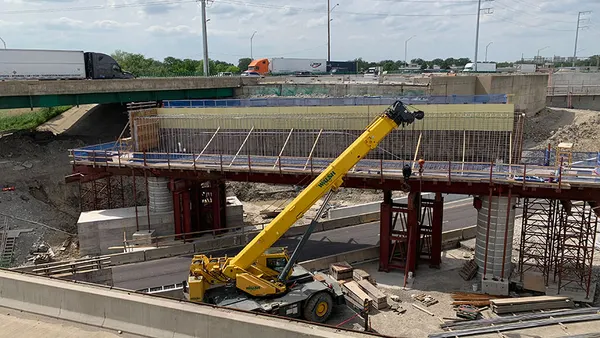
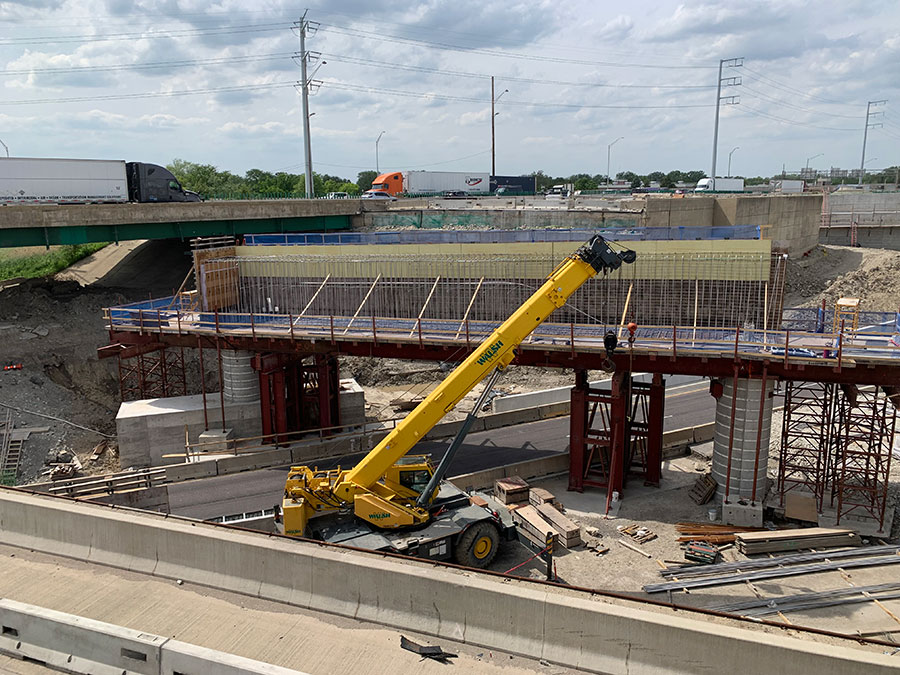
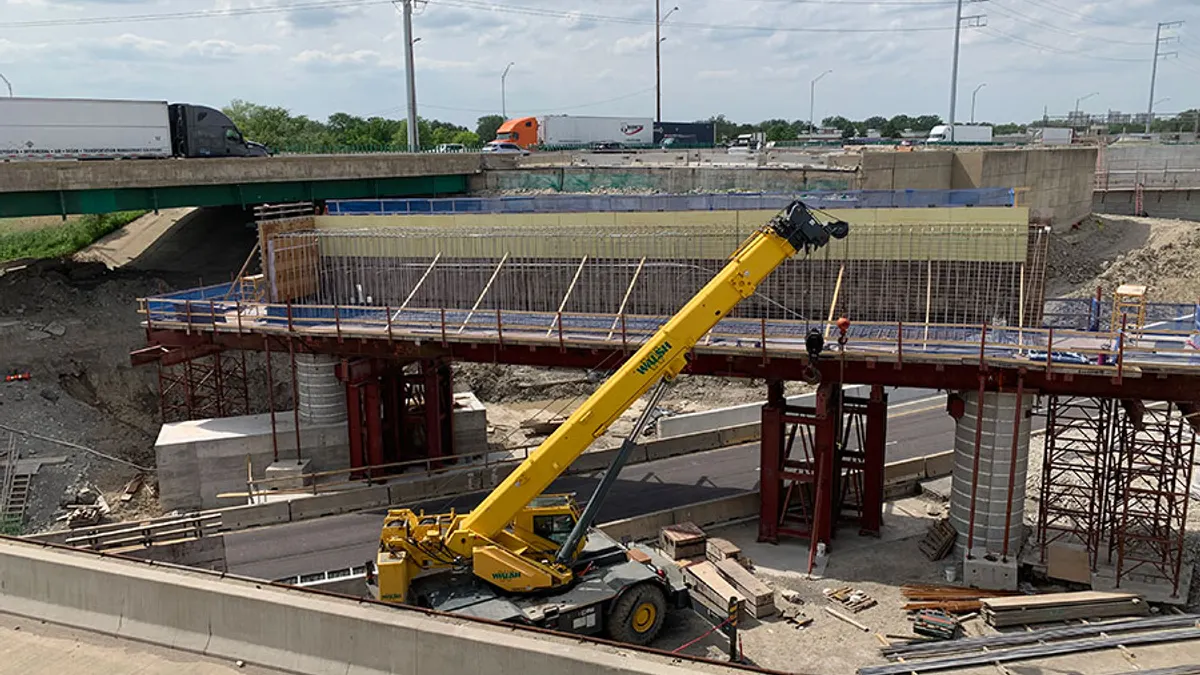
- The interchange handles more than 300,000 vehicles a day and is in year six of a massive reconstruction project scheduled for completion at the end of 2027, according to the Illinois Tollway. Once completed, the $800 million project is expected to reduce congestion and improve road safety.
- Road work contributes to traffic snarls, ATRI said. American Trucking Associations President and CEO Chris Spear said in a statement that those least likely surprised by the Chicago area highway’s ranking are “the truck drivers and commuters who are forced to endure endless delays when navigating this dreadful interchange.”
The top 10 biggest truck bottlenecks
| Highway interchange | City and state | Average speed (mph) |
|---|---|---|
| 1. I-294 at I-290/I-88 | Chicago, Illinois | 39.5 |
| 2. I-95 at New Jersey Route 4 | Fort Lee, New Jersey | 28.2 |
| 3. I-285 at I-85 (North) | Atlanta, Georgia | 35 |
| 4. I-45 at I-69/US 59 | Houston, Texas | 29.2 |
| 5. I-75 at I-285 (North) | Atlanta, Georgia | 39.1 |
| 6. I-20 at I-285 (West) | Atlanta, Georgia | 40.4 |
| 7. I-24/I-40 at I-440 (East) | Nashville, Tennessee | 36.8 |
| 8. I-10 at I-69/US 59 | Houston, Texas | 34.3 |
| 9. I-71 at I-75 | Cincinnati, Ohio | 42.5 |
| 10. I-75 | McDonough, Georgia | 46.2 |
Source: ATRI
Dive Insight:
ATRI has been studying the nation’s most congested traffic areas for nearly 25 years.
It examines truck GPS data in support of the U.S. Department of Transportation Freight Mobility Initiative. The research provides a look at traffic congestion in over 325 areas around the country to gauge speeds and volume of freight movement through these locations.
The research has been referenced by public and private stakeholders to direct infrastructure investment to reduce barriers that impact supply chains, according to ATRI.
The latest report concluded that traffic conditions around the country continue to deteriorate. Average rush hour truck speeds were 33.2 mph, 2.8% slower than last year. However, among the top 10 bottlenecks, the average rush hour truck speeds were 29.6 mph.
ATRI’s study suggests traffic congestion adds $109 billion to the cost of goods paid by consumers and also impacts motorists’ quality of life.
While the Chicago area secured the top spot on this year’s bottleneck list, the Atlanta Metro Area had four spots in the top 10. Last year’s most congested bottleneck – I-95 at New Jersey Route 4 in Fort Lee, New Jersey – fell to second place.
Spear said problem bottleneck areas have been addressed over the years. He pointed to the $2 billion George Washington Bridge project, where some of the completed improvements have benefited traffic flow between New York and New Jersey.
“This success provides a roadmap for policymakers to invest in projects that will improve efficiency throughout our transportation system and benefit their constituents,” Spear said.