Editor’s Note: This story is the last installment of a five-part series highlighting intermodal growth in the Chicago area and its impact on trucking. Read the previous story here.
Trucking has been stuck in a perfect storm with increased operating costs, flat rates and reduced freight volumes.
At the same time, shippers are putting pressure on carriers to reduce rates, according to Anthony Apa, Jr., president and owner of Illinois-based Mark-it Express. The result: fleets are squeezed between rising expenses and stagnant revenue.
“We’re definitely seeing margin compression,” Apa said.
Apa named insurance as one area with the biggest cost increases. Nuclear verdicts and large jury awards, north of $10 million, are contributing to inflation in insurance, he added.
Carriers face rising insurance premiums
Truck insurance premiums rose for the fifth consecutive year in 2024, according to the American Transportation Research Institute. From 2023 to 2024, rates rose 3%, reaching a new record high of $10.2 per mile. In Q1 2025, carriers reported a 5.8% year-over-year increase in truck insurance premiums.
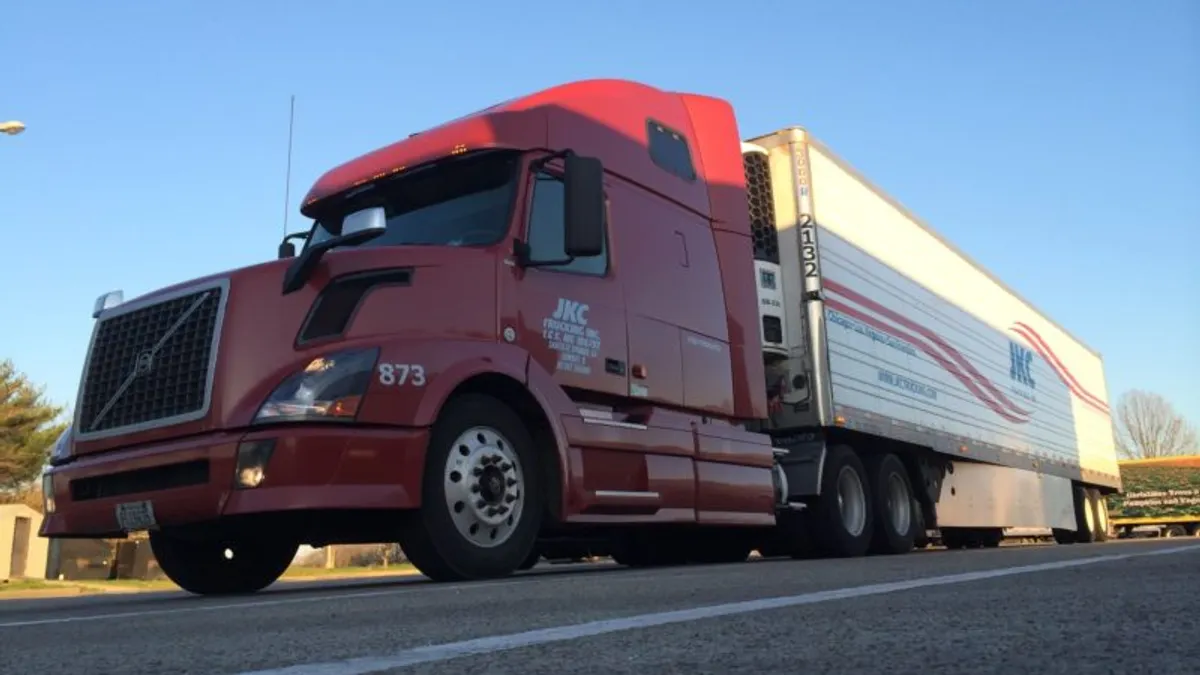
And the upward trend has yet to subside. Mike Kucharski, co-owner and vice president of Illinois-based JKC Trucking, said his insurance cost “keeps going up every year.”
Kucharski also pointed to rising driver wages. His fleet aims to pay slightly above market rate to attract drivers. “It feels like even though we're paying more, we're not finding the right talent,” Kucharski said.
Trucking wages increase steadily over a decade
The U.S. Bureau of Labor Statistics reported truck transportation wages above $30 per hour over the last year. And ATRI said total driver compensation, which includes pay and benefits, increased nearly 3% in 2024 from 2023.
Some trucking companies are offering sign-on bonuses or other incentives to entice drivers. Joe Anderson, director of recruiting at Nussbaum Transportation, had a driver who was set to start at the company, but backed out and stuck with their current employer because they received a counter offer with higher pay and a new truck.
“Companies are still really trying hard to hold on to their drivers," Anderson said.
A new truck doesn’t come cheap, however. In fact, truck and trailer payment costs increased 8.3% between 2023 and 2024. This category has jumped 52.3% since 2019. “No other line item has been subject to such a radical cost upheaval,” ATRI said.
Trucking equipment costs rise
Tariffs only add to the rising costs. The U.S. imposed 25% tariffs on imported heavy- and medium-duty trucks Nov. 1.
Karl Fillhouer, VP of sales and operations at Circle Logistics, an Indiana-based brokerage, said the on-again, off-again tariffs are causing “upheaval of the industry … specifically the cost of turning equipment.”
According to ATRI, the 12% federal excise tax alone raises the average cost of a new truck by $20,000 to even more than $50,000.
If there’s one silver lining to trucking’s economic landscape, it’s that diesel prices are relatively steady and have remained under $4 for more than a year. ATRI found carriers’ average fuel costs decreased 13% YoY in 2024.
But it’s still another expense trucking companies have to incur, on top of all the other mounting costs. As Kucharski sees it, diesel is “burning a big hole in my cash flow.”