Economies of scale, specialized markets or survival may drive trucking mergers and acquisitions in 2026, industry experts suggest, although their predictions are mixed on how active dealmaking will be in the sector this year.
Prolonged weak freight conditions and excess market capacity may sideline purchasing aspirations for some, as carriers look to reduce their capacity rather than augment it through acquisitions. However, opportunists may view the current business climate with low interest rates and distressed carriers as perfect for dealmaking.
“The extended freight downturn is a catalyst for M&A,” said Darach Chapman, transportation and logistics deal leader for PwC.
The consultancy in its 2026 transportation and logistics deals outlook said deals “favoring platforms that enable network optimization, automation, and resilience” may define combinations this year, particularly among regional carriers seeking scale.
“We expect continued consolidation as smaller or subscale operators look for exits and better-capitalized buyers pursue targeted acquisitions,” Chapman said. “That said, strategic buyers will remain selective, focusing on cost synergies, network fit, and contractual revenue rather than volume growth alone.”
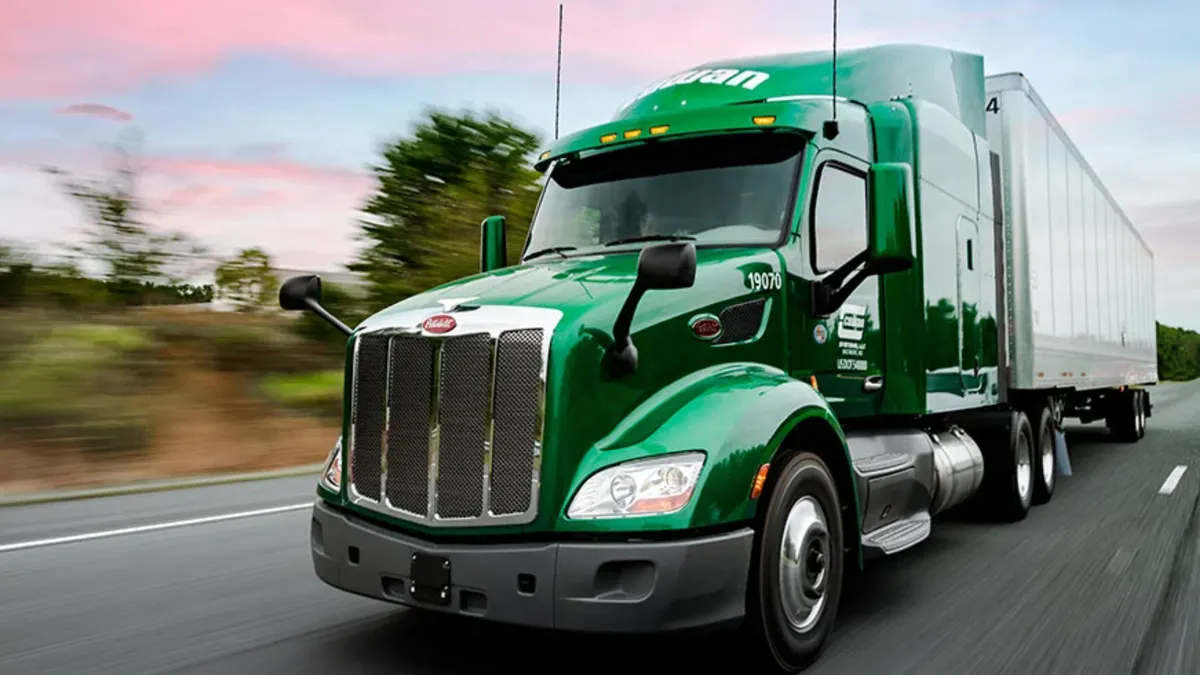
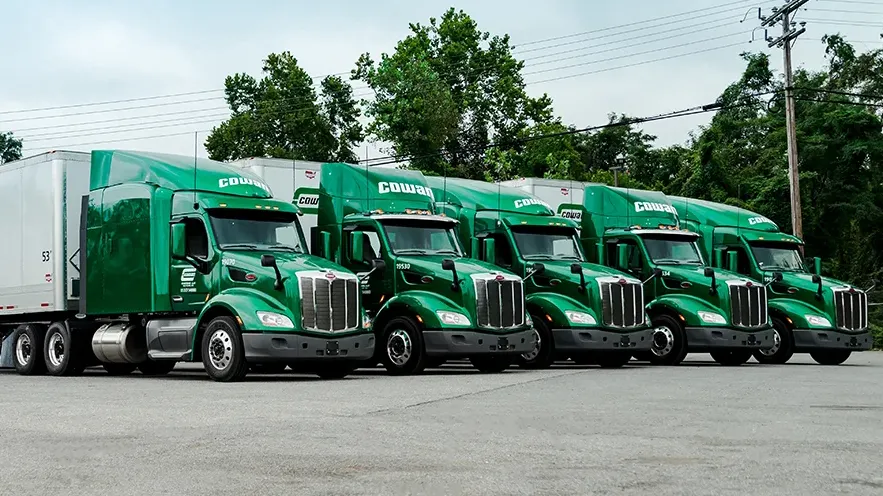
This formula fits a recent purchase by Schneider National. Just over a year ago, the Wisconsin-based carrier acquired Cowan Systems of Baltimore. Schneider credited Q3 revenue growth in its dedicated business segment to the acquisition, while Cowan acknowledged that access to a larger network opened new opportunities for its existing customers.
As low freight rates drive challenges for the industry, especially struggling carriers, Schneider EVP and CFO Darrell Campbell sees potential deals in the making. “There’s opportunities to be opportunistic,” he said during the annual Baird Global Industrial Conference in November.
Signs suggests quiet year for M&A
Current freight market conditions may be ideal for carriers seeking growth through acquisition, but Geoff Wilson, director and lead analyst for transportation at S&P Global Ratings, believes that isn’t enough to take on a struggling company even if the deal was a good fit.
Wilson pointed to carriers taking capacity off the road in hopes it would rebalance supply with demand and increase freight rates. That’s why Wilson doesn’t expect a large carrier to pursue a distressed company, especially in the truckload segment.
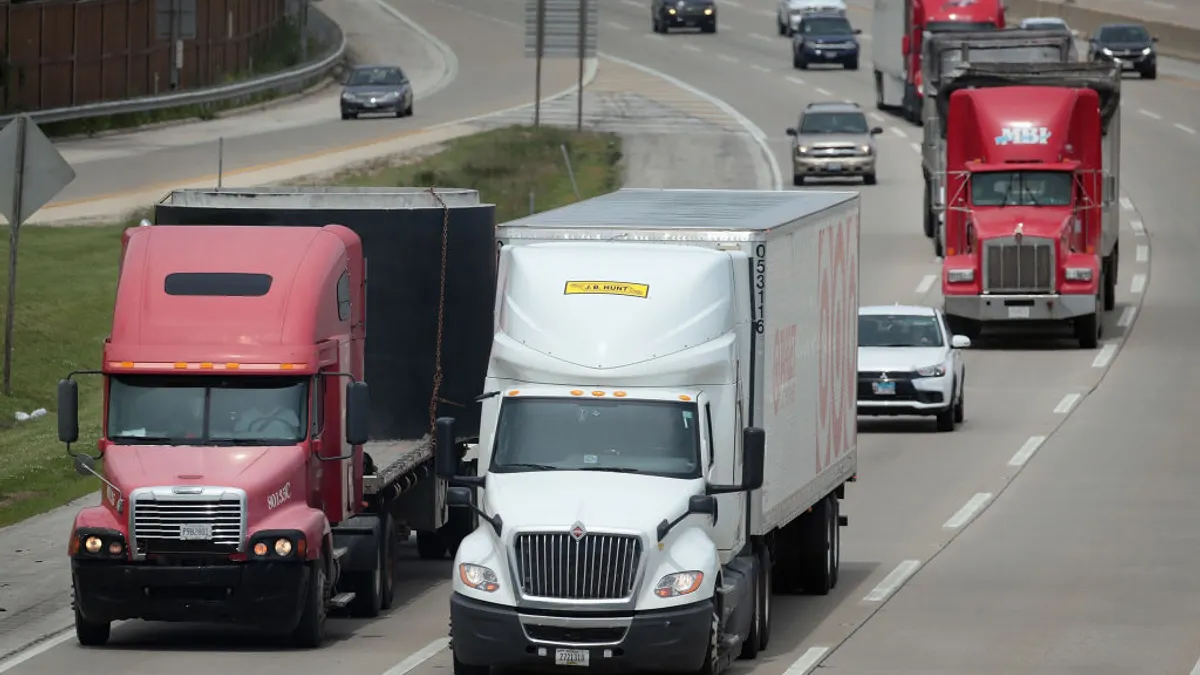
Major trucking carriers like J.B. Hunt and Knight-Swift Transportation Holdings have seen their fleet size decrease over the past year, which may influence their strategy. J.B. Hunt had 63 fewer revenue-producing trucks at the end of Q4 than it did a quarter earlier. Knight-Swift fleet followed a similar trend, reporting a 4.7% drop in average tractor count in Q4 to 21,175 units from 22,208 units the previous year.
“I don’t see the truckload operators really wanting to go out and get more capacity when they have the existing capacity themselves,” Wilson said.
Werner Enterprises did not sway from an opportunity when it announced its acquisition of FirstFleet. Chairman and CEO Derek Leathers said buying the privately held company “comes at an ideal moment for our company.”
Werner noted that FirstFleet’s record of long-term profitability and established relationships in the dedicated segment improves its competitive position in the marketplace.
Another factor weighing on M&A decision making is uncertainty surrounding policy and the economy, according to Aleksandra Maguire, associate director of freight transportation consulting at S&P Global Market Intelligence.
Some dealmaking has already slowed due to tariff uncertainty in 2025. For example, TFI International CEO Alain Bédard in April said the carrier was avoiding any deals “of size,” and had even walked away from a transaction that “was a great transaction for both parties.”
Additionally, unresolved questions around environmental regulations, labor costs and insurance liability all raise the risk profile of acquisitions, she said.
Maguire said buyers are weighing risks especially with today’s market, which means there may be fewer opportunities worth considering.
“For some carriers, this environment may delay selling decisions; for others—particularly those under financial strain—it may force them to seek buyers to avoid bankruptcy,” she said.
Lower borrowing costs to finance deals could factor into decision making, but Maguire said that won’t significantly unlock more trucking industry M&A.
“Long-term capital costs remain elevated compared with pre-2024 levels, and lenders and private equity continue to price in risk carefully,” she said. Maguire added that while interest rate cuts may ease financial pressure slightly, they wouldn’t override the larger structural and market factors at play.
If there are active buyers in the market, Maguire’s outlook concurs with PwC’s Chapman, in that companies seeking deals will be selective and strategic. Transactions that expand access or defensible markets and add specialized offerings could be the foundation for deals this year, she said.
“Refrigerated carriers serving food and pharmaceutical markets, tank truck operators hauling fuels or chemicals, and select LTL operators adjusting to the post-Yellow Freight landscape may present more attractive opportunities than general dry van trucking,” Maguire said.
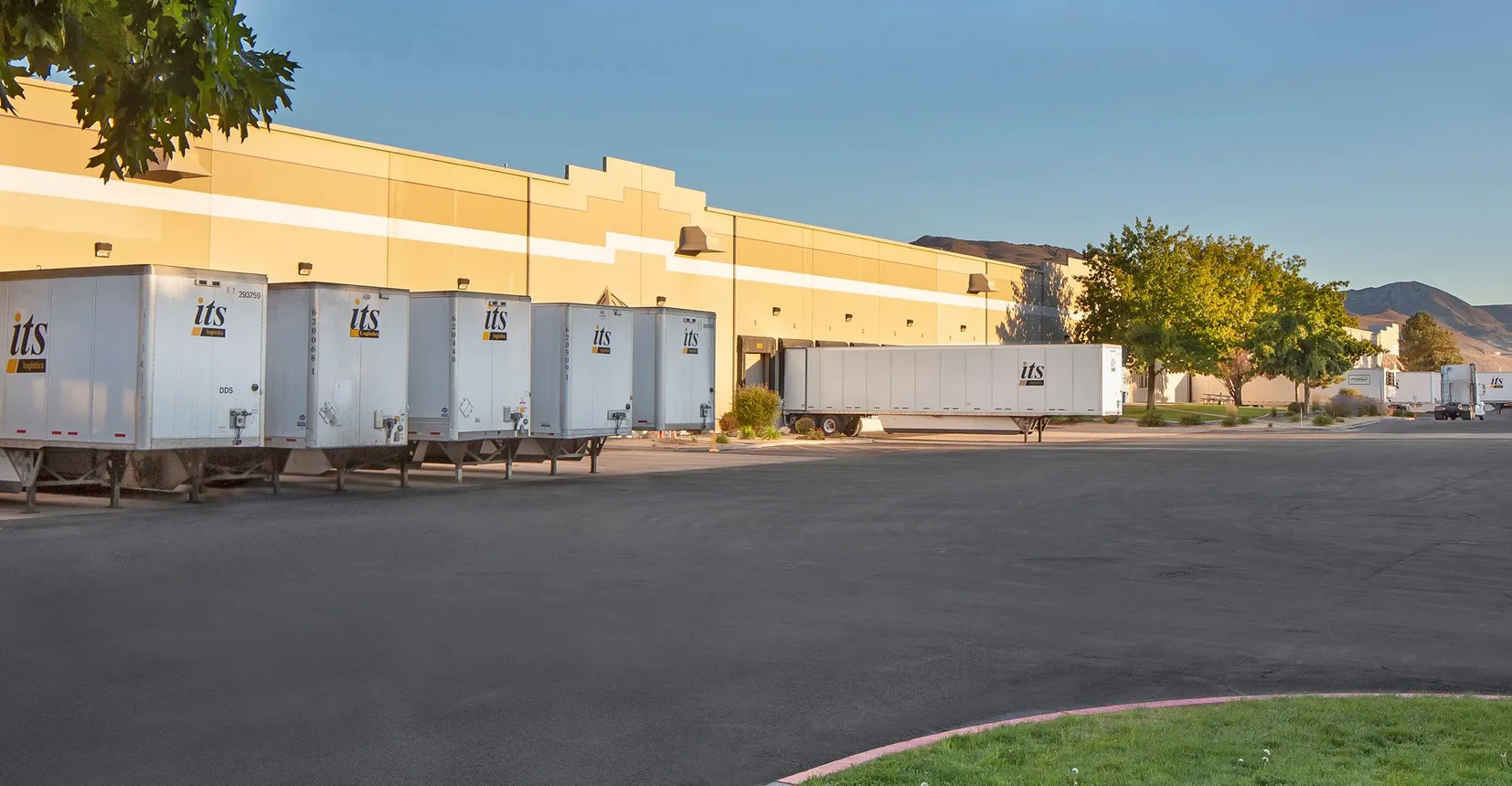
The recently announced deal by Echo Global Logistics to acquire ITS Logistics from GHK Capital Partners LP reflects a combination that is expected to deliver business synergies and service expansion.
Doug Waggoner, CEO of Echo Global Logistics, noted the acquisition represented a “meaningful strategic opportunity” for his company.
Potential buyers and sellers are talking
Whether it will be an active or quiet year for mergers and acquisitions is hard to say for Steve Murray, EVP of professional services at J.J. Keller and Associates, a Wisconsin-based motor carrier consultancy.
However, what he does know is that consulting inquiries in recent months to J.J. Keller has not cooled across its national customer base, even with today’s tepid economic conditions.
J.J. Keller launched a service to aid carriers who acquired trucking companies to integrate equipment and other credentials to ensure things like registrations and titles were in compliance. Ever since, the consulting firm has been busy answering customer requests for transaction advice, according to Murray.
“This kind of M&A work with companies’ assets [was] not something that existed more than two, three years ago,” Murray said. “If that’s any indication to me that there’s been more activity, it certainly would be a good one.”