Editor’s Note: This story is the first installment of a five-part series highlighting intermodal growth in the Chicago area and its impact on trucking. Read the next story here.
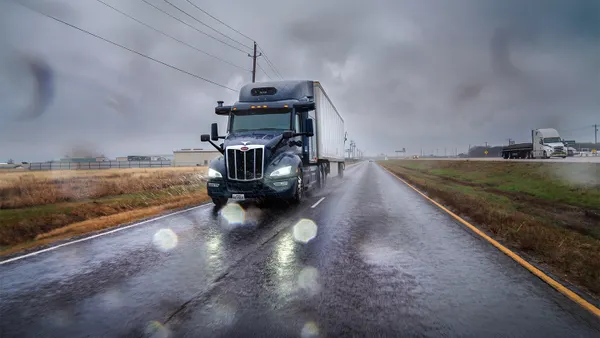
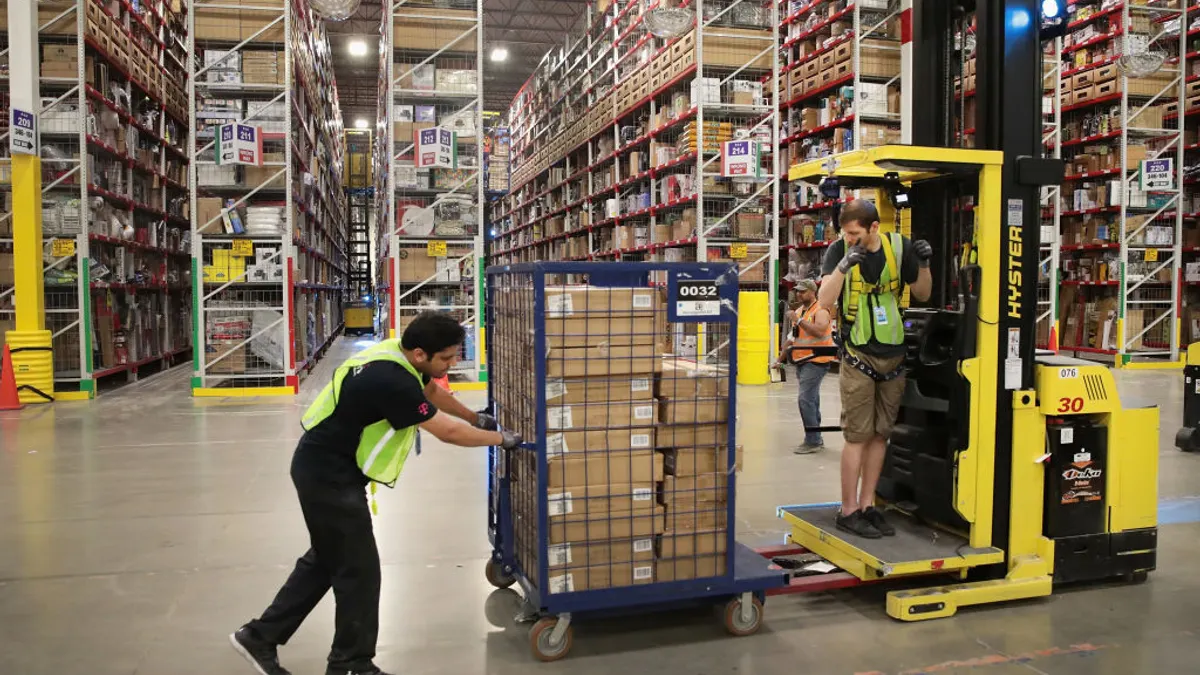
A truck drives out of an Amazon fulfillment center in Joliet, Illinois. Another hauls an intermodal container into a nearby BNSF’s Logistics Park. And another pulls into a Lineage warehouse to pick up a refrigerated load.
It wasn't always like this in Joliet, located in Will County to the southwest of Chicago. About three decades ago, Will County was “pretty much a sleepy” region, said Don Schaefer, president and CEO of the Mid-West Truckers Association. But thanks to the intermodal container, the county’s proximity to Chicago and an embrace of supply chain infrastructure development, Will County has become a “thriving economic hub,” Schaefer said.
What was once a quiet county outside Chicago blossomed into a massive freight epicenter. Today, Will County is home to the largest inland port in North America, three intermodal facilities, four interstates and service from five Class 1 railroads, according to the county’s Center for Economic Development. By one estimate, multimodal freight volumes in Will County are projected to reach 600 million tons valued around $1.2 trillion by 2040.
And because of this rapid and continued growth, Chicagoland trucking companies see opportunities, even in a down freight market. Mike Kucharski, co-owner and VP of Illinois-based JKC Trucking, said volume volatility is among his biggest challenges, but being in the Chicago area has its advantages.
“Chicago is a hub that distributes all over the U.S.,” Kucharski said. “It's kind of nice. No matter where you're coming from, you could pull through Chicago.”
Chicago connects to the West Coast and beyond
Will County’s development is inextricably linked to Chicago’s position as a freight crossroads. The region is also “connected at the hip” to Los Angeles, “because so much infrastructure has been built off that intermodal connection out of LA,” said Dean Croke, principal analyst at DAT Freight and Analytics.
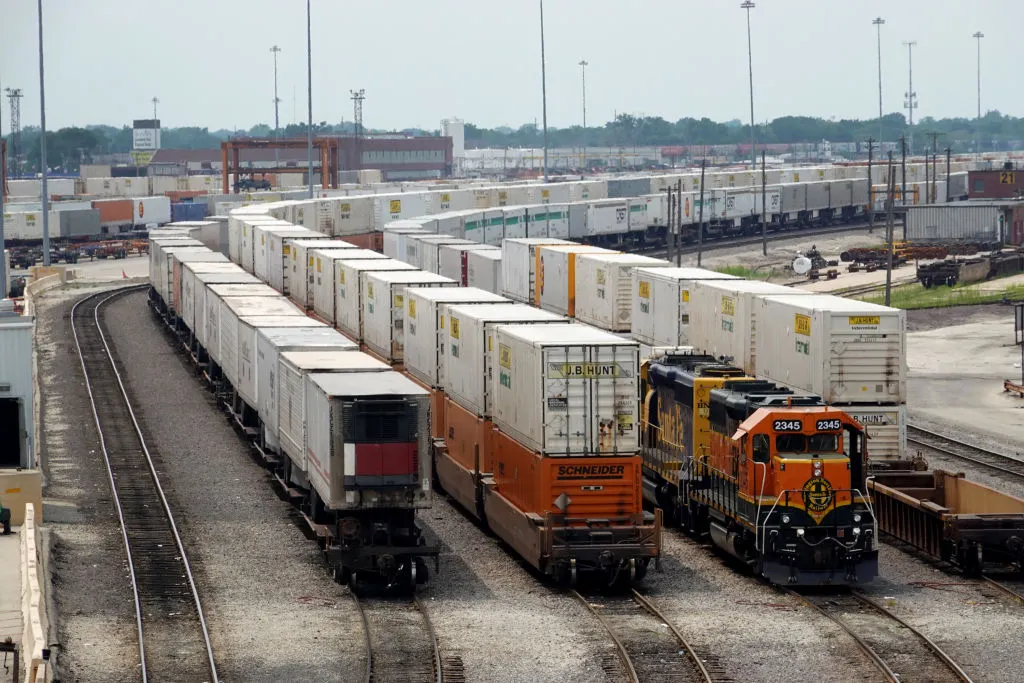
A key catalyst for Will County’s growth was the CenterPoint Intermodal Center in Joliet, which opened in 2010 and later combined with the existing intermodal center in nearby Elwood, Illinois, to create a 6,400-acre intermodal facility. Anchored by BNSF and Union Pacific rail yards, the facility allows containers arriving at West Coast ports to transfer onto trains bound for Illinois, before drayage carriers haul the boxes to their next destination. The massive center drew big-name trucking tenants such as C.R. England, J.B. Hunt Transort Services and Schneider National.
John Schumacher, VP of operations and director of business development at Greenline Express, described Chicago as “the freight equalizer.” The California-based trucking firm offers reefer LTL transport daily between the West Coast and Midwest. Food ingredients move in from California to Chicago, and finished goods move out, which helps to balance loads in both directions, Schumacher said.
Kimberly Maes, president of flatbed and specialized at Wisconsin-based Roehl Transport, said Chicago is a strong market with consistent freight.
“It’s a headhaul market. It’s a producer,” she said, versus the coasts that can be more cyclical and dependent on imports for freight movement. “It’s going to be feast or famine” on the West Coast depending on imports and tariffs, Maes said.
“From a trucking perspective, the Midwest really is a good sweet spot,” she said.
Expansion leads to growing pains
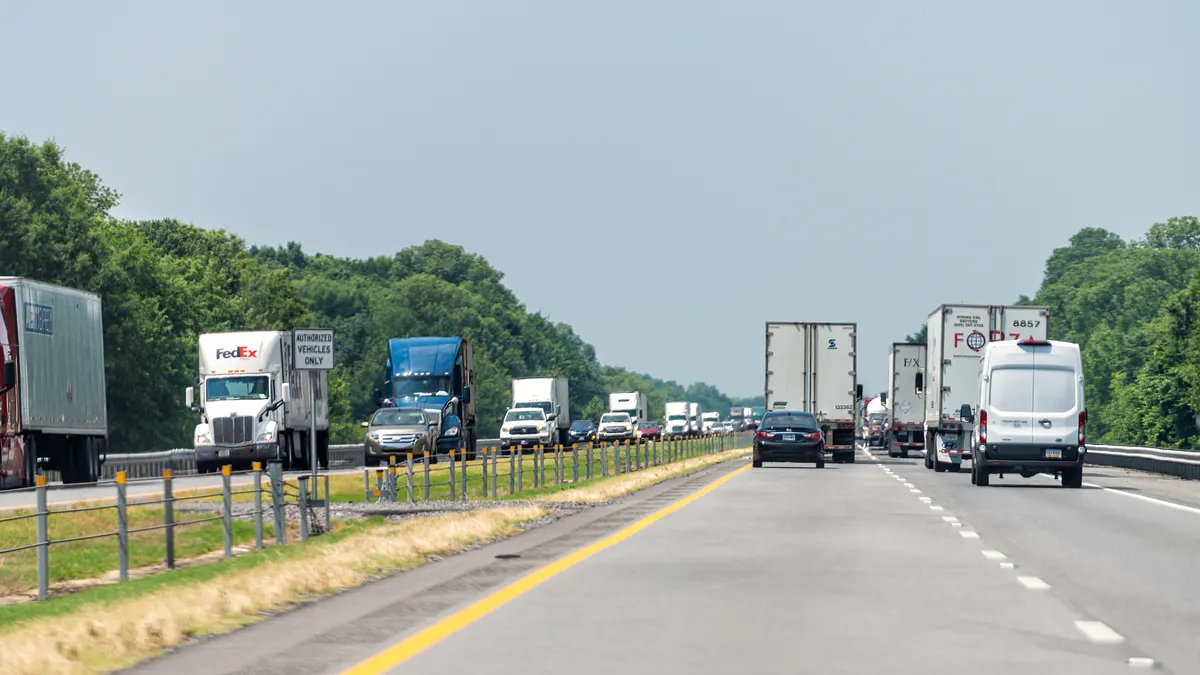
Will County’s expansion has not been without challenges. As supply chain and intermodal infrastructure developed, traffic worsened for residents and motor carriers in the region. Schumacher identified ramp and yard congestion among the key challenges of operating in Chicagoland.
“Chicago’s peak-hour traffic and rail ramp queues can steal half a shift,” he said.

Evan Shelley, co-founder and CEO of Truck Parking Club, said traffic is prevalent “around principal freight routes like I-55, I-80, and I-70” — the first two of which traverse through Will County. The traffic “adds unnecessary inefficiencies to the entire supply chain,” Shelley said.
On top of that, drivers may spend an hour or more looking for a parking spot due to “insufficient” truck parking availability in the Midwest, Shelley added. The Illinois Department of Transportation assessed Will County’s I-80 truck parking needs as “high.” In District 1, which includes Will County along with Cook, DuPage, Kane, Lake and McHenry counties, there are 10 truck parking facilities, 40% of which are above capacity or consistently full.
The challenges could amplify as truck movement grows. By 2050, truck miles traveled in Will County are anticipated to increase 57%, and some interstates are expected to see more than 9,000 trucks daily by 2050.
Some local residents have resisted further development, not wanting the noise and pollution that come with increased truck traffic.
“There’s a lot of NIMBY syndrome — people who did not want the growth,” Schaefer said, referring to the term “not in my backyard,” when residents opposed local real estate or infrastructure development.
Going forward, Will County aims to strike a balance between encouraging continued supply chain investment and protecting residents and the environment. In its 2050 transportation plan, it acknowledges freight movement is “essential” to the region’s economy and has brought jobs, but the county government also recognizes the downside of increased traffic. The goals are to modernize intermodal facilities, plan transportation infrastructure to accommodate freight growth, and move some freight traffic off of trucks to rail or barge — all while preserving residents’ quality of life.
“The fact is, all this development through logistics has brought in tons of revenue, and it’s given the whole region an economic boost,” Schaefer said.