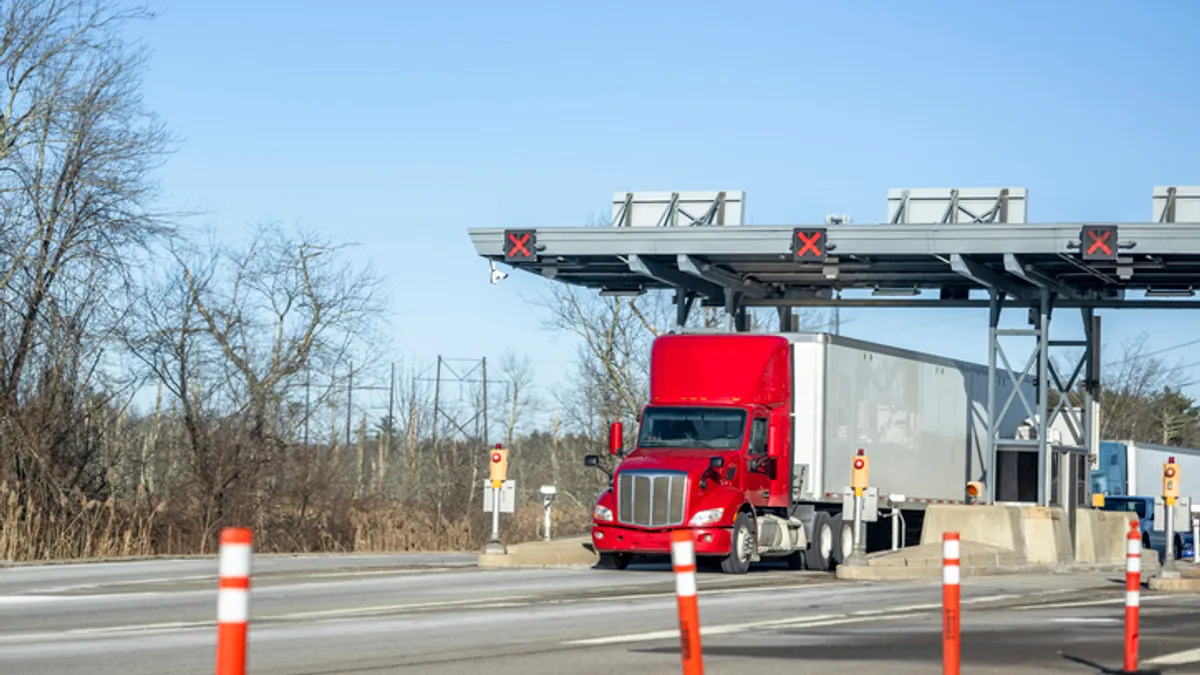

As toll rates climb in 2026, many trucking companies are feeling the effects. Some toll authorities have raised rates by as much as 10% this year, with additional route- and axle-specific increases adding to the pressure. These increases hit the bottom line, of course, but the impact is just as intense in the back office, where undocumented amounts of time and effort go toward toll paperwork and violations instead of high-value work.
“There’s always pressure to reduce toll, but it’s a very difficult thing to control without centralized visibility,” says Heather Shedd, VP of Sales-SE at Fleetworthy. “Companies are up against a curve: Mitigating expenses only goes so far when costs keep rising.”
How can you manage something that will cost you more, no matter what you do?
Begin by focusing on what you do have influence over: who owns toll work, how the work is done, and how much visibility you have into the charges hitting your fleet.
The Hidden Burden of Toll Administration
Organizations often underestimate the burden of toll administration: paper mail to sort, multiple portals to manage, and calls to tolling authorities to investigate and manage disputes. They don’t realize how many hours are spent moving paper around.
On top of that, teams rely on patchworks of regional providers, spreadsheets, and paper invoices as they try to keep up with what they owe. Even if they have regional toll services, they’re still buried in paperwork and follow-ups.
On the frontlines, staff are very aware of how much toll work has crept into their day, but they’re not sure how to fix it (or if it can be fixed at all). They’re busy juggling core business responsibilities like fleet safety and driver scheduling while sorting through toll notices and violations as an additional task. Typically, within organizations there isn’t one person that owns toll from end to end, so it’s treated like a game of “hot potato,” often passed between operations for approval and finance for payment. When the toll violations are received or processed late, they can have significant impact on the bottom-line, often increasing the complicated process and ability to properly allocate (or recoup) the spend.
“Toll transactions are happening whether anyone owns the process or not,” says Shedd. “The paper violations still arrive, and someone is dealing with them, regardless of what’s actually owed,” explains Shedd. She recently spoke to a company that processes close to 350 paper violations each month. As the violations show up, they’re processed and paid. But because the toll process is so messy and decentralized, the company has no way of knowing whether those violations are correct or valid.
What Reactive Toll Management Costs You
Disjointed approaches may keep things moving for a while, but something will eventually force the issue. Maybe it’s a demand from a nearby state for thousands in outstanding tolls and violations/fees to be paid before they place a hold on vehicle registrations. Maybe it’s months of late-posted tolls hitting a single location’s P&L at one time.
Either way, the cost of inaction exceeds the cost to properly manage tolls.
“If you operate company-owned assets, then locations or profit centers are taking a big hit on profit when they get thousands of dollars in late posting toll,” explains Shedd. “If you use contractors or owner-operators, the lapsed time impacts your ability to properly rebill tolls to the right person. In many cases, people have moved on, leaving you to try to collect on something that happened six months ago from an individual no longer associated with your organization.”
Without centralized visibility and management, it’s extremely difficult to:
- Catch duplicate charges
- Understand route‑level toll costs
- Decide when a different lane or customer mix would improve margins
- Identify which plates rack up the same violation every week
- Hold the right people accountable when charges can’t be traced
- Monitor spending and risk at the enterprise level vs. location by location
A Case for Coast-to-Coast Toll Coverage
What’s the alternative to working this way? At a minimum, it’s as simple as securing coast-to-coast toll coverage.
- For drivers, this means fewer stops, no worries about reporting missed tolls to get them paid, and more focus on driving and safety.
- For workers in the office, it means no more paper toll or violations driving up operational costs. Teams don’t have to sit on the phone with agencies trying to resolve issues.
The right toll management solution goes beyond paying tolls to also protect assets, reduce paper violations, and deliver visibility. You can determine where every transponder is, which plates generate recurring violations, and where dollars are lost to poorly optimized routes.
Where Toll Management Leads Next
For fleets that want to go beyond basic cost control, the answer is to treat toll management as a strategic cost center and recognize that it’s part of a larger ecosystem of operational efficiency.
Many of the problems that make toll messy also show up in weigh station activity and fleet compliance. Both pull time and attention away from core responsibilities and influence how often trucks are stopped, the risk they carry, and operating costs.
But they can all be managed through a single connected solution.
For example, Fleetworthy provides the largest weigh station bypass service in North America. It cuts unnecessary scale stops and transforms your fleet's safe driving and compliance into tangible rewards. Eligible trucks are waved through more often thanks to lower safety scores from the Federal Motor Carrier Safety Administration (FMCSA), drivers can spend more time driving and less time idling, while flee save approximately $11.96 per bypass.
Its comprehensive fleet and driver compliance platform is the final piece of the puzzle, including licensing, permitting, registration renewals, driver qualification files, asset management and much more.
Fleetworthy brings together safety and compliance, toll management, and weigh station bypass solutions to simplify operations and reduce costs. The result is a fleet that stays moving, and an office that spends more time on what matters.
Fleetworthy offers the only fleet technology with safety, compliance, toll, and bypass, plus North America’s largest coverage.
No other provider gives you the ability to bypass weigh stations, pay tolls, and keep your drivers safe and compliant, all in one place.