Major carriers are optimistic that the long-awaited market recovery is sustainable, but shrinking driver supply continues to pressure capacity, particularly for drayage services, according to recent earnings calls.
This summer, companies including J.B. Hunt Transport Services, Schneider National and Knight-Swift Transportation Holdings noted this concern while reporting strong Q2 revenues and improving market conditions.
Government initiatives to change processes and regulations on the issuance of commercial driver’s license is one hurdle for prospective new drivers to overcome. Another is a crackdown on CDL schools for possible violations of Federal Motor Carrier Safety Administration standards. Additionally, several states have been threatened with possible loss of federal funding over compliance issues with non-domiciled CDLs.
As the driver pool continues to be tested, carriers say the trend is limiting their ability to pursue new business. Meanwhile, capacity pressure and rising fuel costs have shifted more shippers to intermodal, experts have said.
Despite the challenges, in recent earnings calls, trucking executives have touted efficiency strategies to maximize operations and limit the need for outside drayage services as a way to retain customers and secure new business. Here’s more of what they had to say:
Schneider President and CEO Jim Filter
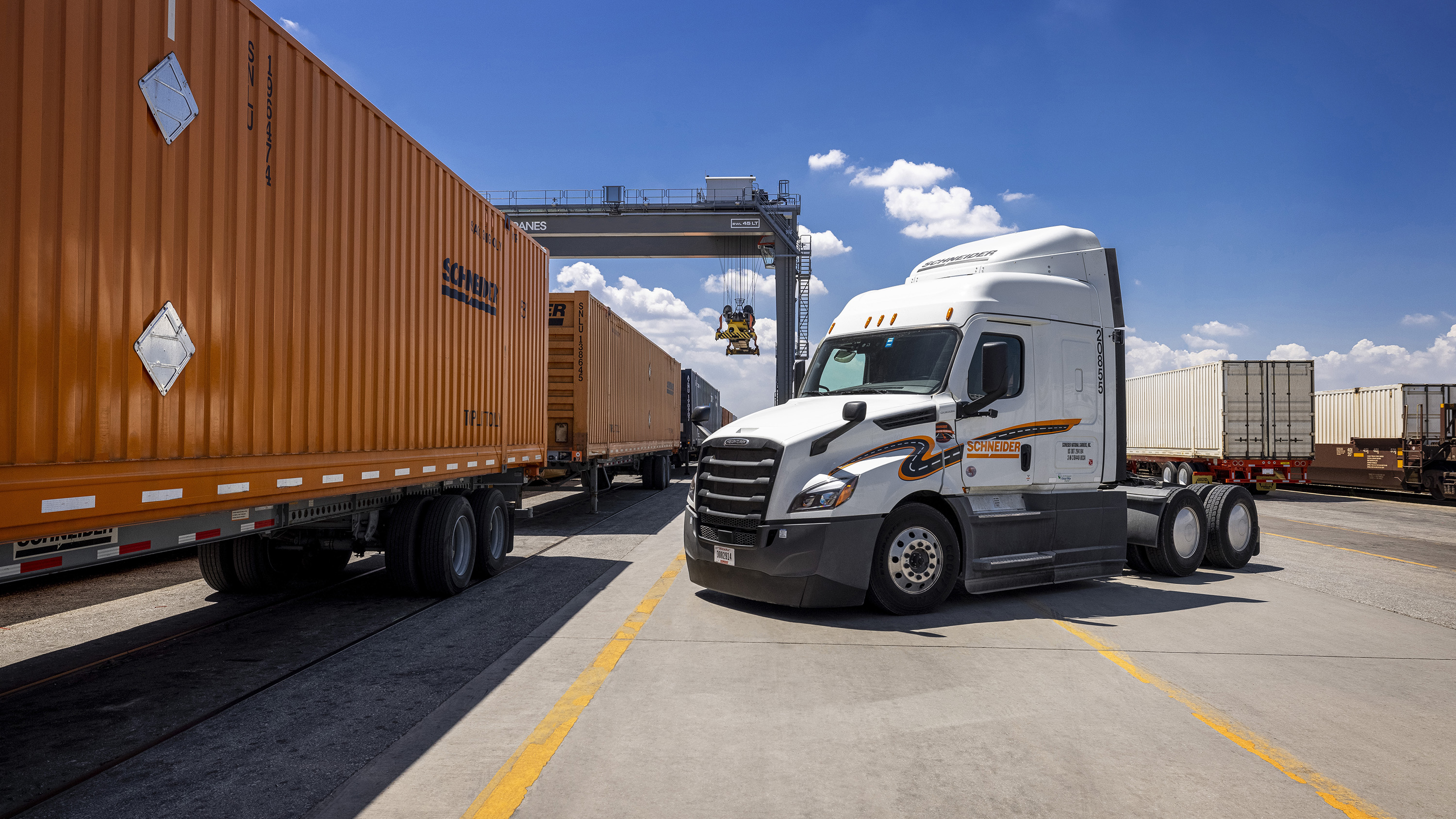
“In Intermodal, second quarter results underscore the efforts we have made and continue to make to prioritize profitable growth,” Filter said during a call with analysts. “Over-the-road conversion opportunities expanded in the quarter, but as expected, drayage has become the primary constraint.
“Realizing nine consecutive quarters of volume growth, we remain disciplined in the second quarter. We elected not to chase growth that would have required expensive third-party dray when pricing was not yet supportive of the incremental cost. We are growing in areas where returns are commensurate with our service and cost as evidenced by the strong growth in Mexico and in the East, where there are the most significant over-the-road conversion opportunities, and we have clear differentiation.”
JB Hunt EVP and President of Intermodal Darren Field
“We remain confident in our rail providers' commitment to service and our collective ability to support higher volume levels while maintaining dependable and reliable performance,” Field said in a call with analysts. “The same supply challenges affecting truckload capacity are impacting the drayage market, where driver availability remains tight, and we are working diligently to attract quality drivers to support our growth.
“In this environment, our in-sourced drayage strategy is a meaningful competitive advantage. By owning our tractors, containers and chassis and utilizing primarily company drivers, we maintain greater control of the customer experience while reducing reliance on more costly and less reliable third-party drayage capacity.”
Knight-Swift Treasurer and SVP of Investor Relations Brad Stewart
“While outside drayage service is affected by the constrained driver market, we outsource only a low single-digit percentage of our drayage needs, which should provide some insulation from the tightening in drayage capacity,” Stewart said in a call with analysts. “Though the intermodal pricing environment remains more competitive than truckload, we are encouraged by ongoing opportunities to leverage our strong service performance and our truckload relationships to continue growing our volumes at improving rates.
“Our pipeline is strong and supported by mini bid and turnback bid activities as well as modal conversion opportunities. We remain focused on delivering excellent service and driving appropriate returns through growing our load count with disciplined pricing through cost control, network balance and equipment utilization.”