Dive Brief:
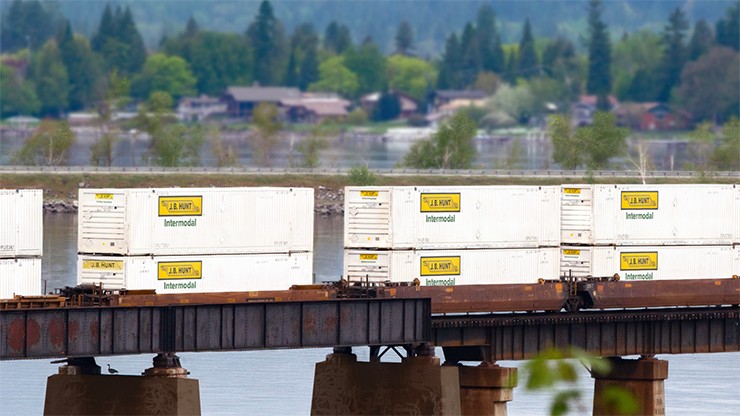
- J.B. Hunt Transport Services on Wednesday reported Q2 revenues jumped 19% year over year to $3.5 billion, driven by increased load volumes across most segments, including intermodal.
- The carrier reported intermodal operating income surged 22% to $1.75 billion from segment volumes rising 10% YoY to more than 578,000 loads, setting a quarterly record, Darren Field, EVP and president of intermodal, said in a call with analysts. He added it was the segment’s first double-digit growth quarter in over a decade.
- “We continue to see significant road-to-rail conversion opportunities in the East, particularly as rising truckload rates, fuel prices and tightening truckload capacity make intermodal an increasingly attractive solution for shippers,” Field said.
Dive Insight:
Tightening trucking capacity and rising rates have pushed shippers to intermodal in recent months.
J.B. Hunt reported intermodal gross revenue increased 11% per load YoY from higher fuel surge revenue, customer rates and changes in freight mix. Excluding fuel surcharge, revenue per load increased 1% from the prior year, the company said.
Spencer Frazier, EVP of sales and marketing, said the company’s strongest area of customer engagement centered on highway to intermodal conversion, dedicated fleets and access to safe and reliable capacity. He added customers initiated more out-of-cycle mini-bids as they sought to keep pricing aligned with rising capacity costs.
The company has been working on productivity improvements across its operations. In its intermodal segment, for example, the carrier has seen a reduction in empty container moves and lower container storage expenses, per its earnings release.
While J.B. Hunt welcomed intermodal’s Q2 performance, Field said the carrier’s focus is to remain disciplined to ensure growth is sustainable over the long term. The company noted it had available intermodal capacity, possibly 10% or more.
Field said the carrier is actively engaged with its rail providers on resource planning to support current and future needs as volumes have accelerated. He added conversion activity is experiencing levels not seen in more than a decade.
What may affect the carrier’s intermodal surge is driver availability, which has been impacted by heightened enforcement of commercial driver license issuance.
Field said driver shortages impacting truckload capacity have trickled into the drayage market.
“In this environment, our in-sourced drayage strategy is a meaningful competitive advantage by owning our tractors, containers and chassis and utilizing primarily company drivers,” he said.
Limiting its use of third-party drayage capacity gives the company more control to maintain the customer experience, Field said.
President and CEO Shelley Simpson said on the call that the company’s available capacity in its segments means more opportunities.
“What makes it great for us to work with our customers is we can help them with conversion into intermodal,” she said. “We can build better fleets for them, and we have plenty of capacity to help them on the highway and final mile side.”