Dive Brief:
- A federal appeals court rejected requests to temporarily pause the Federal Motor Carrier Safety Administration’s non-domiciled CDL rule. Non-domiciled is a special category given to a foreign driver who is legally present in the U.S., and those drivers may make up as much as a quarter of for-hire and private motor carriers.
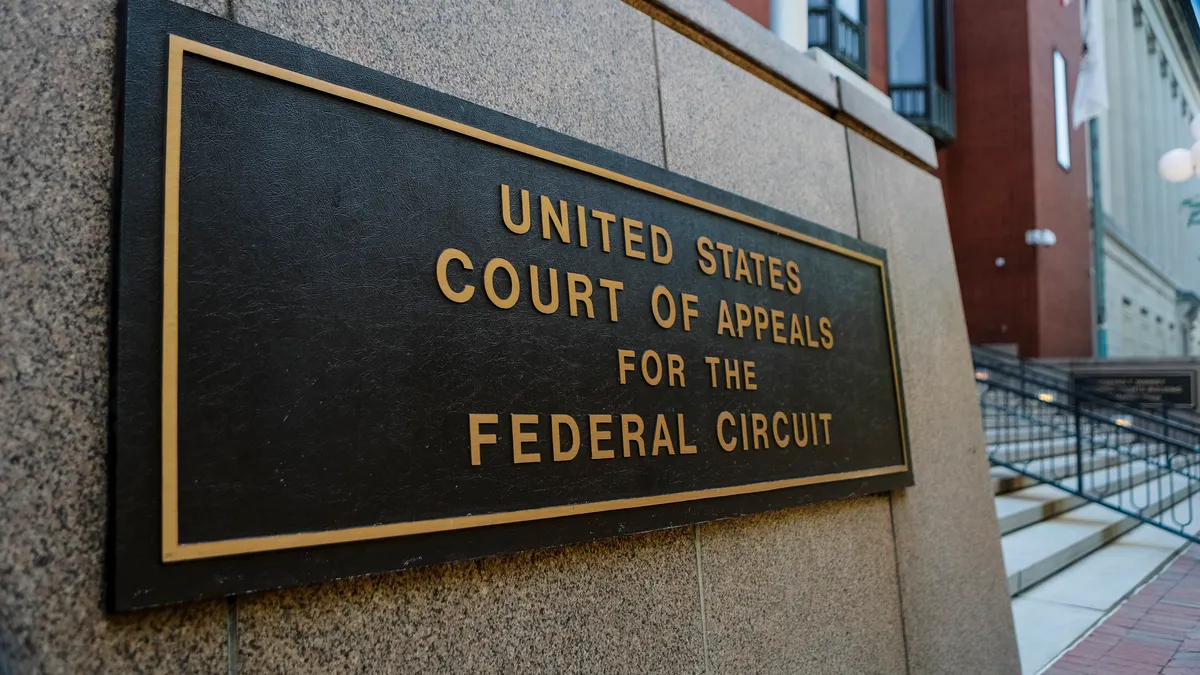
- The Tuesday order suggests judges with the U.S. Court of Appeals for the District of Columbia Circuit are questioning whether the parties suing the federal government will succeed. “Petitioners have not satisfied the stringent requirements for a stay pending court review,” the appeals court said in its order.
- The order means the case will continue to unfold with the rule intact, and there’s “at least fairly contestable” dispute over the issues, judges said. Briefs are due on dates ranging from June 15 through Aug. 5.
Dive Insight:
The new regulation has the ability to slowly sideline most noncitizens from trucking, where affected drivers represent about 97% of the country’s roughly 200,000 non-domiciled CDLs, according to the final rule from February.
Drivers eligible to remain in the workforce must have an I-94 admission form as well as an unexpired passport and belong to one of three employment-based immigration categories.
Those categories are H-2A (temporary agricultural workers), H-2B (temporary non-agricultural workers) and E-2 (treaty investors) nonimmigrant status holders.
That’s a change from when the federal government allowed employment authorization documents to approve non-domiciled CDLs. FMCSA audits have alleged states such as Illinois, North Carolina and Pennsylvania were not properly issuing and renewing non-domiciled licenses. The agency has suggested that state clerks are misreading immigration codes on EAD forms, according to the appeals court.
“In contrast, I-94 forms convey that information in plain English,” the appeals court order noted.
A key issue in audits, which have threatened states’ funding, involves whether a federal immigration document expires before a non-domiciled CDL does. But some states have pushed back with lawsuits over whether they should really lose the money.
The agency also says the new rule strengthens identification requirements and seeks to make the roads safer. The rule also involves commercial learners’ permits.
The rule can come into force particularly when non-domiciled CDL holders seek to renew their licenses. Affected drivers could “exit the market over the course of the next five years,” the FMCSA said in its rule.