Just like a cracked or foggy windshield, corporate security can have visibility issues with fragmented systems.
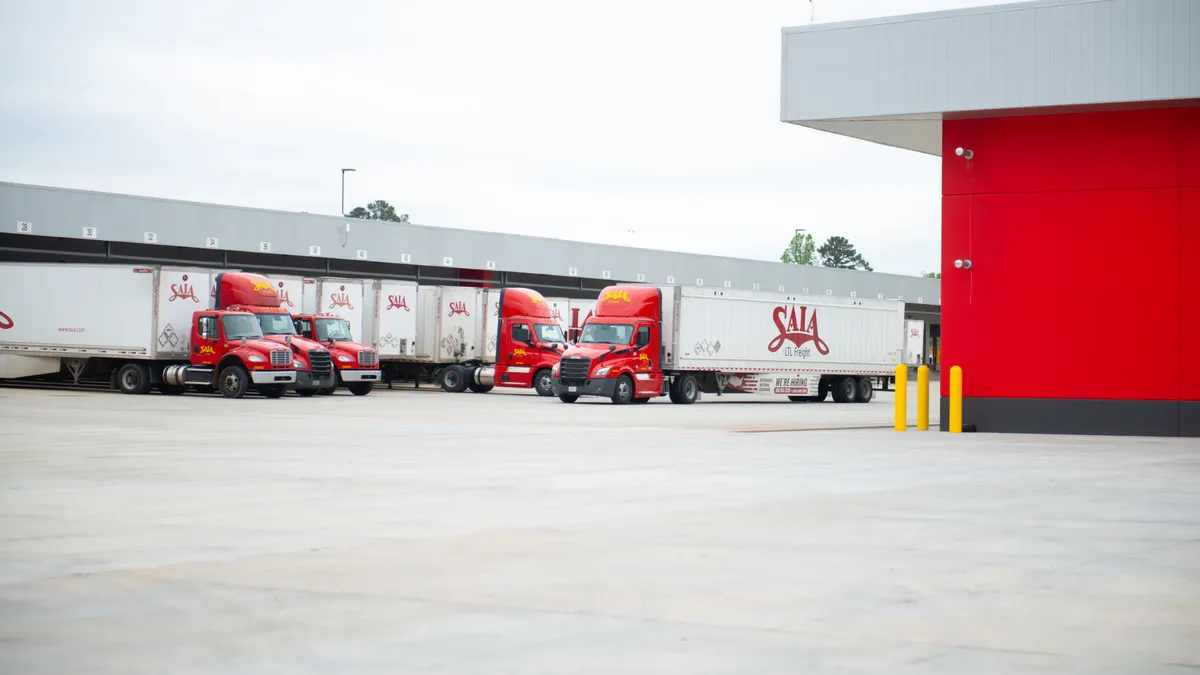
Connecting discrete systems for improved oversight was a key reason why Saia transitioned over 10,000 physical security assets, such as cameras, access control systems and intercoms, to connect through SecuriThings’ device management platform, according to the carrier’s senior director of corporate security, Jason Bain.
That transition in early 2025 gave the LTL carrier a “single-pane-of-glass view” to centrally monitor the health, status and performance of those items, Bain said in an email to Trucking Dive.
“With our other tools, you'd have to log into different individual sites or locations to be able to actually check the health status of those,” Bain said on a SecuriThings webinar. The carrier also had to manually track changes on spreadsheets in a time-consuming process, he said.

The upgrade means the carrier can see statuses, compliance and vulnerabilities with the touch of a button, Bain noted.
Without proper security, carriers are exposed to costly cargo thefts. Such crimes can cost the industry an estimated $18 million per day, the American Transportation Research Institute said in a report last year.
Adam Blanchard, co-founder and CEO of Double Diamond Transport and Tanager Logistics, told U.S. senators last year that strategic cargo thefts have rapidly risen 1,500% since Q1 2021.
Legislators have taken note of such impacts. Multiple bills are moving through Congress, such as one calling for the develoment of automated systems to flag suspicious registrations and another pushing to create a coordination center to focus federal responses to supply chain crime.
Similarly, cybersecurity threats continue to keep carriers on alert. The average data breach costs a transportation company some $4 million on average, according to a 2025 report from IBM.
For Saia, the centralized SecuriThings platform helps make sure devices like cameras are up and running to protect employees as well as the company in the case of lawsuits.
“Especially with the growing threat landscape on the cyber side, you can’t wait,” Bain said. “We're always trying to stay one step ahead.”