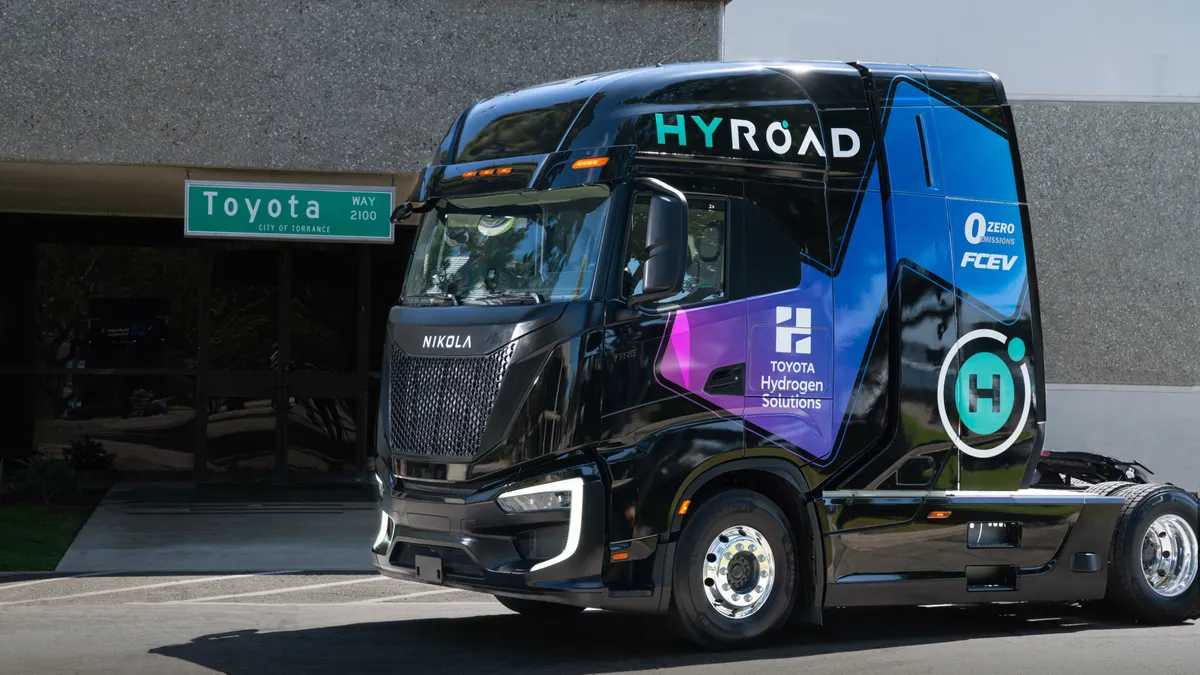
Toyota plans to build a hydrogen fueling station in Southern California at its North American Parts Center and use Hyroad Energy hydrogen fuel cell Class 8 trucks to deliver cars and parts.
“We're building our first ever hydrogen fueling station,” Jason Zahorik, Toyota Hydrogen Solutions’ general manager, told Trucking Dive.
The businesses announced the development on Monday during the ACT Expo for its Ontario, California, property, and Zahorik said the fueling station could be in place by early 2027. A state business guide notes construction for such hydrogen projects tend to take about nine months after planning and building reviews, which average around 10.5 months.
“This station will be open to non-Toyota fuel cell customers as well,” Zahorik said.
The move reflects Toyota’s commitment to decarbonize, which includes eliminating emissions by 2050 at manufacturing hubs. The company says it sees commercial trucking as a “critical proving ground for that ecosystem at scale.”
In the meantime, mobile fueling stations will allow the manufacturer to jump-start hydrogen transportation operations.
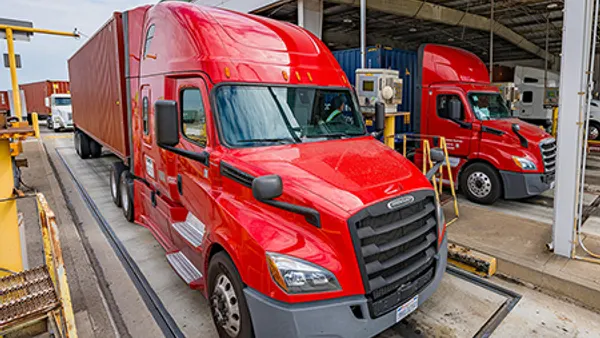
Hyroad is providing 40 heavy-duty trucks in the partnership, where Toyota logistics teams will assist with hauling vehicles from the port to dealerships and moving parts within the company’s ecosystem, Zahorik noted.
Hydrogen fuel cell trucks take about 15-20 minutes to fill and have an approximate driving range of up to 500 miles, but unlike diesel semi-trucks, the only local emission is water vapor, a news release said.
“I think with this infrastructure that's being established and the scale of the deployment, it really creates a foundation for future hydrogen mobility growth,” Hyroad founder and CEO Dmitry Serov told Trucking Dive.
Texas-based Hyroad, which provides trucks as a service, acquired over 100 hydrogen fuel cell trucks last year from Nikola Corp., intellectual property and other assets after the latter filed for Chapter 11 bankruptcy.
“We provide the truck, the maintenance, the access to fueling it, all in a bundled lease,” Serov said. “There's no upfront capital burden for the customer.”