Dive Brief:
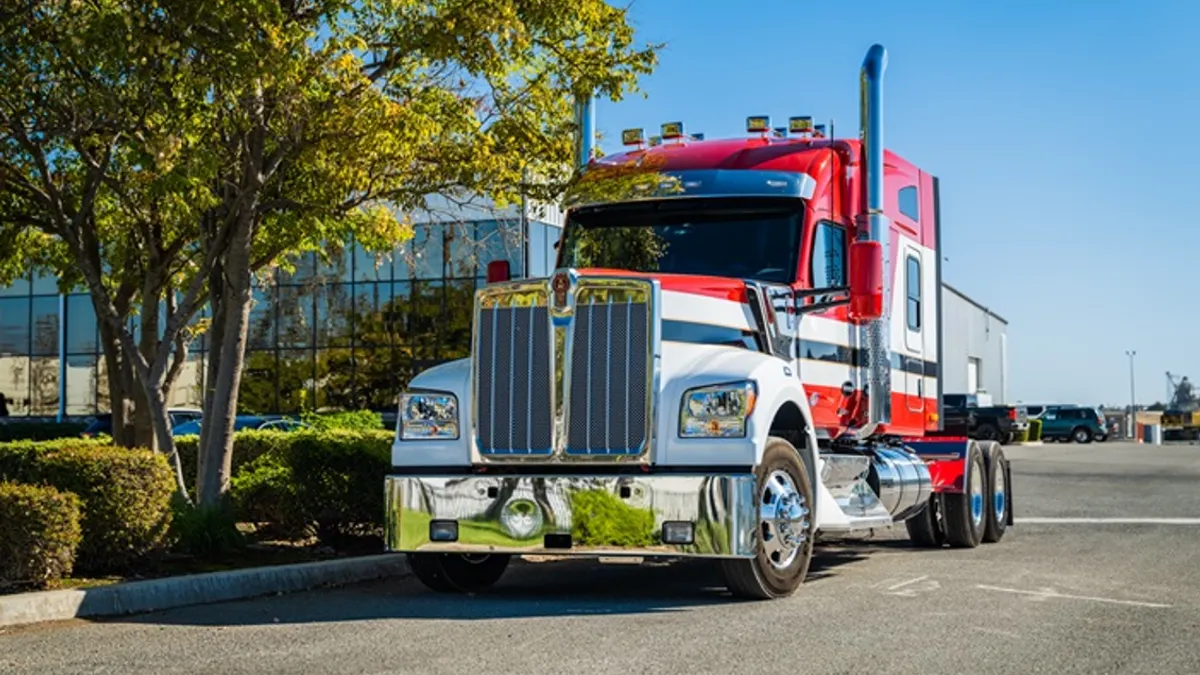
- Paccar will begin to update the software on trucks equipped with MX-11 and MX-13 engines following the Environmental Protection Agency’s revised guidance on diesel exhaust fluid inducements, according to a July 6 press release.
- Trucks built after July 20 will come equipped with the new software, while trucks produced after 2018 can receive the update at Kenworth and Peterbilt dealerships.
- The software is designed to improve reliability and minimize operational disruptions by raising the final inducement speed limits and lengthening the time drivers have to address certain emissions-related issues before speed restrictions take effect.
Dive Insight:
Paccar is the second major manufacturer to roll out software upgrades since the EPA updated its guidance in March, allowing manufacturers to use alternative monitoring technologies, including software-based approaches. The agency said the revisions are intended to improve system reliability while maintaining emissions compliance.
Under the updated guidance, Paccar’s software increases the final inducement speed limit from 5 miles per hour to 25 miles per hour, the release said. Drivers will also have 160 hours, up from five, to repair component or diesel exhaust fluid quality issues before reaching the final inducement speed limit.
Daimler Truck North America announced plans in June to update about 330,000 trucks. New Freightliner and Western Star vehicles are already being built with the updated software.
While the EPA’s recent guidance was expected to provide relief to trucking and agriculture businesses that have reported malfunctions with DEF sensor equipment, the agency last week announced a proposal that would revise portions of its 2023 heavy-duty nitrogen oxide regulations, including eliminating DEF-related engine derates and vehicle speed restrictions on newly built trucks.
Still, industry groups earlier this year, including the American Trucking Associations, welcomed any regulatory relief.
“EPA’s decision to provide manufacturers with flexibility to suspend these inducements — and eliminate problematic sensors altogether by monitoring a truck’s actual emissions — is a pragmatic solution that reflects how these systems perform in the real world,” Patrick Kelly, ATA VP of Environmental Affairs, said in a March statement.