Dive Brief:
- California’s legal challenge of a federal funding loss over approximately $160 million, slated to begin Oct. 1, is moving through a U.S. appeals court, after both state and federal attorneys laid out opening and final briefs and replies.
- The case centers on whether the state improperly carried out rules and compliance of commercial driver licenses for immigrants, known as non-domiciled CDLs. The Federal Motor Carrier Safety Administration determined in early January that lapses and a failure to meet a corrective action plan on Jan. 5 meant the state would lose out on the upcoming transportation funding.
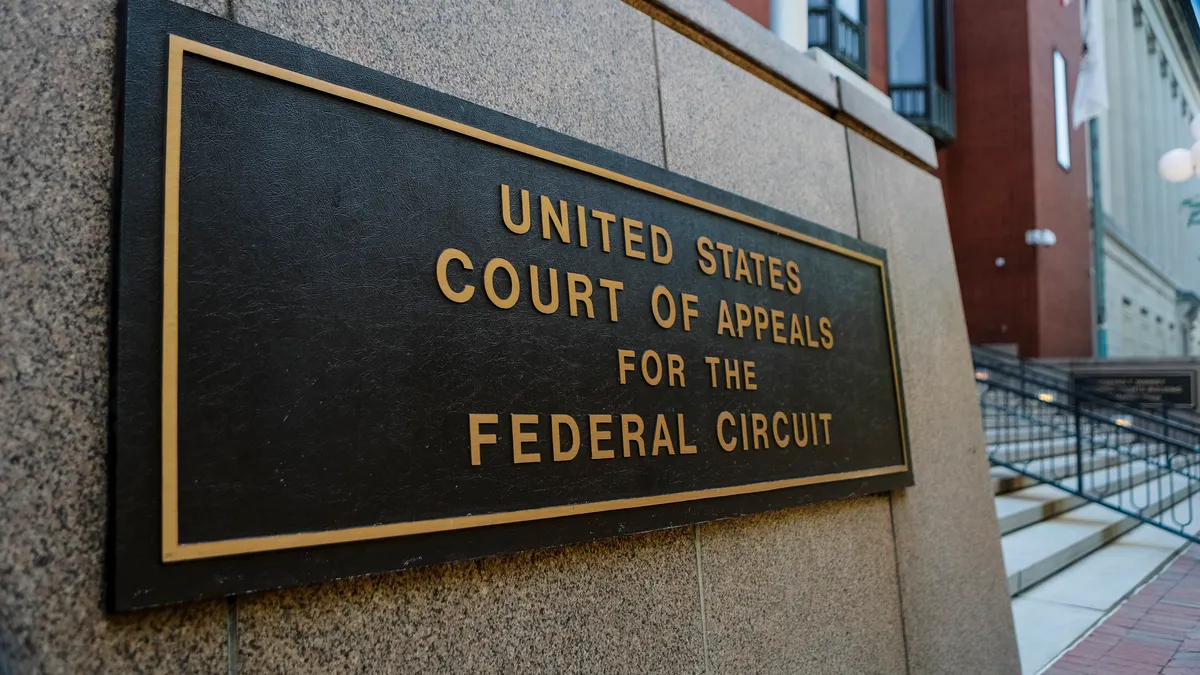
- The case is set for oral arguments on Sept. 11 before the U.S. Court of Appeals for the District of Columbia Circuit. The clash could have implications for other states that have received similar funding threats, notably New York state, which the federal government declared would lose $73.5 million.
Dive Insight:
Tied to the issue is a Northern California trial court case seeking class-action relief for truckers with non-domiciled CDLs who received letters that their licenses would be canceled March 6.
An Alameda County Superior Court judge noted some 20,000 non-domiciled CDLs were being affected. The court ordered the state Department of Motor Vehicles to allow individuals who received cancellation letters to reapply, and it further required the state to process those applications.
Noncanceled commercial licenses in California “remain valid until their expiration dates printed on the cards,” the state told Trucking Dive in an email. But California is currently not issuing non-domiciled CDLs due to a directive from the FMCSA.
“DMV is not allowed to reissue non-domiciled CDLs without federal approval,” the state said in the email.
The federal government notes the state agreed to a corrective action plan in late 2025 but then unilaterally changed that 60-day timeline, which would have ended in early January, according to opening and final briefs. An FMCSA review of California in 2025 found improperly issued licenses and deficiencies.
The state and federal government are clashing over whether California failed to meet federal regulations. The FMCSA says those roughly 20,000 non-domiciled were improperly issued “because the expiration date of the license exceeded the applicant’s period of lawful presence."
The agency further noted that a state cannot issue a CDL for up to eight years when an employment authorization or lawful presence status “expires the next day,” lest it create “a ‘paradoxical’ result.”
California has been challenging that argument in opening and final briefs, saying there’s “no federal law requiring non domiciled CDLs to expire on or before the date on a driver’s legal presence documents.” Instead, the state says it was canceling CDLs with expiration date and legal presence documentation issues based on its own state rules, rather than federal ones.
“California Department of Motor Vehicles (DMV) complies fully with federal law governing expiration dates,” the state said. “States are permitted to regulate the validity periods for CDLs issued in their respective jurisdictions so long as they comply with the federal maximum validity periods.”
Meanwhile, the FMCSA set forth an interim final rule on non-domiciled CDLs in September as well as a final rule earlier this year to tighten licensing standards, citing safety concerns.
“While domestic CDL applicants face rigorous driver history checks through the Commercial Driver's License Information System (CDLIS) and the Problem Driver Pointer System (PDPS), non-domiciled applicants were previously processed without equivalent checks on their foreign driving history,” the FMCSA said in its rule.
“This effectively shielded unsafe driving behaviors—including serious violations or fatal crashes—simply because they occurred outside the reach of U.S. databases,” the agency said.