Dive Brief:
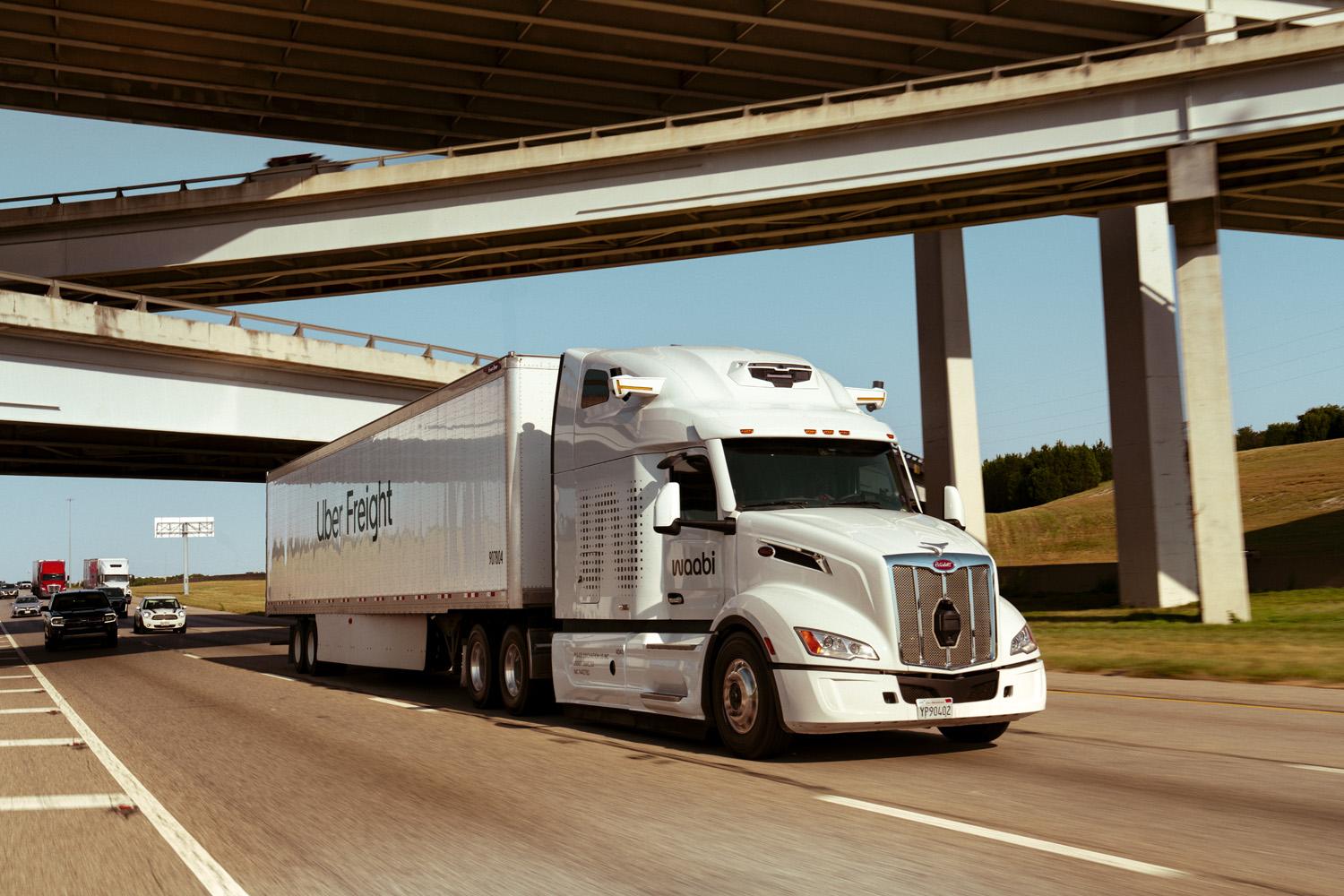
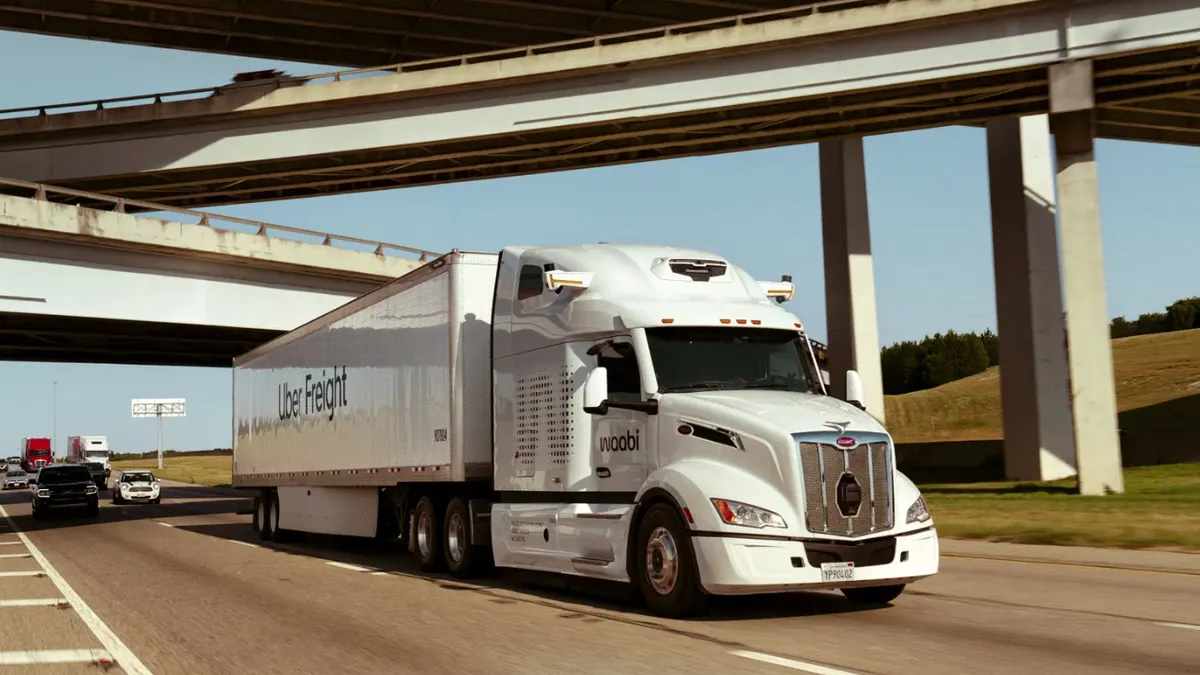
- Waabi successfully transferred its autonomous driving system between truck platforms without new engineering, data collection or retraining, according to a June 26 press release.
- The Waabi Driver, originally trained to operate a Peterbilt 579, was deployed on the Volvo VNL Autonomous through what the company called a “generalized zero-shot transfer.”
- Waabi compared the capability to a human driver switching vehicle without relearning how to drive, noting autonomous systems should be able to make similar transitions.
Dive Insight:
Most autonomous driving systems require additional engineering, testing and validation each time they’re adapted to a new vehicle platform. Waabi says its generalized AI architecture eliminates that step, allowing the same virtual driver to operate across different truck models.
The latest demonstration builds on the company’s broader efforts to create an AI driver that can generalize beyond the environments that it was initially trained in.
As of Q1 2025, Waabi’s said its technology could already adapt across different operational design domains, including varying highway conditions, traffic patterns and driving behavior. Extending that capability to different vehicle platforms could reduce deployment costs while speeding commercialization.
“Road testing the Volvo VNL Autonomous, integrated with the Waabi Driver, on public roads is an important proof point of our partnership with Waabi,” Nils Jaeger, president of Volvo Autonomous Solutions, said in the release. “It also demonstrates the scalability of Volvo’s autonomous truck platform, which is designed to integrate different vehicle models and virtual drivers to enable a wide range of use cases and applications.”
The announcement come as Volvo Autonomous Solutions advances its own commercialization plans. The company said in June that it would go fully driverless on U.S. highways beginning in Q1 2027 and planned to have more than 300 autonomous trucks in operation by the end of next year.
Volvo Group’s venture capital arm became a strategic investor in Waabi in January 2023, and later invested $200 million in the company.