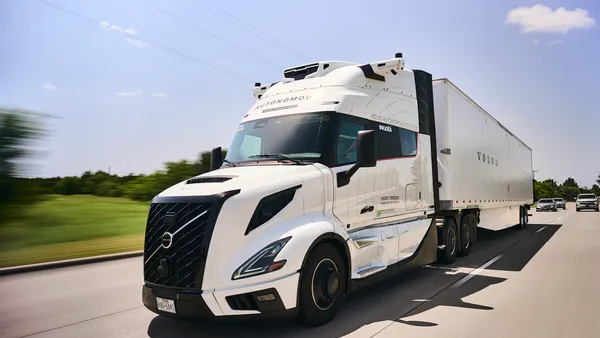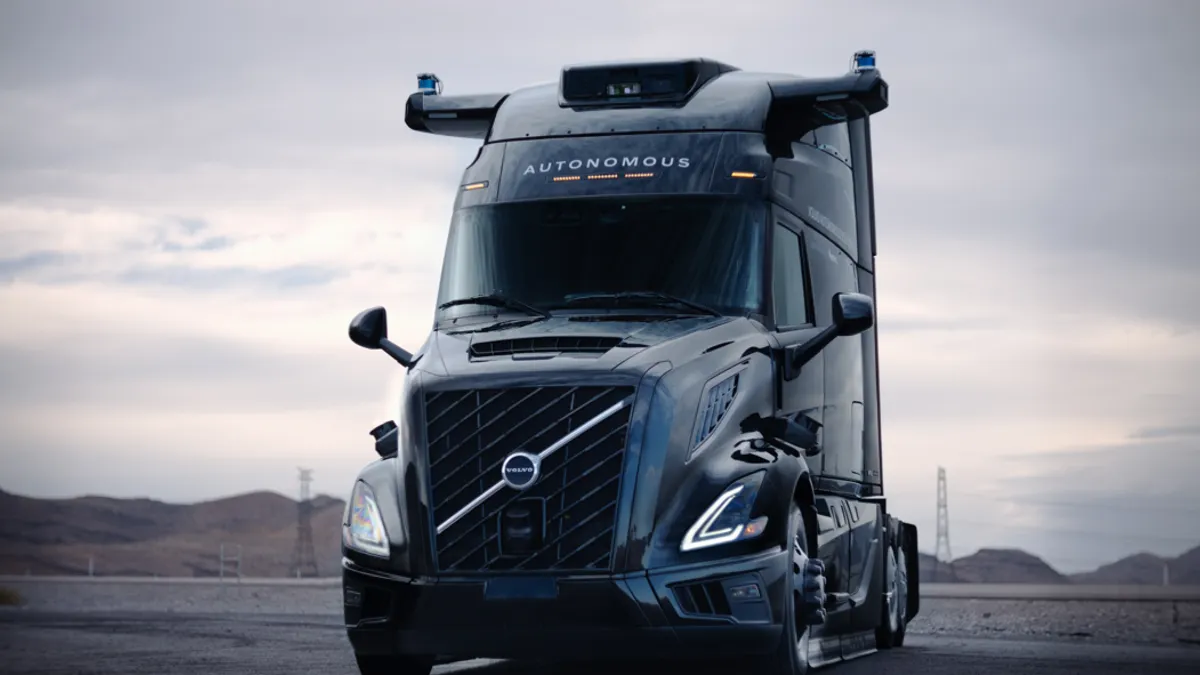
Volvo Autonomous Solutions said it will remove the safety driver and go fully driverless on U.S. highways in Q1 2027, the company announced at its capital markets day event in Sweden Wednesday.

“We’re good to go next year,” Nils Jaeger, president of Volvo Autonomous Solutions said at the event, adding that by the end of 2027, the company will be operating more than 300 autonomous trucks on U.S. highways, followed by industrial scaling in 2028. The trucks mentioned by Jaeger will primarily be operating across the U.S. Sunbelt, according to an event presentation.
Volvo Autonomous Solutions, which was established in 2019, is a subsidiary of Volvo Group that's developing autonomous transport solutions with AV tech firms.
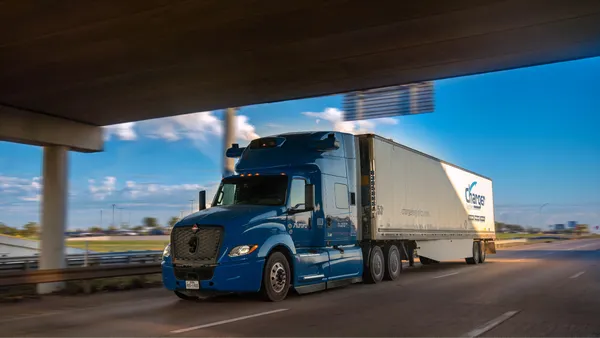
The driverless shift brings its testing portion to a close and moves the company towards scaling the tech. In 2024, the company debuted tractors with Aurora Innovation’s driverless technology and fully integrated production of the tech at its New River Valley facility in Dublin, Virginia. In October 2025, Volvo noted it was quarters away from removing the safety driver from its autonomous trucks.
As it was building trucks with driverless technology, Volvo and Aurora continued to deploy new routes. In May, the companies launched a new 200-mile driverless route between Dallas and Oklahoma City.
Jaeger said having more of its driverless trucks operating on U.S. roads allows the company to introduce “autonomous trucking to more and more customers.”
Volvo noted in its presentation materials that demand for long-haul autonomous trucks in the U.S. could reach 220,000 units by 2035.
“In less than 10 years, one out of 10 trucks you will see on a U.S. highway will be driverless,” Jaeger said, citing industry forecasts.
Volvo’s presence in the market, he added, will “unlock the large-scale adoption of autonomous trucking” by “removing the main barriers” for participants, including up-front capital requirements, and shifting regulatory responsibility away from customers.
Aurora Innovation said in a LinkedIn post its goal with Volvo “has always been about bringing autonomous freight to scale.” Moving production to scale, follows the tech firm noting last May that it had closed its safety case, a major step for Aurora. This indicates the company finalized documentation and testing results proving its autonomous technology is acceptably safe, clearing the way to shift from human-supervised testing to driverless commercial operations.
Jaeger said the company’s next step is to “then utilize our strong position” as it ramps up production.
Volvo projects revenues from autonomous trucks could reach $3 billion within five years, per its presentation materials.
“We will scale and we will scale at an industrial level,” Jaeger said.