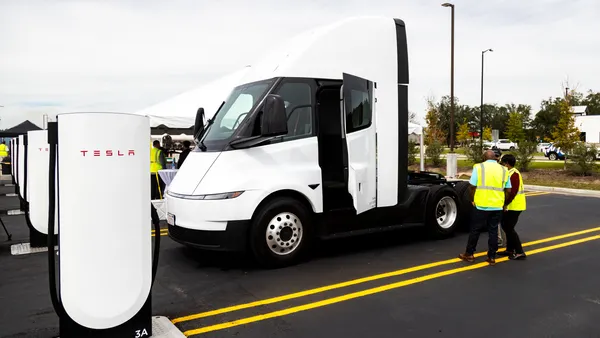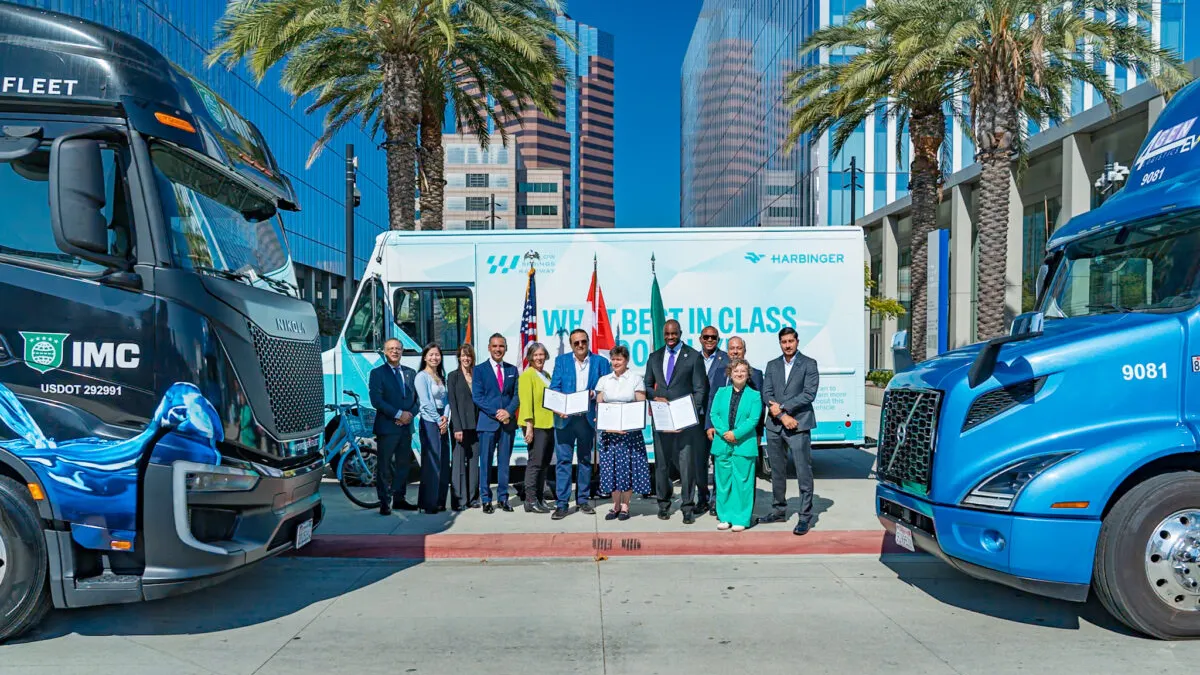
U.S. West Coast states, Canada, and Mexico have pledged to establish a charging network for electric commercial vehicles along Interstate 5, according to an Aug. 26 press release.
The corridor, called the “BC2BC,” aims to make it possible for electric trucks to charge and drive all the way from Vancouver, British Columbia, Canada, to Baja California, Mexico, the press release said.
The partnership aims to coordinate cross-border partners to build a cleaner freight network, California Transportation Secretary Toks Omishakin said in the press release. Coalition members include the states of California, Oregon and Washington; Vancouver, British Columbia, Canada; and Baja California in Mexico.
“With global fuel prices driving up the cost of moving goods, partnerships like this are more critical than ever to strengthen our economies,” Omishakin said in the release.
The collaboration builds on efforts already underway in West Coast states as well as in Canada and Mexico. In 2024, the Department of Transportations in California, Oregon and Washington were awarded a $102 million grant from the DOT to advance emissions-free freight movement along the West Coast.
When the grant was awarded two years ago, California, Washington and Oregon already had a combined 14,000 direct current fast chargers, which accounted for nearly a third of the country’s publicly accessible fast chargers for light-duty electric vehicles, according to Caltrans.
The BC2BC initiative will not cost participating states or countries any tax dollars, a coalition spokesperson said in an email to Trucking Dive. It will utilize existing grant awards and improve the efficacy of those investments.
No timeline was established for the corridor’s completion. However, once all the planned charging infrastructure is in place, carriers using electric and other alternative-fueled vehicles will have access to 20 electric charging facilities and three hydrogen stations, per the release. The coalition estimates nearly 10,000 trucks travel along I-5 daily.
Participating members pledge to align charging infrastructure, technical standards and planning jurisdictions, which will help deliver operational scale, according to Aravind Kailas, advanced technology policy director for Volvo Group North America.
“The BC2BC initiative can give fleets greater confidence to plan routes, maintain uptime, and make long-term investment decisions,” he said. “For Volvo Group, this collaboration supports our commitment to providing customers not only with zero-tailpipe-emission vehicles, but also with the reliable ecosystem needed to operate them productively.”