Dive Brief:
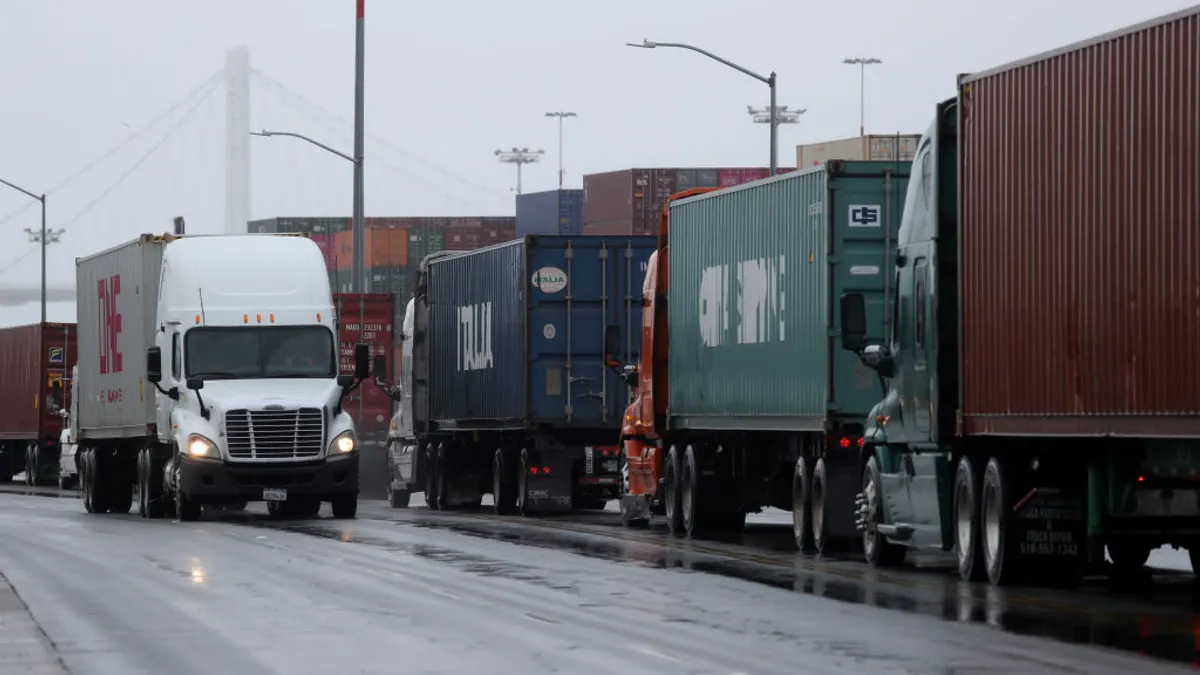
- Federal estimates suggest that states including Arizona, California and Texas could lose 15-25% of CDL holders due to new immigration-related policies, according to a report by C.H. Robinson Worldwide.
- “These localized reductions may create drayage shortages for shippers operating in high-impact regions, even while national capacity appears sufficient,” C.H. Robinson said.
- Trucking employment fell by some 13,700 jobs in September through November, reaching the lowest level since June 2021, according to preliminary seasonally adjusted data from the Bureau of Labor Statistics.
Truck transportation workforce undergoes decline
Dive Insight:
The Federal Motor Carrier Safety Administration’s ramp-up of English language proficiency this year and inconsistent enforcement across states has meant some carriers avoid certain areas, C.H. Robinson’s report said.
“This behavior effectively removes capacity from these markets and creates routing inefficiencies,” C.H. Robinson said. Regulatory impacts could span the next one to three years, the report also said.
English language proficiency enforcement can lead to drivers being placed out of service.
Meanwhile, the FMCSA noted in its push to strengthen non-domiciled CDL standards that 194,000 current drivers could be impacted when seeking to renew their licenses. The regulatory revamp also seeks to affect commercial learner’s permits, which is about a tenth of the size of non-domiciled CDLs.
The initial interim rule was announced in late September on an emergency basis, but a lawsuit has sought to reverse the policy, and a U.S. appeals court issued a temporary stop in November to the interim final rule as the case proceeds.
FMCSA, which collected comments on the interim rule through Nov. 28, says the policy is needed to reduce certain drivers with “unknown driver safety records.”
States including California and Pennsylvania have been threatened with federal funding losses for noncompliance based on federal audits. Nevertheless, the FMCSA notes the ongoing court battle and only requires compliance up until the interim final rule was issued.
The government said last month that it plans to adopt a final rule.