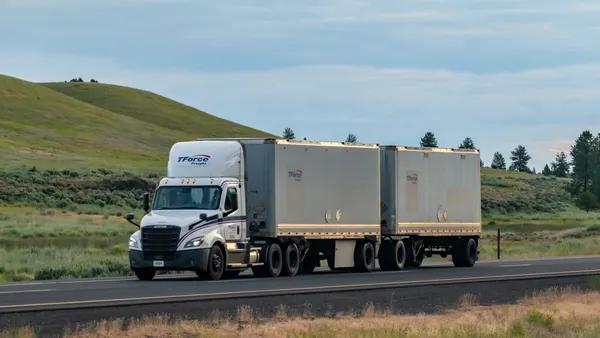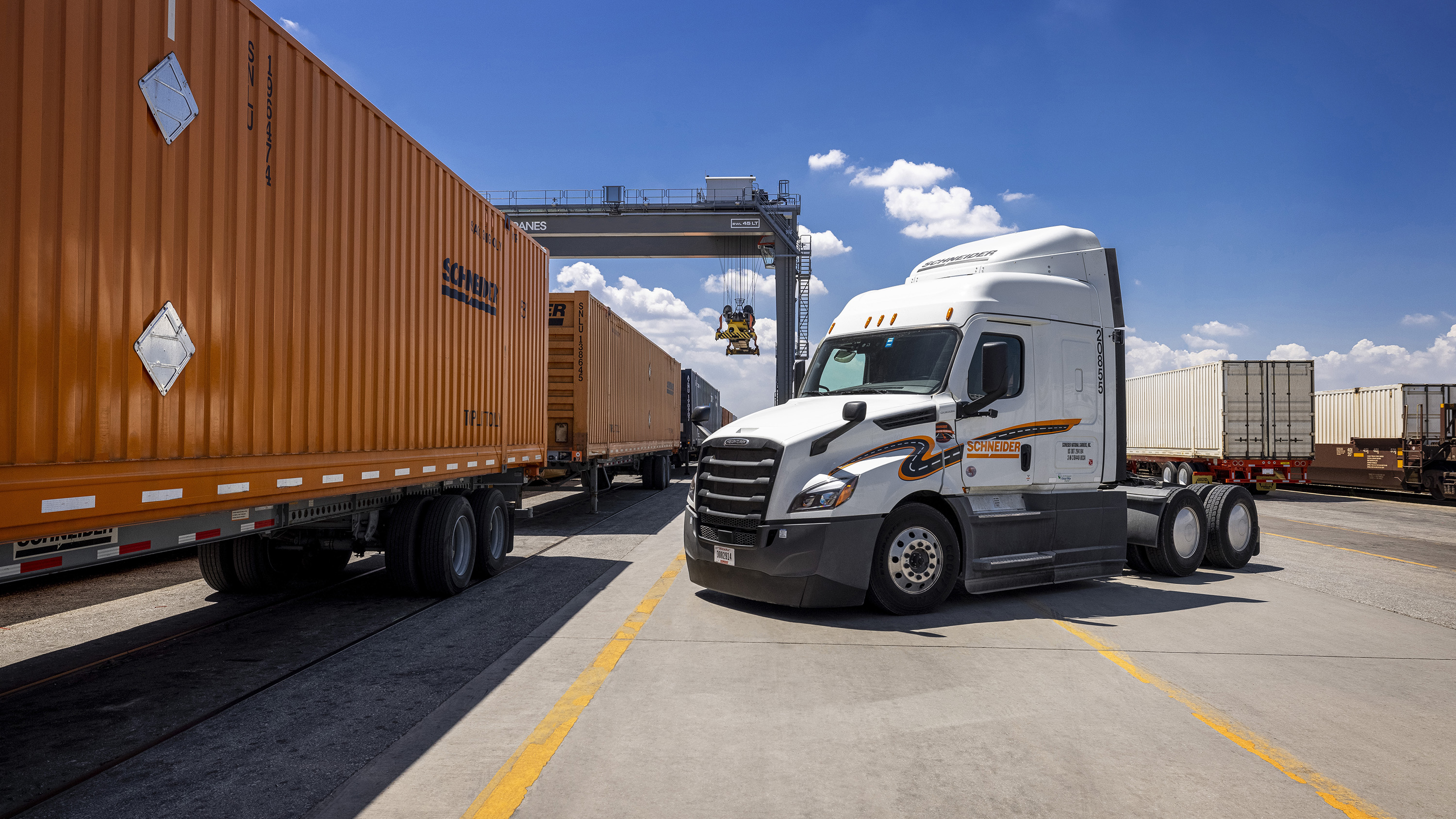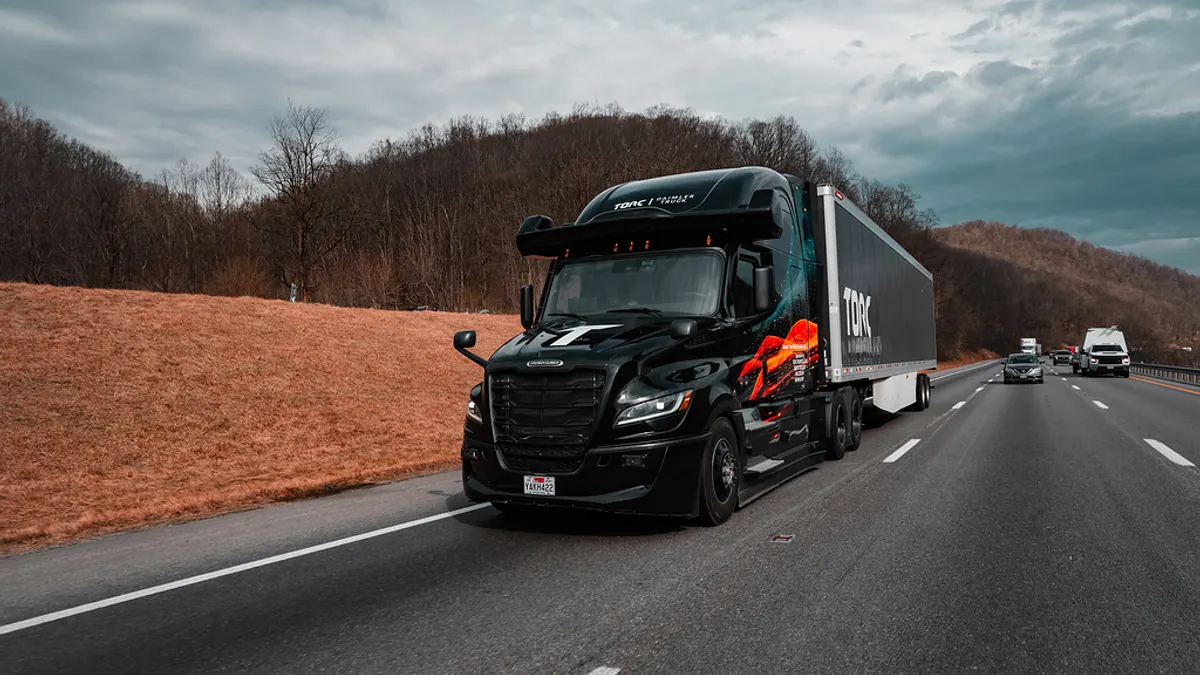
Daimler Truck outlined a three-pronged strategy to improve profitability during the company’s Q1 earnings call held May 6, responding to what executives described as a historically low-demand environment in North America.
A prolonged freight recession and ongoing tariff impacts have pressured the truck maker. As a result, Daimler sold 141,814 trucks in North America during 2025, down 26% from the prior year. The difficult conditions also carried into the start of 2026: the company sold 29,432 trucks during the first quarter, the lowest Q1 sales since 2010, CFO Eva Scherer said during the call.
Even so, executives pointed to early signs of recovery. Q1 orders rose 86% year over year, suggesting demand could be starting to rebound.
In the meantime, Daimler is focused on several initiatives aimed at growing profits and preserving cash flow:
- Deconsolidation of Mitsubishi Fuso: Daimler and Toyota finalized the merger of Mitsubishi Fuso and Hino Motors on April 1. As part of the transaction, Daimler will ultimately decrease its ownership of the newly combined Archion Corp. to 25%, CEO Karin Rådström said, creating 1.5 to 2 billion euros in free cash flow.
- Fuel cell collaboration: Daimler also expects to benefit from Toyota joining Cellcentric as an equal shareholder, which will accelerate the fuel cell joint venture’s ability to scale.
- Pulling back on EV manufacturing investments: Daimler will delay developing the manufacturing capacity for its Amplify Cell Technologies joint venture due to conditions in the North American electric commercial vehicle market. Although Daimler incurred a 200 million euro charge due to the production delay, executives said the move will still have a positive cash flow effect, because the company previously expected to invest a “low triple-digit million range” into the venture in 2026.
Executives said the company is also watching for replacement demand to build after several years of depressed freight activity, though they cautioned that higher freight rates will take time to translate into healthier fleet economics.
“We generally see that there is a renewal need in the market as there has been a very long freight recession ongoing in the third year now,” Radstrom said. “I mentioned that freight rates have improved 20% since the start of the year and also over 20% year-over-year. So a significant improvement that is helping.”