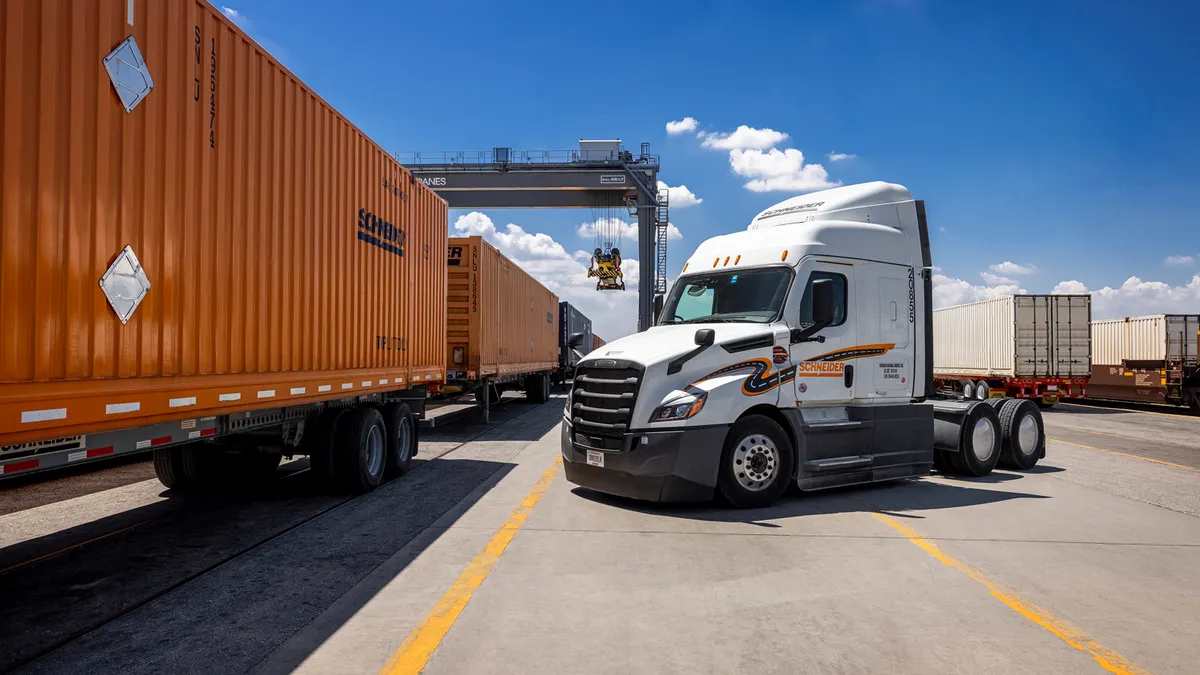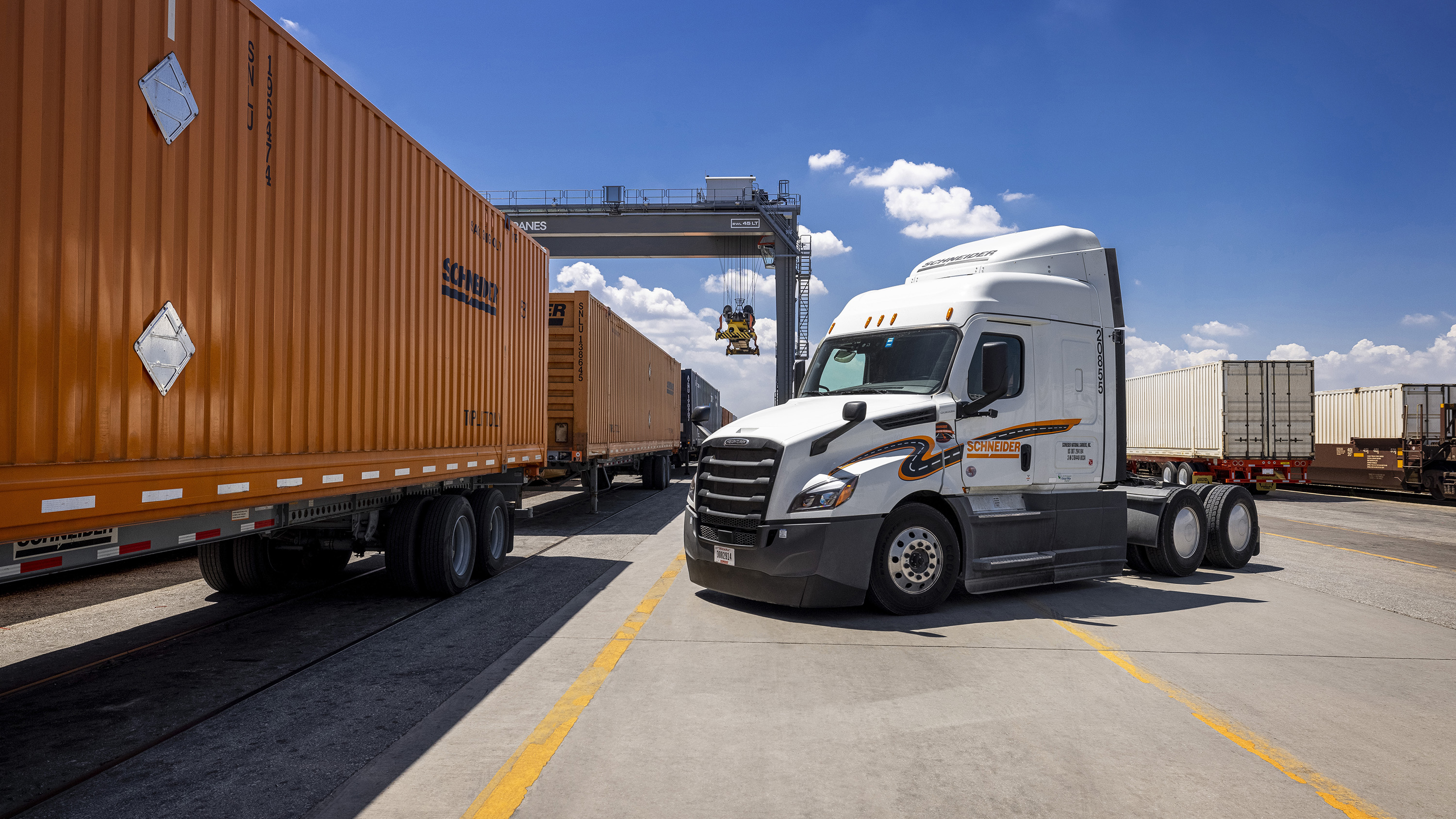
Larger carriers tended to keep their full-year capital expenditure forecasts the same when reporting their Q1 results this year, suggesting some stability in trucking markets.
That’s a switch from last year when J.B. Hunt Transport Services, Old Dominion Freight Line, Schneider National and Saia used Q1 earnings to tweak forecasts they made months earlier in 2025.
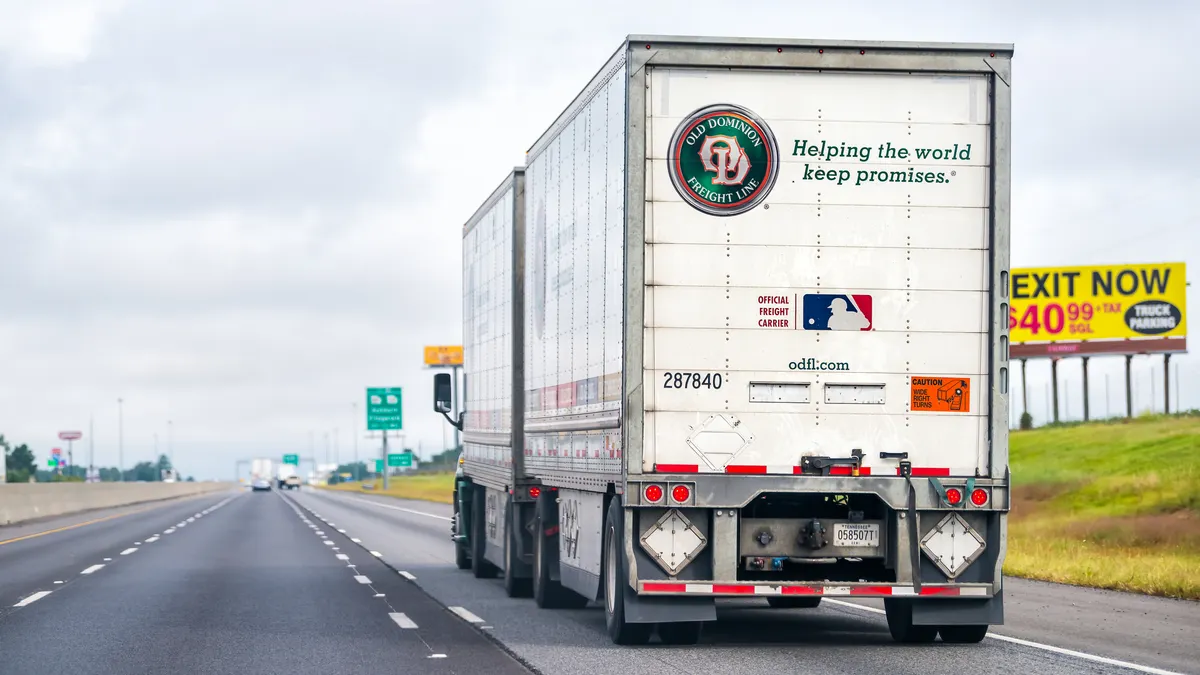
“We believe it is important to invest throughout the economic cycle to ensure that we always have the capacity for new growth opportunities,” Adam Satterfield, Old Dominion Freight Line’s EVP and CFO, told Trucking Dive in an email.
“As a result, our forecasted capital expenditures generally remain consistent throughout a fiscal year once our annual plan is established,” he said.
Among the largest carriers, Knight-Swift Transportation Holdings bucked the trend, revising its initial 2026 guidance downward by $25 million to a range of $600 million to $650 million.
Top carriers mostly keep CapEx forecasts the same
A disruptive environment with fuel prices, tariffs, federal regulations limiting the driver supply, insurance costs and other factors has challenged margins and even carriers’ ability to operate.
The disruption follows a multiyear freight recession amid some glimmers of hope, such as spot rates staying elevated, industrial sentiment remaining in expansion territory and carriers such as Knight-Swift projecting higher bid increases.
“I think liquidity and capital preservation is going to be key in this unstable environment that we have today, this very volatile environment,” Anthony Sasso, president of TD Equipment Finance, said in an April interview with Trucking Dive.
Larger carriers’ CapEx can cover vast areas from real estate to technology as well as tractors and trailers. Several LTLs upped spending in recent years to take advantage of Yellow Corp.’s bankruptcy and related auctions of equipment and property.
Sasso said that recently, some smaller players have refinanced, and in some cases, sale-leasebacks of equipment have been another tool that companies are utilizing.
“We're seeing companies continue with the replacement cycles,” he said. “If there's been a cutback, we're seeing it more on the new acquisition side versus the replacement cycle.”
Analytics and forecasting firm FTR Transportation Intelligence noted in a recent report how North American Class 8 orders have been maintaining strength, suggesting “that momentum is being driven by improving freight volumes, higher asset utilization, and firmer rate expectations.”
Market leaders Daimler Truck North America and Paccar estimated Class 8 retail sales to be in the range of 250,000 to 290,000 or 230,000 to 270,000, respectively.
“The market is strengthening as driver and fleet capacity becomes limited and customers begin to realize higher freight rates,” Paccar CEO Preston Feight said on an earnings call April 28. “This is somewhat moderated by fuel and other operating cost volatility.”
Freight volumes are still barely budging upward, but tightening capacity meant an abrupt surge in prices in Q1, which rose 21.8% year over year, according to the U.S. Bank National Spend Index.
For Old Dominion, Satterfield said the carrier maintains a long-term focus with its capital expenditure program, which has included approximately $2 billion over the past three years despite persistent softness in the domestic economy.
Any change to its annual plan typically results from an update in forecasted tonnage and shipment levels, he noted.