Dive Brief:
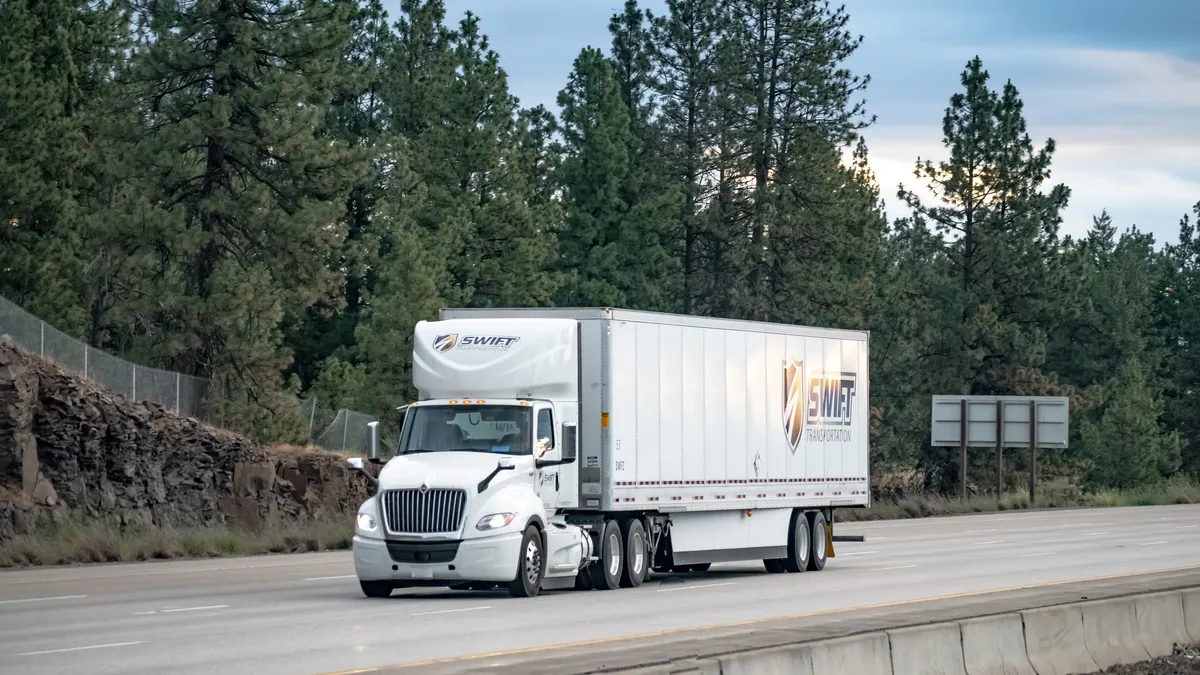
- Knight-Swift Transportation Holdings’ Q3 operating income more than tripled to nearly $179 million, compared to a year ago, aided by pricing improvement across segments, according to an earnings release.
- An adjusted operating ratio for the quarter in truckload of 89.2% reflected truckload’s breakout quarter with $123 million in operating income.
- “The improvement in earnings was primarily driven by pricing and network efficiency gains across our asset-based businesses in addition to gross margin recovery in our Logistics business,” CFO Andrew Hess said on an earnings call Wednesday.
Dive Insight:
One-way margins, particularly business under contract, helped the service exceed performance compared to dedicated for the first time in years, Hess said on the earnings call.
Constraints in capacity as well as stable demand are helping Knight-Swift, CEO Adam Miller said. That comes from forces such as tougher regulations and enforcement of English language proficiency, non-domiciled CDLs and CDL schools.
“Industry capacity remains under pressure, and sourcing quality drivers is as challenging as it has been in years,” Miller said in the earnings release. “On the pricing front, our spot pricing trended better than public indicators in the quarter, staying well above contractual rates that continued to accelerate throughout the period.”
Additionally, tender rejection rates are significantly elevated, running two to three times that of broader market measures, Miller said.
While those gains helped the truckload segment, its dedicated service operating margin was essentially flat year over year, Hess said. The company had to respond with driver pay increases, recruiting and training but has found stability in its truck count, he said.
“We are preparing further measures to improve our driver development and enhance utilization to maximize our opportunities,” the company said in its earning release.
In contrast, J.B. Transport Services’ dedicated contract services segment reported a 22% YoY decline in operating income to nearly $82 million in Q3. The decrease was primarily due to driver and equipment costs, higher group medical claims and insurance premiums, and increased expenses for new business onboarding, the company said in an earnings release Oct. 15.