Dive Brief:
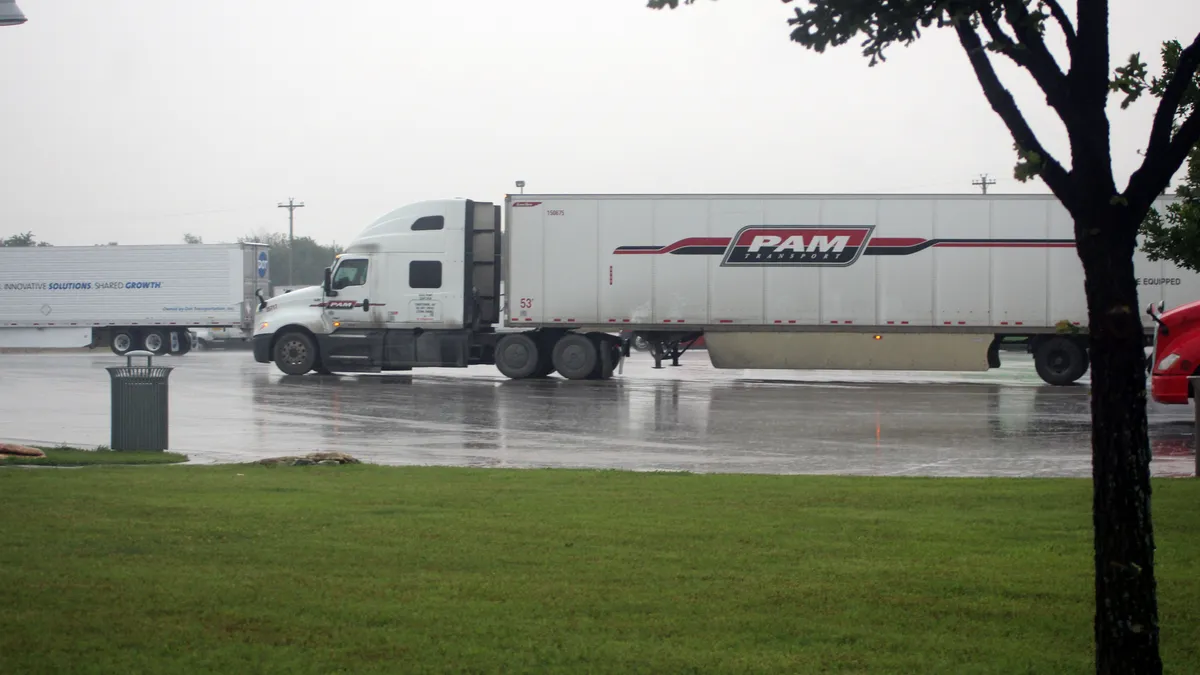
- PAMT last week posted an operating loss of $5 million for Q3, an improvement from a year ago but still its eighth consecutive loss, a streak that started in Q4 2024.
- Operating revenue increased by $12.3 million year over year, whereas operating expenses only rose by $11.6 million compared to a year ago, slightly reducing its financial bleeding YoY.
- The increased revenue was partly due to a tighter driver market, which helped improve the company’s rate per mile by 6% year over year, and fuel surcharges. But “cumulative cost increases continue to outpace the pricing improvements achieved to date,” President and CEO Lance Stewart said in the earnings announcement.
Dive Insight:
Despite the rising rates, higher costs came from fuel, driver retention and recruiting, which chipped away at gains, Stewart noted.
Such cost pressures are affecting the rest of the industry, even if fuel surcharges can largely represent pass-through costs. Federal actions on English proficiency, non-compliant CDL schools and non-domiciled drivers have put pressure on who can join and remain in the workforce.
“Higher net fuel costs were primarily attributable to the timing difference between significant weekly increases in national diesel fuel prices and the corresponding adjustments to customer fuel surcharges, which typically lag changes in fuel prices by one week or more,” Stewart said.
Fuel surcharges rose significantly in Q3, up nearly $9.3 million YoY. In comparison, revenue excluding fuel surcharges increased $3 million in the quarter, rising 2.3% YoY.
“We remain optimistic that rates will continue to improve as the market adjusts to ongoing cost pressures and reduced industry capacity,” Stewart said.
The carrier’s latest operating loss wasn’t as severe as in the fourth quarters of 2024 and 2025 when they were both around $38 million. The best quarter during the last two years in regards to its operating loss was Q1 2026 — when the loss was limited to $271,000.
Given the ongoing losses, PAMT has been working to lower costs where it can. The company reduced its rent and purchased transportation costs by $6.8 millions and disposed of some assets. But rising costs of salaries, wages, benefits and operating supplies, among others, outpaced the savings.
PAMT’s freight primarily consists of automotive parts, expedited goods, consumer goods and manufactured goods, such as heating and air conditioning units, its annual report notes. In the report, the company also noted risks to its volume and finances due to tariff trade policies and tariffs’ influence on the broader economy.