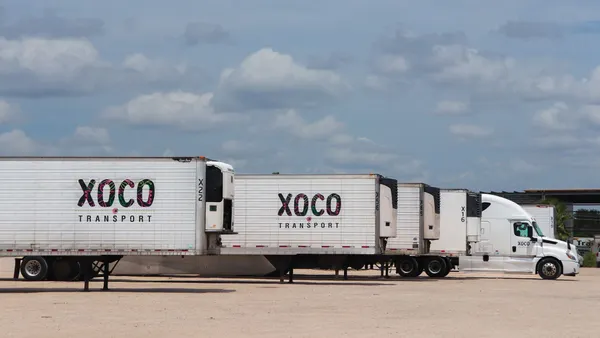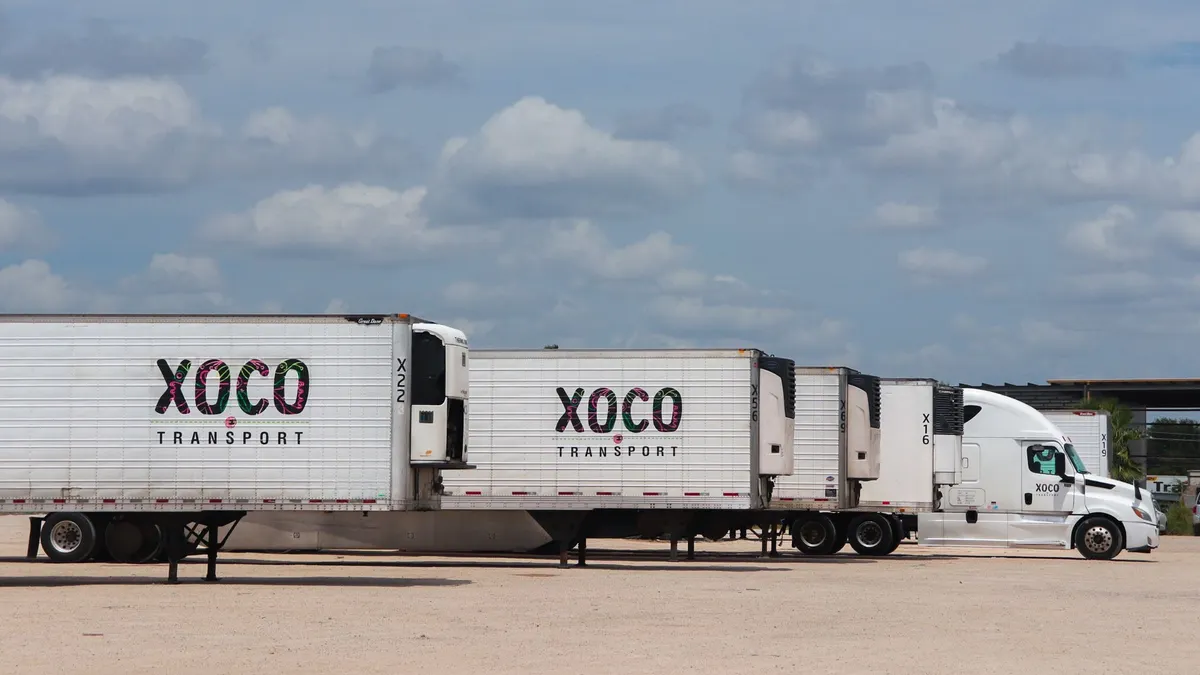
Texas-based Xoco Transport is seeking to reorganize its business through a Chapter 11 bankruptcy.
The business, located near the U.S. border in Hidalgo, filed a voluntary petition on Sept. 16 in federal court.
Xoco Transport told Trucking Dive Wednesday that it’s still operating.
The reorganization envisions business continuity and seeks to make use of a 2019 factoring agreement with RTS Financial Service to help with cash collateral through the bankruptcy process.
The carrier reported $2.2 million in assets and $3.3 million in liabilities, according to the petition. Additionally, the business said revenue declined from nearly $15.4 million in 2024 to $11.3 million in 2025.
In 2026, revenue through Sept. 16 was nearly $6.8 million, which came amid a loss of over $609,000 for the first seven months of the year, according to court documents.
Among its assets, Xoco Transport listed over 40 tractors, mainly 2022-2024 models, and around 70 trailers. A federal database listed the company as having 65 drivers as of last October and carrying refrigerated and fresh produce cargo, beverages, and general freight.
The company was founded in March 2018 and provides longhaul freight transportation services throughout the U.S., including routes from South Texas and McAllen to the Midwest, Northeast, Carolinas and other markets, according to a court filing.
“The company primarily hauls produce on outbound loads, including produce connected to Mirasoles Produce USA LLC, and may haul meat, mail, beer, water, or other available freight on return trips,” the filing said, noting the business relies on customer relationships connected with the wholesale produce player as well as spot market opportunities.
Majority owner Carlos Alberto Collazo-Gonzalez is among the company's unsecured creditors, connected with a $1 million capital contribution that in unsecured.
Trucking companies have faced numerous challenges this year, including constraints on foreign driver eligibility, record-setting fuel prices and smaller freight volumes, though fuel surcharges and higher rates can help off-set some of those setbacks. But several carriers navigating the conditions have shuttered or filed Chapter 7 bankruptcies, otherwise known as liquidation bankruptcies.