CHARLOTTE, N.C. — As Greg Hodgen closed out his one-year term as chairman of the American Trucking Associations, he wasn’t expecting to launch a search for the group’s next president and CEO following the abrupt departure of Chris Spear in August.
But in the weeks leading up to the eventual selection of Alabama Trucking Association President and CEO Mark Colson as ATA’s next leader to replace Spear, Hodgen said the time spent talking to members during the search “left me feeling more connected to our membership than ever.”
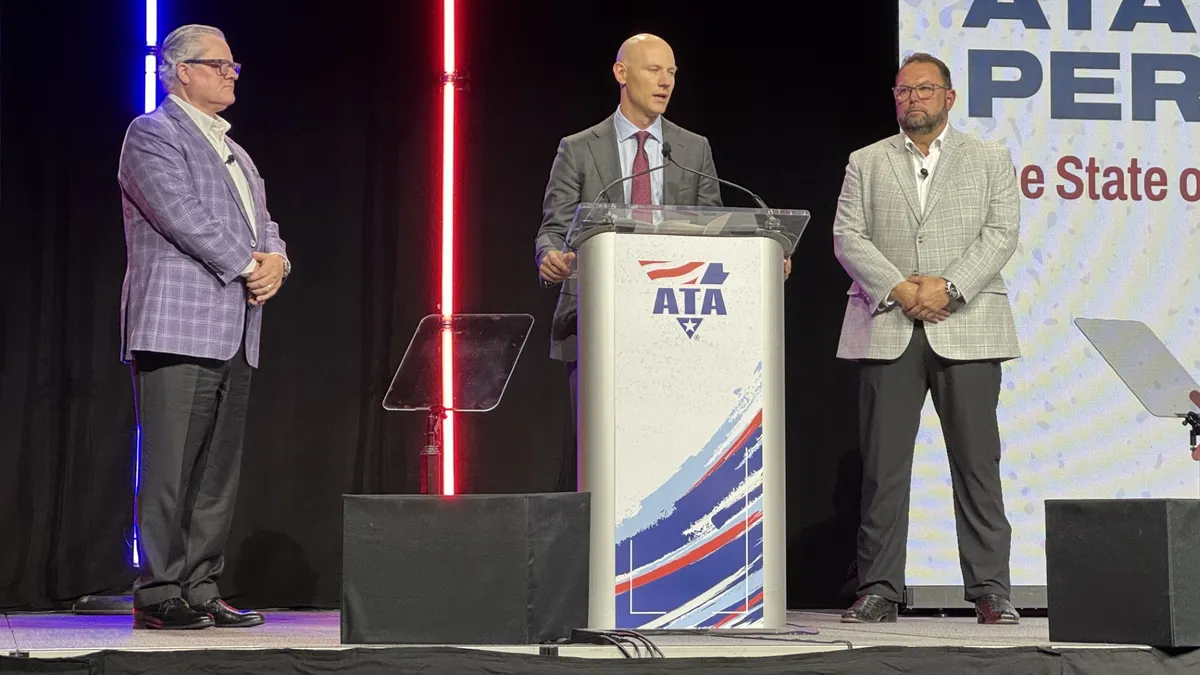
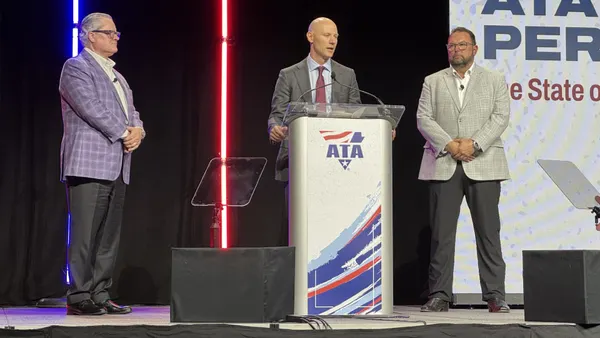
The CEO search provided Hodgen the opportunity to speak candidly with members and listen to constructive ideas for an organization that represents tens of thousands of trucking companies, Hodgen said during ATA’s 2026 Management Conference and Exhibition in Charlotte, North Carolina, Oct. 17-20.
The industry is positioned to move on after the long running freight down cycle, said Hodgen, who’s also CEO of Enid, Oklahoma–based Groendyke Transport.
“I think that’s really important to learn from where we’ve come from,” he said. “Responsible carriers have endured … extremely difficult conditions, but they’ve continued to invest in safety and people and equipment.”
While Hodgen feels the freight market is emerging from of a prolonged downturn, he believes the industry still faces headwinds. This is where ATA can help by advocating for policies “that challenge unnecessary costs, push for workable rules, [and] insist that everyone competes under the same standards,” Hodgen said.
“You just can’t complain in D.C. and expect something to get done. We’ve got to be willing to work across party lines, regardless of your personal affiliations.”

Derek Leathers
Chairman and CEO of Werner Enterprises
The goal is not only to get through the current freight cycle, but also “to be better prepared for the next one,” he said.
ATA’s members differ in size, business model, geography and market segment, but they share “a fundamental interest in a safe, competitive, and ultimately sustainable trucking industry,” Hodgen said.
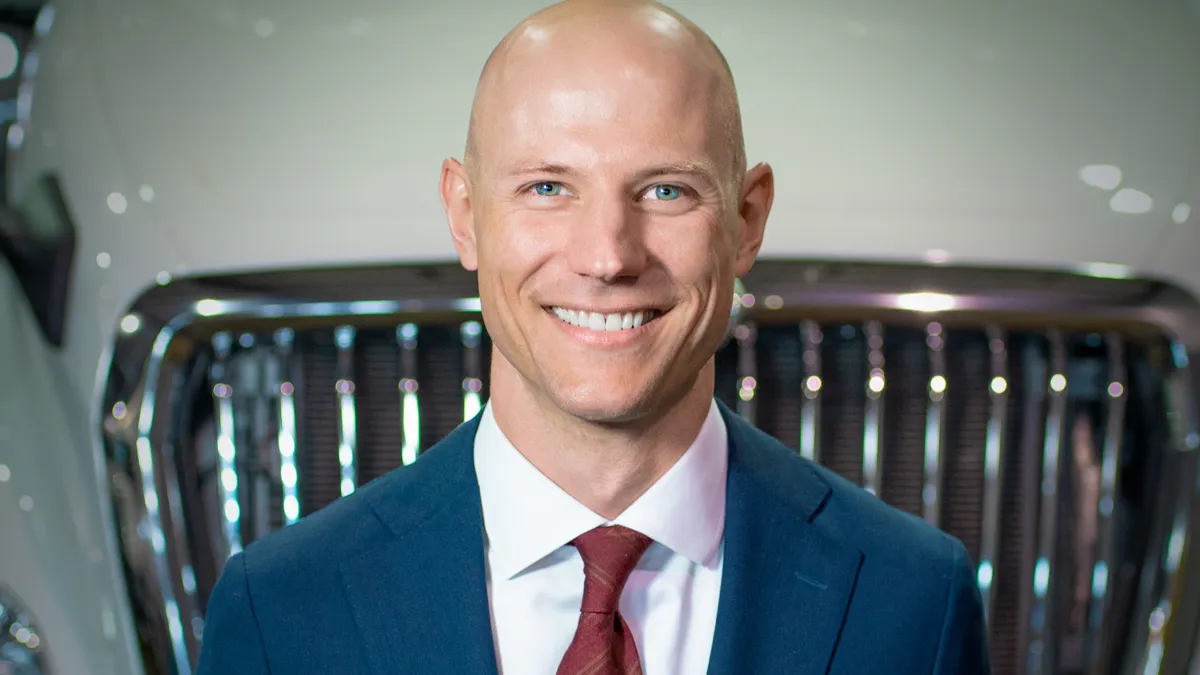
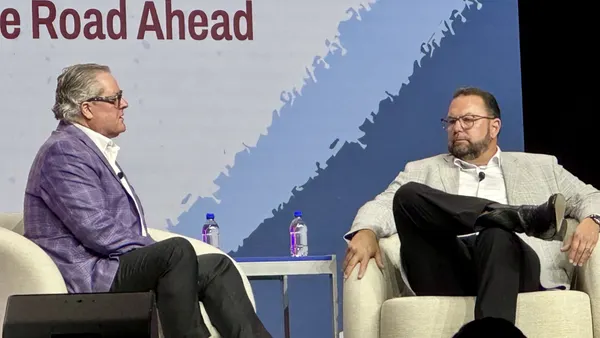
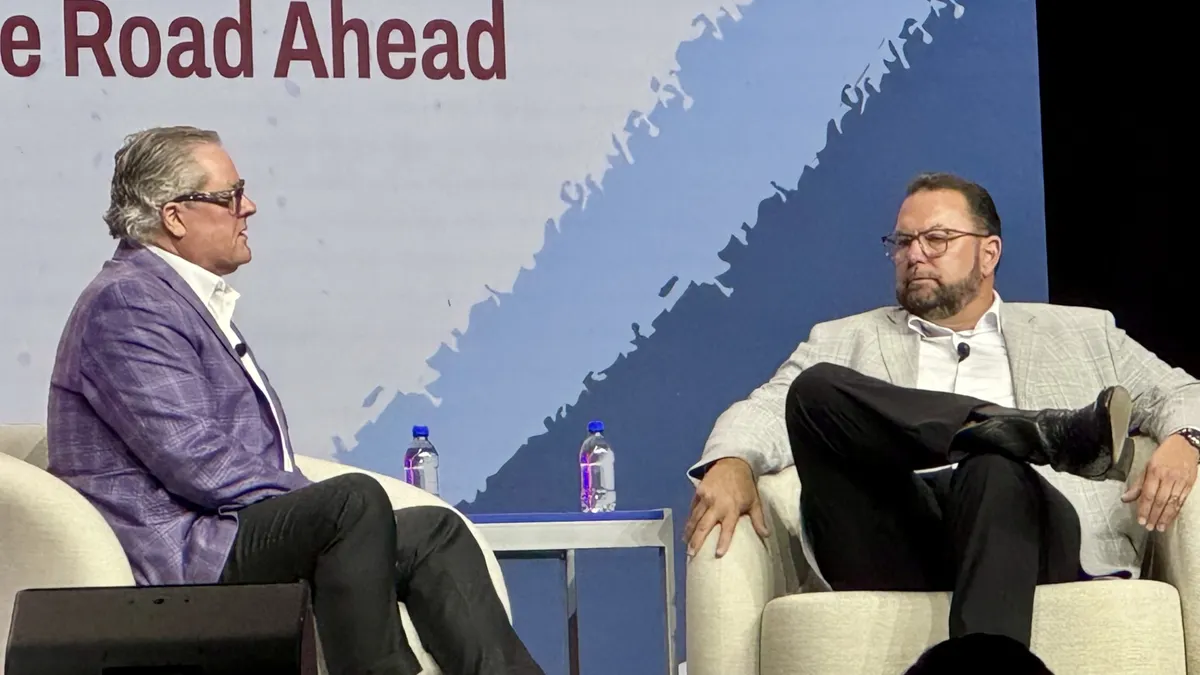
Derek Leathers, chairman and CEO of Omaha, Nebraska-based Werner Enterprises, reflected on what’s happened to the industry the past year and what ATA should prioritize during his time as chairman. He was elected to the post during the conference.
It’s important to “stay relentlessly member focused,” he said.
“We have to listen to what our members are facing, not just in Washington, but at the terminal level and across the country,” Leathers said. ATA leaders pointed to recent regulatory wins for the industry, including efforts to step up safety through the federal crackdown on how nondomiciled commercial driver’s licenses are issued, increased enforcement for English language proficiency and removal of CDL schools from the national training registry.
Leathers said ATA has also worked to address ongoing problems with cargo theft and built bipartisan support for the Combating Organized Retail Crime Act, which would strengthen efforts by law enforcement to combat the problem.
“You just can’t complain in D.C. and expect something to get done,” Leathers said. “We’ve got to be willing to work across party lines, regardless of your personal affiliations.”
He said trucking companies that join ATA pay to belong to the association and “expect to see that investment strengthens their voice.” Leathers added members need to see that ATA advances policies and that it makes a difference in how they’re able to operate, invest, hire and grow their companies.
“Responsible carriers have endured … extremely difficult conditions, but they’ve continued to invest in safety and people and equipment.”
Greg Hodgen
CEO of Groendyke Transport
Building unity within a diverse organization whose members face different problems means finding common ground, he said.
“We have to compete for business every day, but it doesn’t mean that we can’t collaborate and coordinate across mutual interests,” Leathers said.
Leathers called on members to actively take part in ATA committees focused on policy change to benefit the industry as a whole and be open about sharing issues that impact operations.
“It puts a responsibility on all of us and all of you because you’ve got to participate,” he said. “What separates ATA from other organizations in the space [is] our ability to cut across all the industry segments and sizes to channel the voice — a unified voice for positive change.”
Leathers said he looks forward to leading ATA’s next chapter and recognizes it won’t be easy.
“Trucking has never been defined by taking easy roads,” Leathers said. “We’re defined by our ability to keep moving, keep improving and keep delivering. That’s what we’ve got to do in the coming year as well. We’re not just going to respond to what’s next. We’ve got to try to shape what’s next.”