MARYSVILLE, Ohio – Peter Coratola once thought that incorporating autonomous trucks into the daily operations of Ease Logistics would be a tough sell to his employees.
There was some hesitancy initially because no one knew how the technology would benefit freight movement or boost productivity in a warehouse environment, Coratola, CEO of Ease Logistics, recalled. But after working alongside the technology for several months and shifting mundane but necessary tasks to the self-driving fleet, workers now ask “what other ways can we use these,” he added.
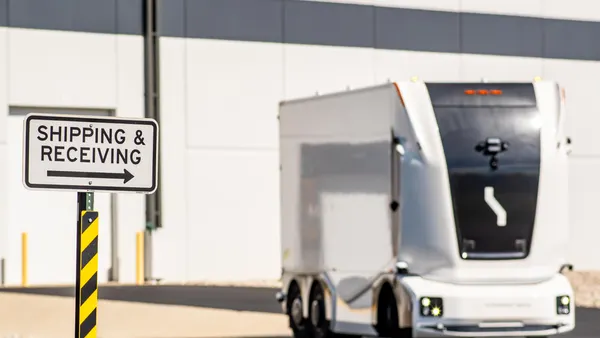
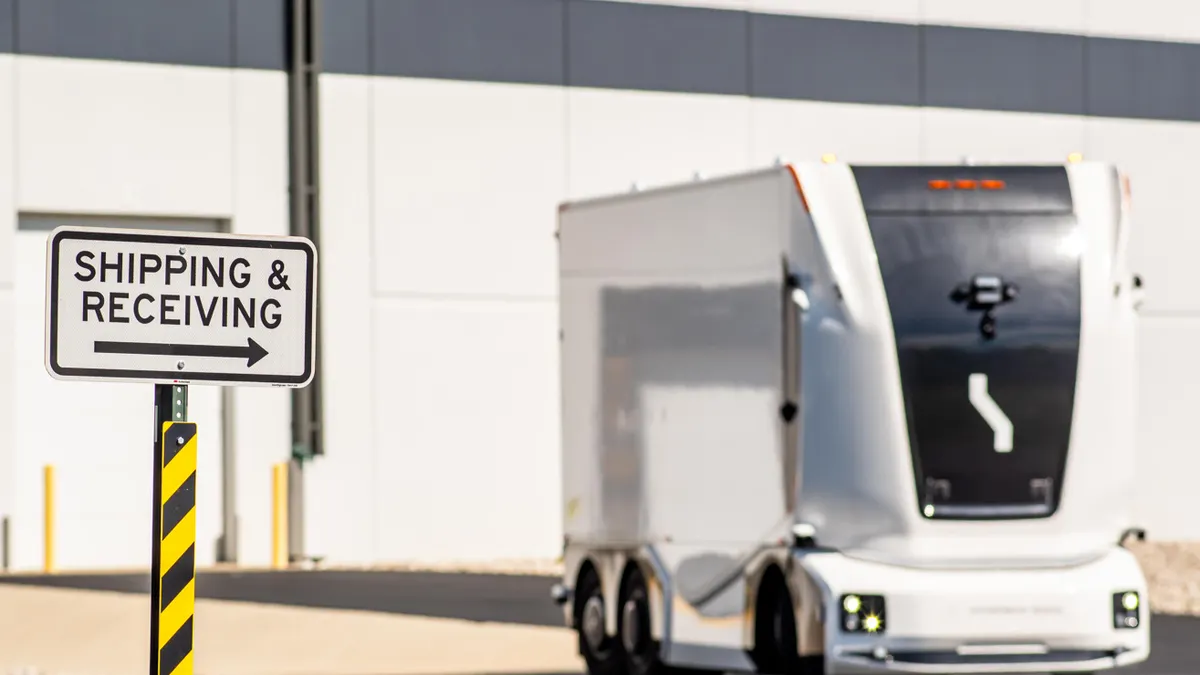
Coratola pointed to how Ease Logistics’ latest autonomous technology trial has shifted employees’ reluctance to enthusiasm. The company in early October hosted a demonstration with its technology partner Einride and state regulators. The event featured Ease Logistics’ two self-driving electric trucks that have traveled on public and private roads to transfer freight starting earlier this year between two Marysville warehouses it operates.
While the two cabless autonomous trucks have been shuttling freight between the company’s Marysville sites since late spring, Coratola noted watching them operate “still has that little bit of excitement.”
But ultimately it was about getting his employees to buy into how the technology can help them be more productive. One immediate benefit was showing how the Einride-powered autonomous trucks could aid with intercompany freight movement, which freed up drivers to handle more over-the-road shipments, Coratola said.
“This is not a human versus technology situation,” Coratola said. “This is a human-led, technology-enabled environment and that is the same case that we want to have for tomorrow.”
The perks of early adoption
Coratola said Ease Logistics advocates for use of innovative technology including self-driving trucks. According to information on the company’s website, its use of autonomous vehicles is an opportunity to demonstrate the technology and identify regulatory and operational obstacles before automated freight becomes a mainstream capacity option, according to the company.
“For now, the practical value for shippers is early exposure, not lower rates,” Ease Logistics said on its website.
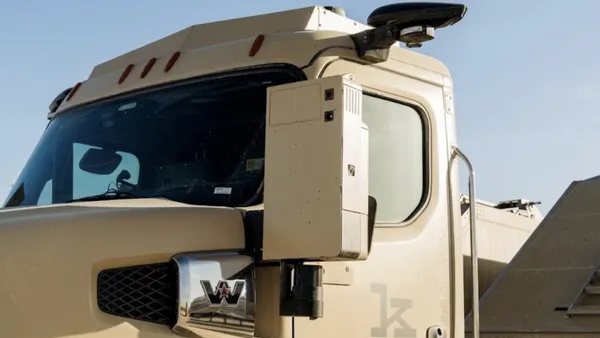
Between April 2025 and earlier this year, Ease Logistics partnered with Kratos Defense to test automated truck platooning technology on Interstate 70 in collaboration with the Ohio and Indiana departments of transportation. In that trial, two electronically linked trucks, both with drivers on board but with the lead operator setting the pace and essentially the control and movement of the self-driving follower tractor-trailer, transferred freight between Columbus, Ohio and Indianapolis.
The latest trial involving Ease Logistics and Einride is being conducted through of the Truck Automation Corridor Project, a multi-year initiative with Ohio and Indiana transportation departments. A goal of the effort is to advance smart mobility technology, which includes automated vehicles, an ODOT spokesperson said in an email to Trucking Dive.
The Truck Automation Project is set to conclued in January 2027 and release the results thereafter, per the DriveOhio website.
By taking part in the trials, Ease Logistics can learn and develop ways to incorporate autonomous technology into its operations, Coratola said. It also provides real-world operational data to the industry and regulators writing policy for self-driving vehicles to operate on public roads, he added. Ease Logistics in October announced the pilot Einride trucks are now operating regularly scheduled routes between its two Marysville warehouses.
However, Coratola recognizes widespread deployment of self-driving technology won’t happen overnight. But companies like Ease Logistics are taking those first steps.
“That’s where we fit into the mix,” he said of his company trialing autonomous technology. “We got to continue to work through the different municipalities and different state regulations to make sure that we’re doing it the right way.”
The right situation for an autonomous trial
Ease Logistics’ Marysville operation in a business park with public and private roads proved a good fit for Einride, according to Henrik Green, the tech firm’s chief technology officer. He was in Ohio for the Ease Logistics demonstration in early October.
Green noted the Ease Logistics and Einride teams clicked immediately, which helped all sides work efficiently together. Collaborating with Ease Logistics also gave Einride the opportunity to see how its technology operated in tandem with human-driven trucks in an active logistics system.
This also included activities from loading and unloading and general dock operations, Green said. It also allowed the company to collect data to better understand how Einride’s technology could create value as his firm works toward scaling its own operations.
The autonomous trucking industry is poised for rapid growth in the coming years, with several companies including Aurora Innovation, Kodiak AI, PlusAI and Volvo Autonomous Solutions all working toward scaling operations.
A study released in March by the consulting firm Steer, commissioned by Aurora Innovation, projected by 2035 self-driving freight could reduce carrier insurance costs 40% through improved road safety, slash fuel costs 32% through improved fuel efficiency and address persistent staffing challenges facing the trucking industry.
However, before those benefits are realized, collaboration between firms like Ease Logistics and Einride is a needed step, according to Green.
Green said logistics systems need to be resilient. By showing how Einride’s self-driving technology seamlessly integrated into Ease Logistic’s operations provided that example, he said.
“I think this is a very good step on that vision for us,” Green said about Einride’s progress toward scaling. “We like to be very close to the reality of logistics.”
Coratola recognizes the potential efficiencies autonomous technology can provide to his company. “Do we see the application and the use case for it? Very much so,” he said.