Targeted investments to recruit and retain drivers to create safe and reliable capacity was a common theme shared by truckload carrier executives during Q3 earnings calls.
With more stringent enforcement of federal regulations stifling driver pipelines, carriers have stepped up recruiting efforts by raising wages.
Executives noted safe operations and dependability were key to improving their marketplace positions amid heightened regulatory scrutiny, capacity constraints and further consolidation.
Here’s what carriers had to say about finding the drivers they need to support long-term growth.
J.B. Hunt Transport Services EVP of Finance and CFO Brad Delco
“At an investor conference in September, we identified three primary cost headwinds this quarter: driver-related investments, volatile fuel prices, and higher claims and medical costs,” Delco said on an Oct. 16 call with analysts. “Driver-related costs include recruiting, onboarding, training, sign-on bonuses and targeted wage actions. In total, these cost buckets, driver-related, claims and fuel, impacted operating income by over $50 million versus the second quarter of this year, and group medical costs alone accounted for more than $16 million of that increase.
“These costs are real, but the context matters,” Delco added. “Driver investments support visible demand and prepare our networks for growth. Fuel surcharge programs recover costs over time, although rapid movements create a timing mismatch and dilute margins. Risk and medical costs remain an industry-wide challenge, and an elevated number of train derailments drive up cargo claims expense. We will control what we can through safety, productivity, asset utilization and disciplined execution.”
Werner Enterprises CEO Derek Leathers
“So the driving schools for us, Roadmaster, is a significant part of what's enabled us to do what we did in Q3 and enabled us to be able to seat drivers where we need them at the quality we need them,” Leathers said on an Oct. 27 call with analysts. “That's the key thing here is the standards at our Roadmaster schools are very high. And so we and other schools across the country have seen enrollments down 20% to 30% on average throughout the year. That's an ongoing battle to get people kind of interested in professional driving as an occupation.
“The wages are certainly attractive enough, and it's about making the job increasingly attractive and changing the narrative on what used to be a go out over the road 2 to 3 weeks at a time, where in Werner with our heavy concentration of Dedicated as well as our engineered routes, we're getting 70-plus percent of the fleet to and through the home multiple times a week. We've got to continue to grow that type of lifestyle. But those schools have performed well. We also work with a group of Tier 1 schools across the country.
“I'm really proud to report that as these ongoing school audits have been taking place nationwide and only increasing in their frequency and their severity, both our Roadmaster schools have all passed those audits with flying colors as well as our Tier 1 partners. And so we're working with the right people to trying to do it the right way, but that limits the pool of drivers that you can pull from.
“And we think it pays dividends in, for instance, Q3, 20-year low in DOT preventable accidents per mile. That's something that we're proud of. We've got to bend the curve on the insurance line and the only way to do it is with high-quality drivers, high-quality training and then giving them the support that they need.”
Knight-Swift Transportation Holdings CEO Adam Miller
“I think any time that our industry can ensure that we have good, safe capacity on the road, that's a positive to everyone in our industry,” Miller said on an Oct. 22 call with analysts. “And I think this is going to make it difficult for noncompliant carriers who are just entering the market, haven't gone through proper training, right, and don't care about safety like the large carriers; it's going to make it more difficult for them to access the freight market. And I think that's good for everyone involved. It doesn't mean there won't be some pain along the way, maybe with some of the brokers who really leaned on that type of capacity. But at the end of the day, I think we're in a better space as an industry because we have safer drivers on the road.”
Miller also detailed how the company differentiates itself, noting its “large academy network and driver training program through which we source and develop a significant portion of our professional driver base. This is helping to somewhat blunt the negative impacts of the tight driver market” on Knight-Swift’s business “and will be key to helping us seat more trucks and increase utilization to capture more opportunities.”
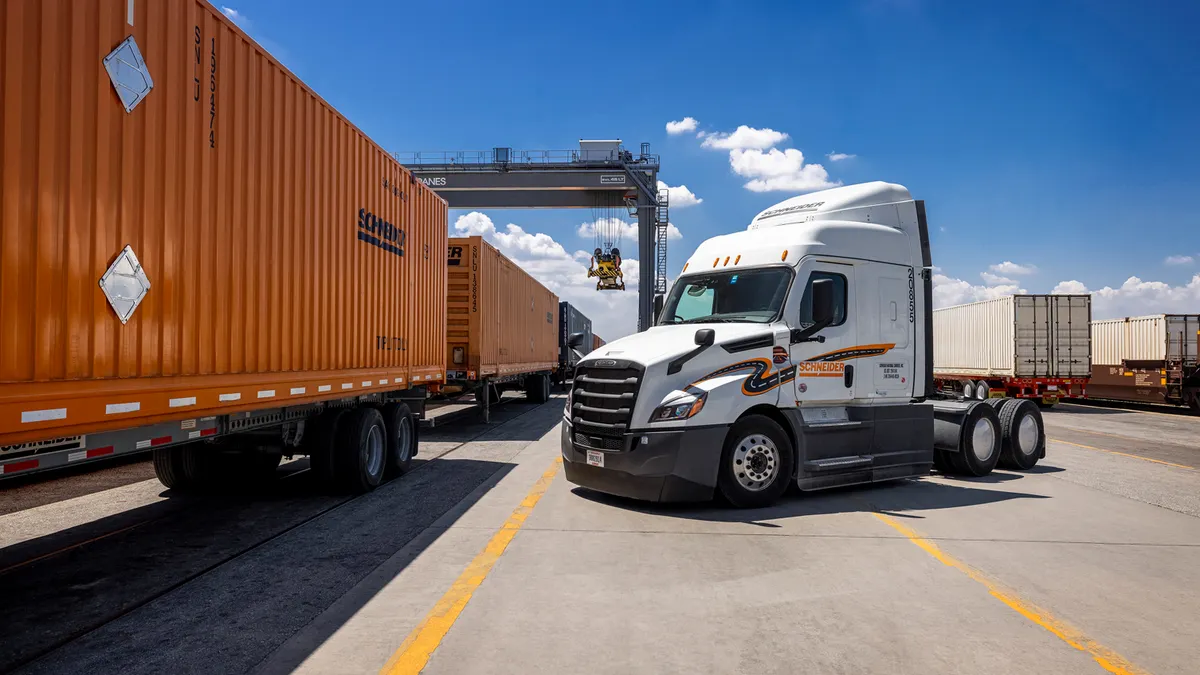
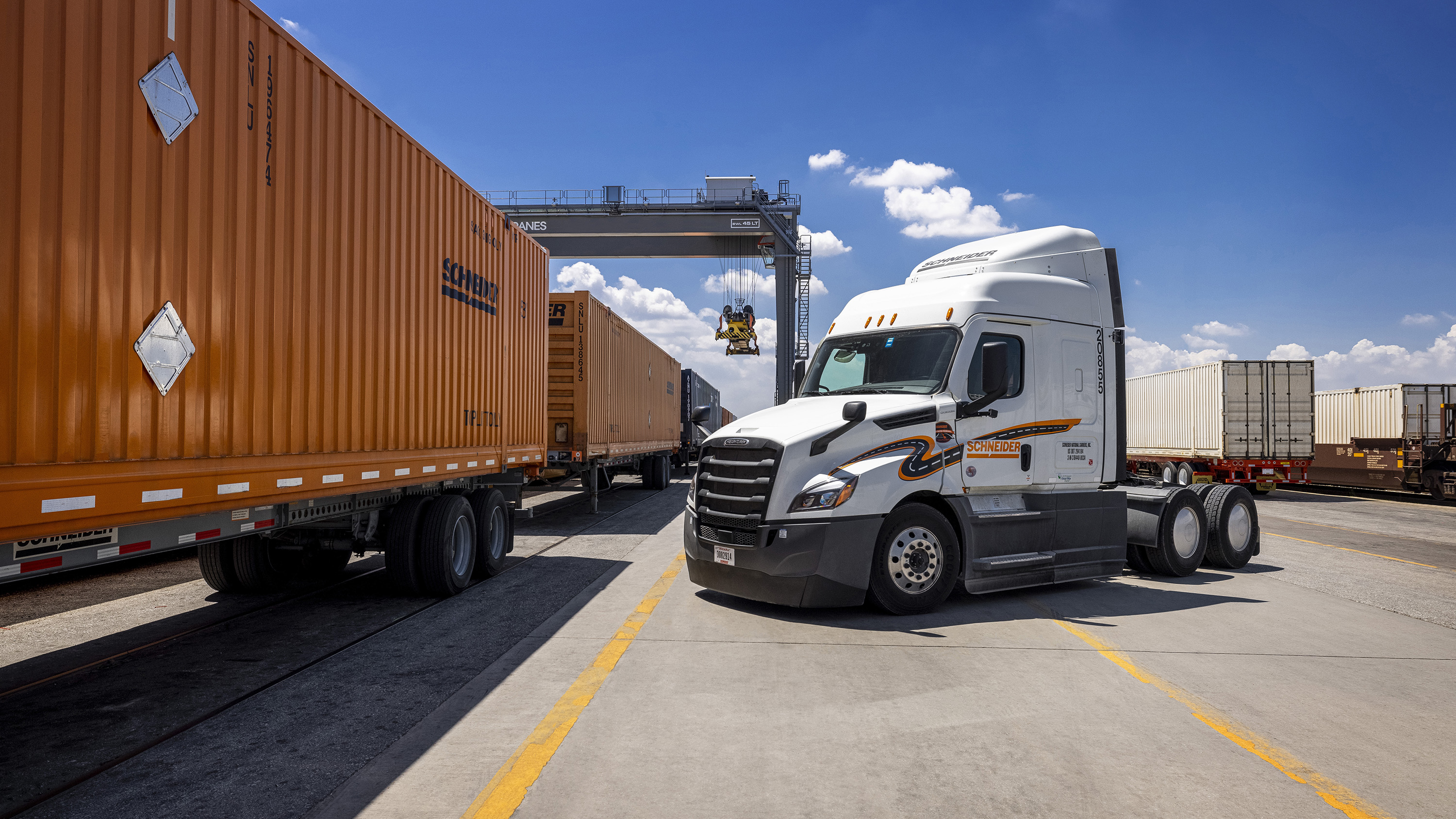
Schneider National President and CEO Jim Filter
“Our way is to remain disciplined. We align pay increases to rate recovery. And so this ensures everyone, customers, our customer-facing associates, recruiting, operations and most importantly, our drivers, we all have a common goal, which is to grow safe, reliable capacity,” Filter said on an Oct. 29 call with analysts. “That's our way. And so I'm encouraged that we're seeing the trajectory of the market improvement, but we're making very specific surgical increases into driver pay where the returns are commensurate.
“We're not just throwing money at everything. I'd also say is you just don't solve this by money alone. You have to focus on the driver experience. And so that comes from freight selection, work configurations, treatment of the drivers, how do we use AI to respond faster to the drivers. And you're seeing some of that evidence within the results as well. If you look at Intermodal, our truck count is already growing sequentially because that's a place where we think we bring a really differentiated experience. And so you just can't throw money on it. It's important to see an improvement in the market condition, but that can't be the only way that you grow your capacity.”