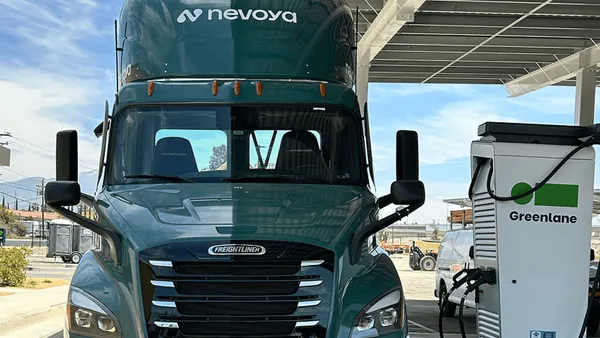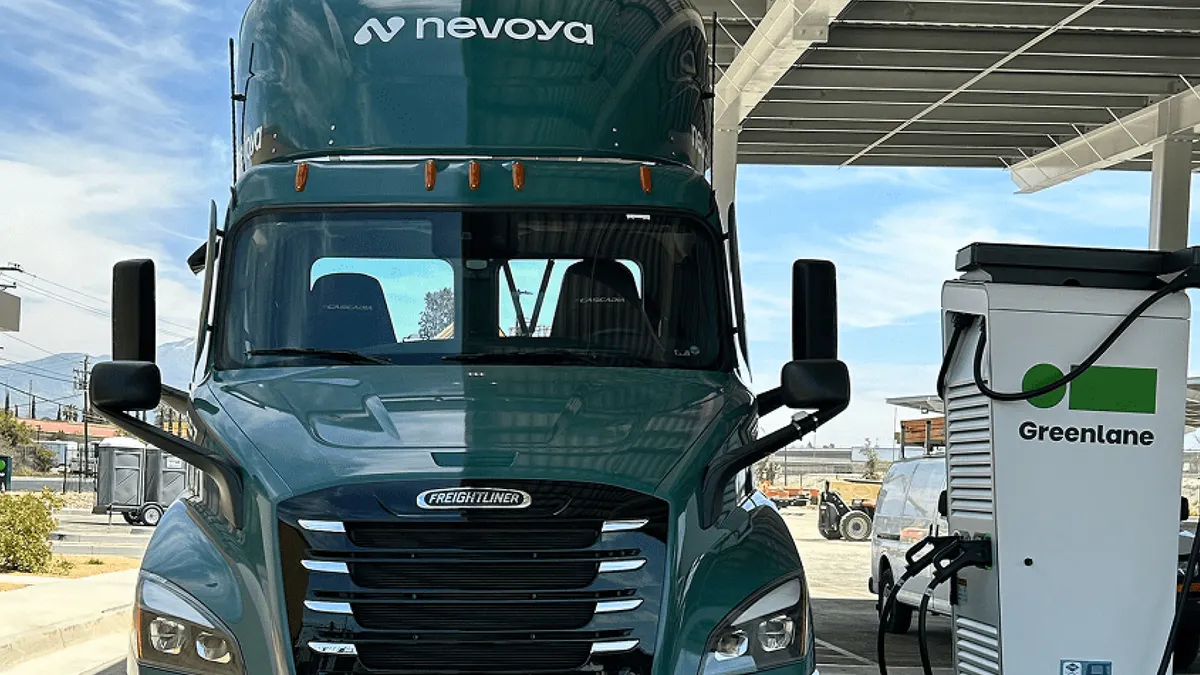
Nevoya is developing a new electric truck corridor on I-10 between San Bernardino, California, and Phoenix, Arizona, in partnership with Facebook and Instagram parent company Meta.
Meta is buying environmental certificates to lower its emissions profile to support the buildout of the route, which will include charging stations. The route is expected to begin operations with 25 trucks in 2027, according to a Nov. 12 news release.
“The agreement helps scale electric trucking in a region central to Meta's infrastructure with the I-10 being a key route for moving data center construction materials across the southern United States,” the release said. The deal doesn’t involve moving Meta’s own goods, the announcement also noted.
The social media company previously established a partnership with the full-service electric trucking company for a Houston-Dallas route, also set to start in 2027.
Nevoya partners previously noted that the Texas setup involves a book-and-claim system in which companies buy environmental attribute certificates, where environmental benefits from the freight transportation itself are separated and transferred to a company seeking to reduce its emissions.
"Meta coming back for a second corridor is a strong signal that this model works,” John Verdon, Nevoya co-founder and chief commercial officer, said in the news release. “Electric trucks already win on the corridors we run; what unlocks them at scale is multi-year demand that drives financial and operational innovation. That is what this agreement does, and we intend to repeat it corridor by corridor.”
Meta noted in another announcement the Arizona-California corridor charging stations will support other commercial fleets, too.
In early 2027, the Texas route will launch first, Verdon told Trucking Dive in an email. Greenlane is developing that infrastructure.
The I-10 corridor route between the Inland Empire and Phoenix will develop later in the year as charging comes online, Verdon added. A charging infrastructure partner is still being developed for the second route.
“We’re continuing to ramp hiring in Texas and are building the California–Arizona team ahead of more trucks arriving on the I-10,” he also said. “Our model helps: these are regional, home-daily lanes in new electric trucks, which is a job a lot of drivers want.”